


The average wedding in 2026 costs $34,200, though your final expense depends largely on guest count, location, and the vendors you select. Venue and catering expenses dominate the budget, consuming 64.6% of total spending—approximately $18,961 to $23,175 combined. Each guest you add typically increases costs by $290 to $300, making headcount one of your most controllable variables.
Where you marry significantly impacts what you’ll spend. Northeast weddings average $46,600, while Southern venues run closer to $31,300. This regional gap reflects both venue pricing and local vendor rates. Timing decisions offer real savings too: choosing off-peak seasons or weekday slots can reduce your bill by 15 to 25 percent compared to Saturday ceremonies in peak months.
Hidden costs often surprise couples during final planning stages. Service charges, taxes, and gratuities typically add $2,000 to $5,000 beyond your quoted vendor prices. Building a 10 to 15 percent financial buffer into your overall budget protects against these extras and unexpected expenses that emerge during the planning process.
The Average Wedding Cost in 2026: $34,200
Ever wondered what couples are actually spending on weddings these days? The average wedding cost in 2026 hits $34,200, according to The Knot’s comprehensive data from 10,474 US couples married in 2025. That figure gives you a solid benchmark for your budget breakdown planning.
Regional variation significantly shapes your actual spending because major cities and expensive regions push averages considerably higher. Rural or smaller towns offer more modest figures, with most couples working within the $25,000 to $40,000 range depending on location and priorities.
Your venue, catering, guest count, and vendor choices directly influence your final bill. A black-tie ballroom in Manhattan might cost $15,000 alone, while a garden venue in Iowa runs $3,000 to $5,000. Understanding these cost drivers helps you allocate resources strategically by identifying where your priorities lie within your overall budget.
Six Cost Drivers: What Actually Affects Your Budget?
Six Cost Drivers: What Actually Affects Your Budget?
Understanding what actually drives up wedding expenses helps you allocate resources more strategically. Six major factors consistently shape your final bill across most weddings.
Venue and catering command the largest share of your budget at 64.6% of total spending. This single category typically consumes more money than all other expenses combined, making it the primary lever for controlling overall costs.
Guest count creates a direct multiplier effect on your entire budget. With 50 guests, expect to spend around $17,000, while inviting 100 or more guests pushes costs to approximately $43,000. Each additional person increases catering expenses, requires a larger venue, and sometimes necessitates more staff for service and coordination.
Vendor selection introduces significant variables into your spending. Most couples hire around 13 vendors total—photographers, florists, caterers, musicians, planners, and others. Each vendor brings their own pricing structure and adds to your final bill.
Location and timing substantially influence per-guest and per-venue costs. Major metropolitan areas and peak seasons (May through October) carry higher price tags for nearly every service. Destination weddings and luxury markets regularly exceed $80,000, while off-season weddings in smaller towns may cost 30-50% less.
The interconnected nature of these drivers means that controlling one element often requires adjustments elsewhere. A larger guest list demands more catering volume and a bigger space, while your vendor choices determine whether you’re paying baseline rates or premium pricing within your selected location.
Budget by Guest Count: Small vs. Large Celebrations
When comparing intimate weddings to larger celebrations, the financial gap becomes immediately apparent. A 75-person wedding typically costs around $22,000, whereas a 150-person event climbs to roughly $44,000—nearly doubling your overall expenses. This dramatic increase reflects how guest count directly influences your total budget.
Each additional attendee introduces approximately $290 to $300 in per-person costs. These expenses span catering, rentals, seating arrangements, and service charges that accumulate rapidly. If you’re considering expanding from 100 to 125 guests, expect an additional $7,250 to $7,500 in direct expenses alone.
The per-person cost structure matters because it compounds across all major categories. Catering typically represents the largest portion—roughly $75 to $150 per guest depending on menu selections and service style. Rentals like tables, chairs, linens, and dishware add $20 to $40 per person. Bar service, if included, contributes another $15 to $25 per guest. These categories intersect in ways that make small guest reductions particularly effective for budget management.
What does this mean practically? Reducing your guest list from 150 to 125 people saves approximately $7,250 to $7,500—funds you could redirect toward photography, florals, or venue upgrades. The inverse also applies: expanding from 75 to 100 guests requires an additional $7,250 to $7,500 in your budget allocation.
Intimate Celebrations Cost Less
How much can you actually save by shrinking your guest list?
Intimate weddings deliver genuine financial freedom through reduced headcount. When you cut guest count from 150 to 75, you’ll save over $15,000—money redirected toward meaningful experiences like better food quality or upgraded photography. Budget breakdowns by guest count reveal stark differences:
- 1–50 guests: $17,000 average cost (maximum budget flexibility)
- 50–100 guests: $27,000 average cost (balanced approach)
- 100+ guests: $43,000 average cost (traditional scale)
Fewer attendees eliminate massive catering, venue, and rental expenses simultaneously. The per-guest cost averages $292, so smaller celebrations reduce your total budget substantially. Why does this matter financially? Catering typically represents 25-35% of wedding budgets, and venue rental scales directly with capacity.
Micro weddings let you allocate savings toward quality over quantity. You might spend $80 per person on food instead of $45, or hire a professional videographer rather than relying on amateur footage. This approach works because you’re trading headcount for tangible improvements in what your guests actually experience. Your overall spending stays manageable while your per-person experience quality increases noticeably.
Scaling Up Guest Numbers
Guest count determines your wedding’s financial trajectory more than almost any other factor. The cost jumps are dramatic: roughly $17,000 for 1–50 guests, $27,000 for 50–100, and $43,000 for 100+ attendees. Your per-guest average runs about $292, though this number masks an important reality.
Budget scaling doesn’t work proportionally because fixed expenses refuse to shrink with your headcount. Photography, DJ services, and rentals like linens and tables carry the same base costs whether you invite 50 people or 150. This is why cutting your guest list from 150 to 75 saves over $15,000—a substantial difference that reflects how dramatically these fixed costs distribute across fewer people.
The real planning insight involves recognizing what you’re actually choosing. You’re deciding between two distinct approaches: celebrating with a larger group at lower per-guest costs, or hosting fewer people with higher individual expenditure. A micro wedding of 30 guests might allow you to spend $600 per person on food and beverage while maintaining overall expenses around $8,000–$10,000. That same $10,000 budget across 80 guests reduces your per-person spending to roughly $125, forcing trade-offs in menu quality or beverage selections.
When your priorities favor intimate gatherings over broad celebrations, the math works in your favor. When you value including extended family and friend networks, you’ll stretch dollars thinner per person while celebrating with more people who matter to you. Neither path requires compromise on your part—only clarity about what matters most.
Regional Wedding Cost Variations: Where You Marry Matters Most

Your wedding’s location fundamentally reshapes your budget in ways that guest count alone cannot explain. The Mid-Atlantic region averages $48,400 for weddings, while the West costs roughly $31,300, yet New York City weddings climb to approximately $88,000. This dramatic difference reflects local labor costs and vendor pricing structures that vary significantly by region.
Major cities command substantial premiums compared to smaller towns. A bride in Manhattan might pay $5,000 to $8,000 for catering per person, whereas the same service in rural Pennsylvania runs $40 to $60 per head. Venue rental alone illustrates this gap—urban ballrooms charge $3,000 to $10,000 for space, while country estates in secondary markets rent for $1,500 to $4,000.
The choice between Northeast sophistication and Southern affordability shapes your spending strategy from the start. Northeastern states factor in higher unionized labor rates and competitive vendor markets, pushing costs upward. Southern locations often feature lower venue fees, more affordable catering options, and vendors with flexible pricing structures. Texas weddings average $33,500, providing a middle ground between coastal extremes and rural bargains.
Urban centers versus smaller towns represent your most significant budget decision. Downtown Chicago weddings average $42,000, while ceremonies in downstate Illinois cost $28,000. This twenty-percent difference stems from rent, payroll, and overhead expenses that vendors pass to couples. Photographer rates exemplify this pattern—city photographers charge $2,500 to $5,000, while rural photographers bill $1,200 to $3,000 for similar coverage and experience levels.
Regional vendor density also influences pricing power. Areas with numerous competing florists, caterers, and photographers enable you to negotiate rates downward. Rural regions with limited vendor options reduce your ability to shop competitively, sometimes resulting in higher per-service costs despite lower base rates.
Northeast vs. Southern Costs
Northeast vs. Southern Costs
Where you choose to marry significantly impacts your overall budget, sometimes by $15,000 or more. The average wedding in the Northeast costs approximately $46,600, while Southern weddings average $31,300—a $15,300 regional gap worth understanding before you book venues or caterers.
Several factors explain this price difference. Northeast venues charge more because of concentrated urban populations and higher demand for weekend dates. Per-guest spending follows a similar pattern, with Northeastern couples investing more in catering, beverages, and service staff. Professional vendor fees reflect regional living expenses, meaning photographers, florists, and musicians charge higher rates in densely populated areas. New York City weddings particularly skew these numbers upward, frequently exceeding $88,000 and pulling regional averages higher than typical Northeast celebrations.
Southern markets deliver comparable wedding experiences at lower price points. You’ll find full-service venues, quality catering, and experienced vendors charging 20-30% less than Northeast counterparts for identical services. A Southern venue might charge $3,000-5,000 for an afternoon rental, while a comparable Northeast space commands $6,000-9,000. Catering per person in the South typically ranges from $60-90, compared to $85-120 in the Northeast.
Your location fundamentally determines what you’ll spend. Understanding these regional patterns helps you set realistic budgets and allocate funds strategically across your guest list and vendor selections.
Major Cities Impact Budgets
Within major metropolitan areas, wedding costs climb significantly above regional averages, often doubling expenses you’d encounter in smaller towns. New York City leads at approximately $88,000, Los Angeles averages $45,000, and Chicago hovers around $54,000. The per-guest expense in urban settings typically reaches $292, with larger guest lists averaging 117 attendees that compound your total spending rapidly.
Why does location matter so much to your bottom line? Major cities demand higher-tier vendors who charge premium rates for their services and expertise. The Knot’s data reveals that extended planning timelines in competitive markets intensify costs across accommodations, catering, and rentals. Expensive destinations naturally attract premium pricing structures that reshape your entire financial strategy.
Consider the practical implications. You’re not just paying more per vendor—you’re paying more per person for every component. A caterer in Manhattan charges differently than one in a mid-sized Midwestern city, reflecting local market rates and operational expenses. Venue availability also tightens in major metros, giving you fewer options and limiting your negotiating power with established establishments.
If you’re planning in a major metropolitan area, understand that location-based pressures will influence nearly every financial decision ahead. Regional differences aren’t subtle adjustments but substantial gaps that require realistic budget planning from the start.
Complete Budget Breakdown: Venue, Catering, Photography, and More
Planning a Houston fall wedding in 2026 means understanding where your $29,370–$35,896 budget actually goes.
Your wedding expenses break down strategically across several essential categories. Venue costs dominate at 64.6% ($18,961–$23,175), encompassing location rental, equipment rentals, food service, and bar service. Photography and video capture 18.0% ($5,279–$6,453) of your total spending. Attire and accessories require 8.6% ($2,516–$3,076) for polished appearances, while gifts, favors, and events account for roughly 8.4% of remaining expenses.
The per-guest cost averages $168–$205 across 175 guests, directly impacting your overall spend. Breaking down venue expenses further reveals bar service ($3,459–$4,227), food service ($6,618–$8,088), location rental ($6,492–$7,934), and equipment rentals ($2,393–$2,925).
What should guide your allocation decisions? Identifying your priorities first helps you distribute funds where they matter most to your celebration. If photography ranks high on your list, you might allocate more toward that category while trimming other areas. Some couples prioritize catering quality and venue ambiance, accepting simpler photography packages in return. Others reverse those priorities entirely. Understanding these allocations and subcategories allows you to make informed choices that align with your values and vision for the event.
Per-Guest Spending: What’s Normal in 2026?
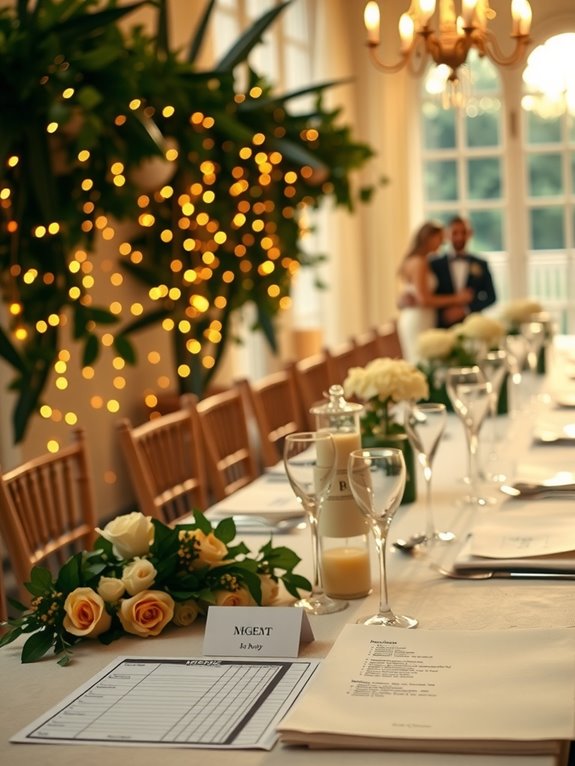
Your Houston wedding’s per-guest cost of $168–$205 aligns reasonably well with national figures when you account for regional differences. The national average per guest runs around $292, though geography and guest list size shift this number considerably.
Wedding scale affects total spending more dramatically than most couples realize. A 100-plus guest celebration typically reaches $43,000 total, while intimate gatherings of 1–50 guests average closer to $17,000. What drives these numbers. Guest count functions as your most powerful budget control. Cutting your list from 150 to 75 people saves over $15,000 without reducing quality—just the headcount.
Location multiplies costs across every category. New York City weddings average $88,000 total, whereas smaller markets keep expenses substantially lower. Your per-guest spending reflects two main factors: where you celebrate and how many people you invite. Since you’re planning in Houston, you occupy middle ground between major metropolitan costs and rural pricing, which positions your budget realistically for the region.
Wedding Season Savings: Best Months to Book
When you’re hunting for wedding deals, timing your booking matters just as much as where you book it. Off-peak months deliver substantial savings that directly impact your overall budget.
November through January offers the most significant price reductions. Venues typically reduce costs by 20–30% during winter months when client demand drops considerably. This pricing advantage applies across most vendor categories, from catering to photography services.
Weekday weddings present another strategic opportunity. Tuesday through Thursday bookings often cost 15–25% less than weekend slots, since venues have more availability and vendors face lower demand during those days. The trade-off involves potential guest attendance challenges, but the financial savings can be substantial.
Shoulder seasons in late spring and early fall offer moderate pricing before peak summer rates take effect. You’ll encounter better negotiating power during these slower periods compared to June through August, when premium pricing becomes standard across the industry.
Last-minute packages from certain venues can provide additional discounts for bookings made within three to six months of your event date. These offers typically apply when venues need to fill calendar gaps and are willing to reduce rates accordingly.
Spring and summer traditionally command the highest prices. Wedding professionals confirm that shifting your date strategically can free up thousands of dollars for other priorities like catering upgrades, enhanced photography packages, or entertainment options. The question becomes not whether you’ll save money by booking off-peak, but rather how you’ll allocate those savings across your remaining budget categories.
Hidden Costs Couples Miss: Service Fees, Gratuities, Taxes

You’re likely budgeting for the obvious costs—venue, catering, flowers—but service charges and gratuities can quietly inflate your final bill by thousands. Taxes alone can increase your base costs by 8-12 percent, depending on your location and vendor types. Many vendors don’t clearly itemize these fees upfront in their proposals, which means you might discover them only when reviewing final invoices.
The Knot’s wedding spending data reveals that couples who don’t account for these hidden expenses often face budget shortfalls of $2,000-$5,000 or more. What happens when you receive vendor invoices and suddenly see a 20 percent service charge added to your catering bill? Planning experts recommend building in a 10-15 percent financial buffer to cover these unexpected line items.
Here’s where the numbers get specific: If your catering bill totals $4,000, you might owe $800-$1,000 in service charges and gratuities combined. A venue charging $3,000 could tack on $600-$900 in mandatory facility fees and staffing costs. Photography packages often include gratuities that aren’t mentioned until the contract review stage.
Consider requesting itemized proposals from every vendor that clearly separate base costs, service fees, gratuity percentages, and applicable taxes before you sign anything. Ask whether service charges are mandatory or optional, since some vendors allow you to negotiate or decline certain fees. Building your buffer into the overall wedding budget—not just assuming you’ll find the money later—helps you avoid the stress of last-minute financial decisions.
Service Charges And Fees
Ever wonder why your final wedding invoice doesn’t match the quoted prices? Service charges and fees quietly inflate your costs beyond base quotes through vendor practices that span multiple categories.
Catering service charges typically range from 18–22% of food and beverage totals, often added automatically to your bill. Venue rental fees frequently include administrative charges and facility maintenance costs that aren’t always separated on initial quotes. Rental companies add surcharges for delivery, setup, and equipment handling, while bartender and server gratuities can add 15–20% to staffing line items.
Location matters significantly when calculating these additions. Urban venues charge steeper service percentages than suburban locations, sometimes reaching the higher end of ranges. Your caterer might build gratuities into the final bill, whereas your florist includes delivery fees as separate line items—creating inconsistency across vendors.
The Knot recommends budgeting a 10–15% contingency specifically for these hidden costs. Smart couples request itemized quotes upfront, clarifying whether charges are included in base prices or added at contract signing. This approach prevents budget surprises when final invoices arrive weeks before your wedding date.
Gratuities And Tax Implications
Gratuities and Tax Implications
When your final bill arrives, gratuities and taxes represent costs separate from your base vendor fees. Catering staff and service professionals typically expect 18–20% gratuities, though this percentage shifts based on your region and individual vendor agreements. Tax treatment varies significantly by location and service category—some items face taxation while others remain tax-exempt depending on local regulations.
Building a 10–15% contingency into your overall budget absorbs these secondary expenses without derailing your finances. This buffer accounts for regional variations in gratuity expectations and unexpected tax assessments that emerge during final reconciliation.
Tracking gratuity obligations and tax deadlines prevents last-minute scrambling for additional funds. Most venues provide itemized breakdowns showing which services include automatic gratuity charges and which require manual calculation at settlement. Review these documents carefully during your initial contract review rather than waiting until final payment.
How do you identify which vendors include gratuity in their quoted price versus those who add it separately? Ask directly during initial consultations. Some caterers bundle gratuity into their per-plate cost, while others list it as an additional line item. Understanding this distinction during proposal stages lets you compare vendors on equal footing and allocate your remaining budget accurately for other expenses like florals, music, or photography add-ons.
Real Wedding Cost Example: A 175-Guest Houston Fall Wedding
Real Wedding Cost Breakdown: A 175-Guest Houston Fall Wedding
What does a realistic wedding budget actually look like when you account for every expense? A 175-guest fall wedding in Houston, TX costs between $29,370 and $35,896, with one category consuming nearly two-thirds of your total spending.
Where Your Money Goes
The venue takes the lead at 64.6% of total expenses, which includes the location rental, food service, and bar setup. Photography and video services run $5,279–$6,453, while attire and accessories average $2,516–$3,076. The combined bar and food service costs between $10,077–$12,315.
Cost Per Guest and Beyond
Once you’ve locked in your guest count of 175 people, plan for approximately $168–$205 per additional attendee. This incremental pricing typically applies to food and beverage services, the primary variable cost in your budget.
Strategic Budget Allocation
Understanding how these numbers stack up helps you decide where to allocate resources based on your priorities. If photography matters most to you, you might select a more affordable venue to free up funds for a higher-end videographer. Conversely, if you’re passionate about the food and beverage experience, investing in a premium all-inclusive venue could streamline your spending while delivering the culinary quality you want. The venue’s dominance in your budget means this single decision ripples through everything else.
Seven Strategies to Cut 15–20% From Your Budget

Your venue typically consumes nearly two-thirds of your total budget, which means this is where meaningful savings begin. Since your guest list directly determines catering, rental, and staffing costs, reducing headcount from 175 to 140 people eliminates substantial variable expenses while maintaining service quality. This single decision can cut 8–12% from your overall spending.
Off-peak dates and less competitive locations historically reduce venue costs by 15–25%. A Saturday in January or February costs significantly less than peak season weekends, and venues in suburban areas charge considerably less than downtown properties. When comparing 2026 estimates against 2024 pricing, lock in major vendor agreements early to avoid rush fees that add 10–20% to final invoices.
Detailed budget tracking tools like Harpsen or similar platforms help you monitor expenses across all categories and flag spending that exceeds your allocations. Checking these weekly prevents small overages from compounding into major budget problems.
Consider swapping expensive additions for interactive experiences that deliver memorable value at lower costs. Lounge setups with lawn games, photo booths, or craft stations typically run $800–1,500 compared to $3,000–5,000 for high-end entertainment upgrades. These alternatives engage guests while staying within tighter spending limits.
Your Planning Timeline: When to Book What

Timing your vendor bookings strategically separates couples who secure their preferred professionals from those who accept whoever remains available. Your budget timeline directly determines which vendors fit within your $292 average per guest rate. Since venue and catering typically consume over 50% of total wedding costs, booking these services 12–14 months in advance gives you access to premium options and better pricing.
The booking sequence works like this:
Months 12–14: Venue and catering
Lock down these two largest expenses first. Premium venues often book 18 months ahead during peak seasons, so waiting past 14 months significantly limits your choices. Your catering partner needs equal lead time to secure your preferred menu options and service style.
Months 10–12: Photography, videography, and florals****
These vendors shape how your wedding looks and feels in lasting ways. Top photographers typically maintain full schedules by month 10, particularly for popular dates like Saturdays in spring and fall. Florists appreciate longer timelines because they coordinate with seasonal availability and can source specific flowers.
Months 6–8: Hair, makeup, and entertainment
While these vendors offer more flexibility than the earlier bookings, securing them six to eight months out prevents conflicts on your date. Entertainment vendors particularly benefit from advance notice if they need to learn specific songs or arrange special performances.
Months 3–4: Final vendor confirmations****
Use this window to nail down remaining details with all vendors and address any questions before your wedding date arrives.
Starting early prevents schedule conflicts and allows you to work within realistic budget parameters throughout your planning process.
Wedding Budget Checklist: Don’t Forget These Details
What separates couples who stay on budget from those who don’t? A thorough checklist and disciplined tracking throughout planning. Your venue deserves top priority since it typically consumes 64.6% of your total budget, ranging from $18,961 to $23,175. Photography should be locked in before booking other vendors, as this category claims 18.0% of expenses, or $5,279–$6,453.
Beyond these anchors, calculate per-guest costs of $168–$205 per person to understand your true financial scope. Create separate line items for frequently overlooked categories: bakery services at $650–$794, attire between $2,516–$3,076, and rentals ranging from $2,393–$2,925.
The real difference between staying on budget and overspending comes down to documentation. Track every vendor commitment in writing, including dates, deliverables, and payment schedules. This practice prevents misunderstandings that lead to unexpected charges or service gaps. When you systematize these elements early, you’ll identify budget gaps before they become problems rather than discovering them during final payments.