
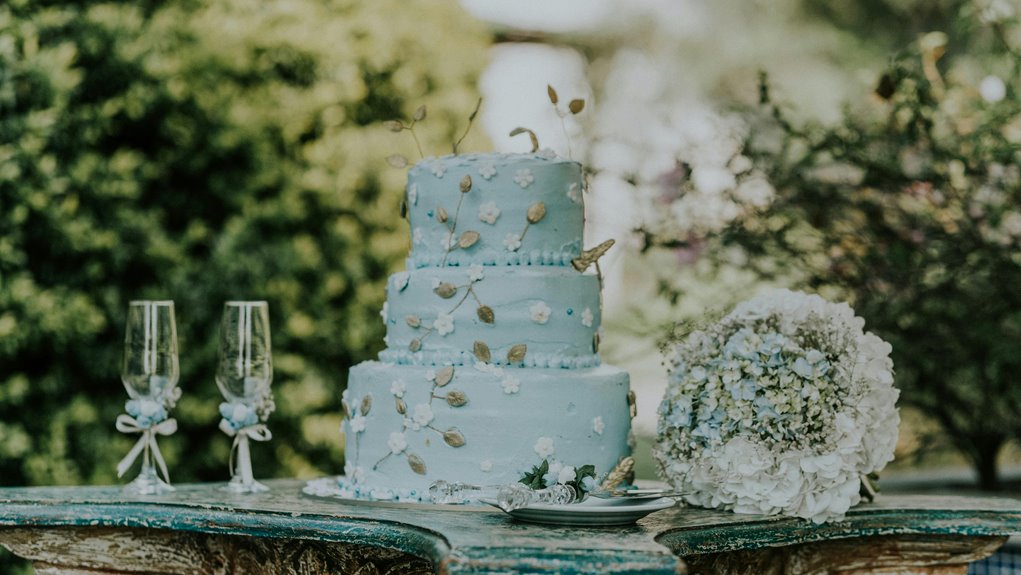
Wedding cake costs typically range from $300 to $700, depending on several interconnected factors that go into your baker’s final quote. The per-slice pricing structure breaks down fairly predictably: buttercream bases start around $4 per slice, while fondant coverings run $5 per slice for basic designs. When you add decorative elements like intricate piping, handcrafted sugar flowers, or specialty fillings, expect to pay $8–$12 per slice instead.
Your location significantly affects pricing, with urban bakeries charging considerably more due to higher rent and labor costs. A fondant cake in a major city might cost substantially more than the same design from a rural baker, who operates with lower overhead expenses. Why does geography matter so much? Bakeries in densely populated areas simply have bigger expenses to cover.
Several additional charges frequently appear on final invoices beyond the cake itself. Delivery and setup services add to your total, as do custom flavor requests or dietary accommodations like gluten-free or vegan options. Guest count remains the primary driver of overall cost, since most bakeries calculate pricing either per serving or as a tiered structure based on the number of attendees you’re feeding.
When comparing baker quotes, ask specifically about what’s included in their base price and what carries extra fees. Understanding these cost components helps you evaluate whether a quote represents fair value for your budget and wedding vision.
What’s the Average Cost of a Wedding Cake?
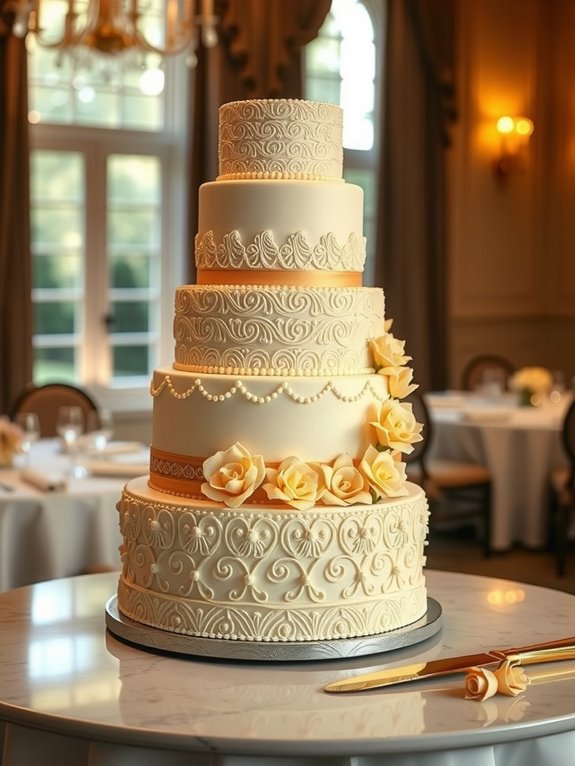
Average Wedding Cake Costs and What Influences Pricing
Most couples allocate between $300 and $700 for their wedding cake, with the national average settling around $500. Your per-slice expense typically ranges from $4 for buttercream designs to $5 for fondant-covered options, though your guest count and aesthetic preferences ultimately determine the final bill.
Breaking Down Per-Slice Pricing
The price per slice varies based on cake style and decoration level. Buttercream cakes sit at the lower end of the spectrum, while fondant-covered designs command higher rates. A 100-guest wedding with $5 per-slice fondant cakes costs $500, whereas the same guest count with buttercream designs runs around $400. Regional differences also matter—urban bakeries typically charge more than rural counterparts.
Design Complexity Drives Cost Increases
Intricate details and custom decorations substantially impact your final price. Simple, single-tier designs with basic frosting cost less than multi-tier cakes featuring hand-painted elements, sugar flowers, or personalized toppers. What specific design elements are you drawn to? Answer this question early to understand where your budget needs flexibility.
Service Inclusions in Baker Quotes
Many bakeries include delivery, setup, and initial consultations within their quoted prices. Specialty finishes like metallic edging, custom printing, or non-traditional flavors typically incur additional fees. Always clarify what’s covered versus what costs extra before signing contracts.
Budget-Stretching Alternatives
Consider pairing a smaller display cake with sheet cakes for cutting and serving. This approach reduces expenses while maintaining an elegant presentation. Simpler designs without elaborate decoration also preserve funds for other wedding priorities.
Why Guest Count and Cake Size Drive the Price?
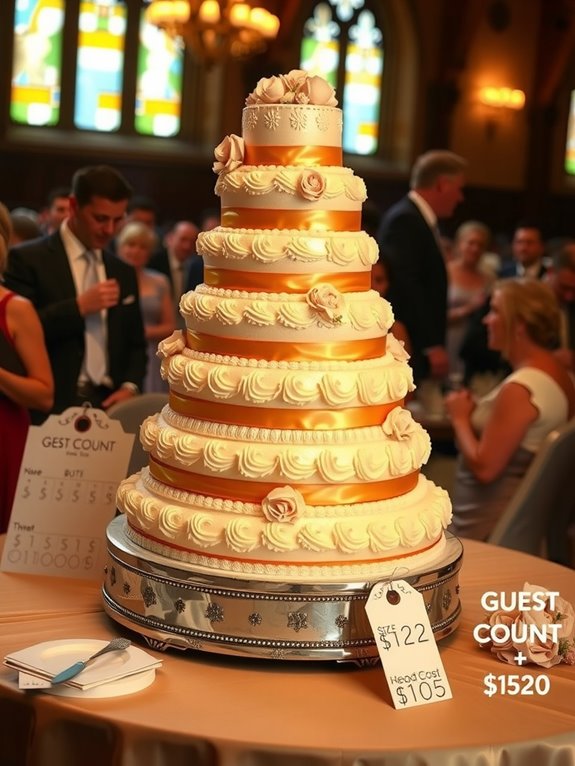
Your guest count directly determines how many cake slices you’ll need, which shapes your baker’s pricing and design strategy. The average wedding hosts around 117 guests, requiring multi-tiered cake specifications rather than a single 8-inch round that serves only 15 people. Understanding your per-guest serving requirements helps you budget accurately and decide whether you’ll need supplemental sheet cakes or strategic half-slice portions.
A standard sheet cake serves 24 to 48 people depending on slice size, while a three-tier wedding cake typically serves 75 to 100 guests with 1.5-inch slices. If your guest count falls between these numbers, bakers often recommend a two-tier main cake paired with a sheet cake to fill the gap. This combination approach costs less than stacking additional tiers while covering your full headcount efficiently.
Pricing scales predictably with cake size. A two-tier cake with buttercream generally costs between $300 and $500, while a three-tier cake with fondant and custom details ranges from $500 to $900. Adding a supplemental sheet cake typically adds $75 to $150 to your total. The labor involved in stacking, transporting, and assembling larger structures increases costs beyond just the ingredient amount, which is why bakers price per tier rather than by total weight alone.
Serving Requirements Per Guest
Guest count is the main driver of wedding cake pricing, and it’s straightforward math once you understand the basics. Most bakers price cakes by the slice, using a simple 1:1 ratio that matches your guest count. An 8-inch round cake serves approximately 15 people, which means weddings with 117 guests require careful design planning.
Multi-tier cakes work well for moderate gatherings, but larger celebrations benefit from a hybrid approach. Many bakers recommend pairing a display cake with sheet cakes stored in the kitchen. This strategy lets bakers cut portions from the sheet cake while guests see an impressive tiered design, combining visual impact with practical serving capacity.
Half-slice portions represent another option worth discussing with your baker. Some guests prefer smaller pieces, especially when multiple desserts appear on your menu. Sheet cakes can match your main cake’s flavor profile, so guests won’t notice the difference between slices cut from the display versus the backup supply.
This combination approach serves several hundred guests affordably while maintaining consistent quality and presentation throughout your reception.
Multi-Tiered Cake Specifications
Planning a multi-tiered wedding cake involves straightforward mathematics that directly impacts your overall budget. Your guest count determines tier requirements, since an 8-inch round cake serves approximately 15 people. With 110 guests, you’ll need multiple tiers stacked strategically to serve everyone while managing costs effectively.
Most bakers charge between $4 and $5.50 per slice at this guest level, depending on design complexity and local market rates. Each additional tier increases labor, ingredient costs, and decorator time significantly. A three-tier cake might cost $300 to $450, while a four-tier design could reach $500 to $700 before any specialty elements.
Consider supplementing your tiered cake with sheet cakes to serve larger crowds without proportionally increasing expenses. This approach lets you maintain an elegant tiered centerpiece while keeping per-slice costs lower overall. Sheet cakes typically cost $2 to $3.50 per slice, offering a practical alternative for feeding additional guests. A 18×26-inch sheet cake serves roughly 60 people and might cost $150 to $250, depending on frosting type and fillings.
When meeting with bakers, ask about their pricing structure for specific tier combinations. Do they charge by total servings or by individual tier? Some bakers offer package deals that bundle tiered and sheet cakes together at reduced rates. Understanding these pricing models helps you compare quotes accurately across different vendors.
Buttercream vs. Fondant: How Frosting Affects Your Cake Cost
Wedding cake pricing shifts noticeably based on your frosting selection. Buttercream options typically start at $4 per slice, while fondant varieties begin around $5 per slice. This difference compounds quickly across your guest count—a fondant cake for 100 guests costs roughly $100 more than buttercream before accounting for design complexity.
Why does this price gap exist? Buttercream requires less specialized equipment and training to apply, which translates to lower labor costs for bakers. Fondant demands precision tools, climate-controlled workspaces, and additional expertise to achieve that signature smooth finish. A baker spends considerably more time smoothing fondant by hand than spreading buttercream with a spatula.
The frosting type influences your base price independent of cake size or flavor complexity. A two-tier cake with chocolate buttercream costs differently than that same two-tier cake finished in fondant, even when both designs are equally simple. Your baker’s time investment shifts based on the frosting medium you select.
Specialty details like piped borders, textured finishes, and custom toppers compound pricing differently depending on your frosting choice. Buttercream allows bakers to layer colors and create dimensional piping relatively quickly. Fondant requires more meticulous hand-work for similar effects, pushing labor time higher. Some decorative techniques work better on one frosting than the other—intricate sugar flowers stick reliably to fondant but may wilt faster on buttercream in warm venues.
If budget constraints matter in your planning, switching from fondant to buttercream delivers meaningful per-slice savings. You sacrifice the polished, flawless appearance fondant provides, but you gain flavor depth and texture variety that many guests actually prefer tasting.
Design Complexity’s Impact on Wedding Cake Pricing
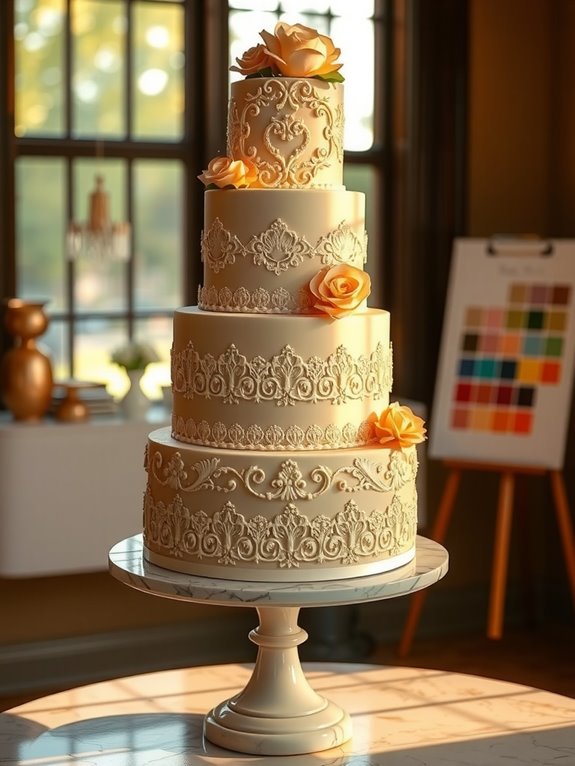
Design complexity fundamentally affects your wedding cake budget in ways that extend well beyond your frosting selection. When you add intricate piping work, handcrafted sugar flowers, or edible embellishments such as gold leaf, you’re paying for specialized labor and premium materials. A baker skilled in delicate piping might charge $3 to $8 per serving above the base price, while custom sugar flowers can add $50 to $200 depending on quantity and detail level.
What happens when you choose a different approach? Opting for a simpler design—perhaps smooth buttercream with minimal decoration—typically costs $2 to $4 per serving. Many couples reduce expenses by displaying a decorated two-tier cake for cutting and photography while serving guests from budget-friendly sheet cakes positioned elsewhere. This hybrid approach often cuts your cake budget by 30 to 40 percent while maintaining visual impact for important moments.
Each decorative element compounds the total cost. Edible gold leaf runs approximately $15 to $25 per application, hand-piped borders require 20 to 45 minutes of additional labor per tier, and custom sugar flowers involve separate artisan work outside your baker’s standard pricing. Your baker can walk you through which decorations require the most time investment during your initial consultation, helping you identify where to simplify without sacrificing the overall aesthetic you’re seeking.
Frosting Type and Base Price
Your frosting choice determines the starting cost of your wedding cake before any other factors enter the equation. Fondant typically costs about $5 per slice, while buttercream averages around $4 per slice—a difference that compounds across a 100-slice cake. This one decision affects your overall budget immediately, regardless of the cake’s size or design complexity.
Fondant provides a polished, durable finish that withstands heat and humidity better than buttercream. However, many guests find its taste artificial or overly sweet compared to traditional buttercream’s flavor profile. Buttercream, conversely, offers better taste but requires more frequent touch-ups during outdoor summer receptions.
Specialty frostings like Swiss meringue or ermine push costs higher, sometimes reaching $6 to $8 per slice when combined with intricate piping work or edible gold leaf details. A hybrid approach—fondant accents applied over a buttercream base—gives you visual polish without the full fondant expense. For instance, a fondant ribbon border with fondant flowers on buttercream layers costs less than complete fondant coverage while maintaining sophisticated aesthetics.
Your frosting selection shapes both what guests experience taste-wise and what your budget accommodates. Rather than viewing frosting as purely decorative, recognize it as the foundation that influences flavor satisfaction, structural integrity, and final price simultaneously.
Decorative Details Drive Costs
Beyond frosting choice, your cake’s exterior design becomes the second major price driver, where costs can escalate significantly based on decoration complexity. Fondant-covered cakes typically cost $5 per slice, while buttercream-only options start around $4 per slice—that $1 difference reflects the labor intensity involved.
Handmade sugar flowers, elaborate piping work, and edible details push prices higher through skilled labor and specialized materials. When you add elements like edible gold leaf or custom toppers, you’re paying for artisanal craftsmanship that requires training and precision. A baker might charge $8 to $12 per slice for highly decorated fondant cakes with multiple decorative techniques applied.
Bespoke design requests further increase your total. Custom fillings, unique flavor combinations, or intricate hand-painted patterns each require additional planning and execution time from your baker. Consider decoration as your cake’s visual signature—the more specific your vision, the more investment you’ll make in bringing it to life.
Design Simplicity Saves Budget
How much can a cleaner aesthetic reduce your wedding cake expenses? A buttercream-only design starts around $4 per slice, while minimalist decorations cost significantly less than ornate alternatives. Skipping handmade sugar flowers and intricate piping work represents real savings on both labor and materials.
Design complexity directly impacts your final bill. Simple fondant cakes run approximately $5 per slice, but multi-tier cakes with four or five layers require substantially more time and ingredients. The labor involved in stacking, leveling, and decorating each tier compounds quickly with added height.
A practical strategy involves displaying a smaller, beautifully designed cake alongside sheet cakes or cupcakes. This approach achieves a polished visual presentation while keeping your per-slice costs manageable across the entire dessert service. You’re essentially using one statement piece rather than requiring an elaborate multi-tier creation to serve all your guests affordably.
Custom Flavors and Fillings: Do They Cost More?
When designing your wedding cake, flavor choices directly affect both your taste preferences and your budget. Standard vanilla or chocolate costs considerably less than specialty flavors because bakers source basic ingredients from regular suppliers and complete preparation quickly. Specialty options—lavender honey, earl grey, bourbon vanilla bean—require sourcing premium or unusual ingredients, which adds to ingredient costs and kitchen preparation time.
Custom fillings demand different considerations entirely. Buttercream remains the most affordable option because bakers prepare it with basic ingredients and standard techniques. Mousse fillings require precise temperature control, special equipment, and careful handling during assembly and transport. Ganache sits between buttercream and mousse in terms of complexity and cost. Fruit compotes involve the most intensive labor since they require cooking, straining, and precise consistency management to prevent cake sogginess.
| Filling Type | Complexity | Price Impact |
|---|---|---|
| Buttercream | Low | Minimal |
| Ganache | Medium | Moderate |
| Mousse | High | Moderate-High |
| Fruit Compote | Medium-High | High |
Before finalizing your flavor selections, request a detailed pricing breakdown from your baker. Ask how custom flavors affect your per-slice cost and whether certain flavor-filling combinations carry additional charges. Some bakers charge flat fees for custom options, while others add percentage increases to base pricing. Understanding these specifics prevents unexpected costs during final consultations when changes become more difficult and expensive to accommodate.
What Labor, Delivery, and Setup Fees Cost
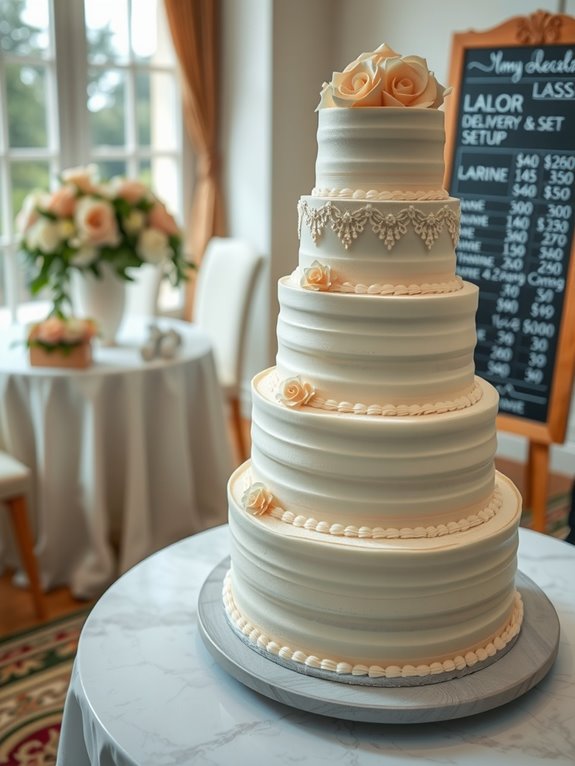
Your wedding cake’s price extends well beyond the cake itself—labor, delivery, and setup costs typically account for 30-50% of your total bill. When you hire a cake designer, you’re paying for their years of training, technical skill, and time spent on your specific creation. A baker might spend 8-12 hours on a three-tier custom cake, from design consultation through final execution.
Delivery fees vary based on distance and complexity. Local deliveries within 15 miles might cost $50-150, while venues 30+ miles away could run $200-400 or higher. These charges cover more than just transportation—they include professional handling, temperature control during transit, and liability insurance. Your baker needs to protect the cake during vehicle movement and account for potential traffic delays.
Setup services are where precision matters most. Your baker assembles tiers using dowels and internal supports, positions the cake on decorative stands, and verifies structural stability before leaving your venue. This process typically takes 30-45 minutes and requires coordination with your venue’s banquet staff about table placement, electrical access for refrigeration if needed, and cake-cutting logistics.
Stands, toppers, and serving utensils represent additional line items on many invoices. Premium cake stands might add $25-75, fresh flower installations $40-100, and specialty cake servers or cutting service $50-150. Some bakers include these basics in their base price, while others separate them out. Ask your baker for an itemized quote that breaks down exactly what you’re receiving.
What’s Included in Your Wedding Cake Price
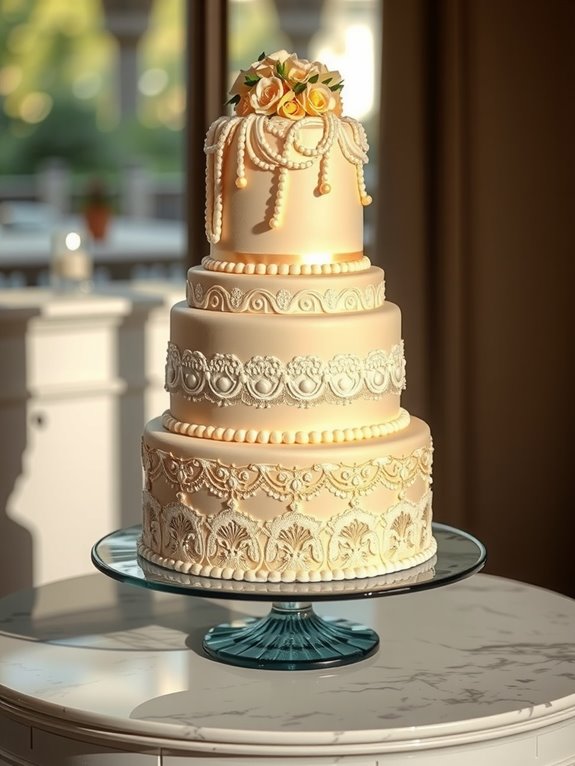
Ever wonder why two bakers quote vastly different prices for seemingly identical cakes? The answer lies in understanding what’s actually bundled into your final bill. Most professional bakers include the cake itself, design consultation, tastings, delivery, and venue setup in one comprehensive price, along with cake cutting utensils at no additional charge.
The variance in pricing often comes from what falls outside the standard package. A baker quoting $400 might include elaborate sugar work and multiple flavor options, while another at $600 could add custom cake stands, preservation tiers for anniversaries, or extended setup time. Requesting a detailed breakdown helps you see exactly where your money goes.
| Item | Usually Included | Sometimes Included | Often Extra | Details |
|---|---|---|---|---|
| Cake design | Yes | — | — | Consultation required before booking |
| Tastings | Yes | — | — | Multiple flavors sampled before final order |
| Delivery/setup | Yes | — | — | Bundled into the quoted price |
| Cake stand | No | Sometimes | Yes | Rental ($25-75) or purchase option |
| Anniversary tier | No | Sometimes | Yes | Preservation and storage costs apply |
When you get a quote, ask your baker to itemize each component. Custom flavors beyond standard vanilla or chocolate might add $0.50 to $1.50 per slice. Elaborate fondant designs, hand-painted details, or structural elements like fresh flower installations typically cost $75 to $300 extra depending on complexity.
The delivery radius matters too. Most bakers include setup within a 15-20 mile radius, but venues further away might incur mileage fees ranging from $1 to $3 per mile. Weekend weddings occasionally cost more than weekday events, and rush orders placed within two weeks of your date often carry 15-25% surcharges.
Popular Add-Ons That Raise Your Cake Cost
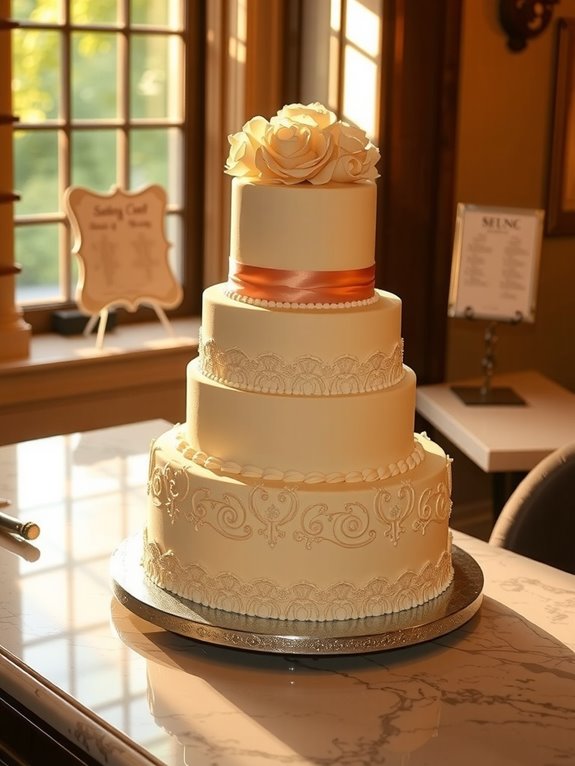
What actually separates a $300 cake from one priced at $600 or beyond? The answer lies in specific additions that require specialized skills and materials.
Handmade Sugar Flowers and Botanical Details
Handmade sugar flowers represent one of the most labor-intensive cake embellishments available. Bakers craft each petal individually using gum paste or fondant, a process that takes considerably longer than printing designs onto fondant sheets. A single sugar peony might require two to three hours of work, yet appears as one element among many on your finished cake. This labor-intensive approach costs between $3 and $8 per flower depending on complexity and baker experience. Edible gold leaf application adds another $50 to $150 to your total, as this requires careful handling and precise placement by hand.
Handmade sugar flowers demand hours of meticulous work per element, commanding premium pricing that quickly elevates your cake’s final cost.
Delivery, Setup, and Logistics
Transportation costs depend heavily on distance and venue difficulty. A 15-mile delivery might add $75 to $150, while a 50-mile trip could reach $300 or more. Venues with challenging access—multilevel buildings, outdoor locations requiring refrigeration support, or venues with limited delivery windows—command premium fees. Setup services that include assembly on-site, tier stacking, and decoration arrangement typically run $150 to $400 depending on cake complexity and number of tiers.
Specialty Presentation Components
Cake stands, premium toppers, and coordinating ribbon packages contribute $75 to $200 to your final bill. Acrylic stands cost less than vintage wooden options, while custom-engraved toppers exceed standard designs in both price and personalization value. These accessories accumulate charges quickly across your invoice.
Use Sheet Cakes to Cut Total Cost
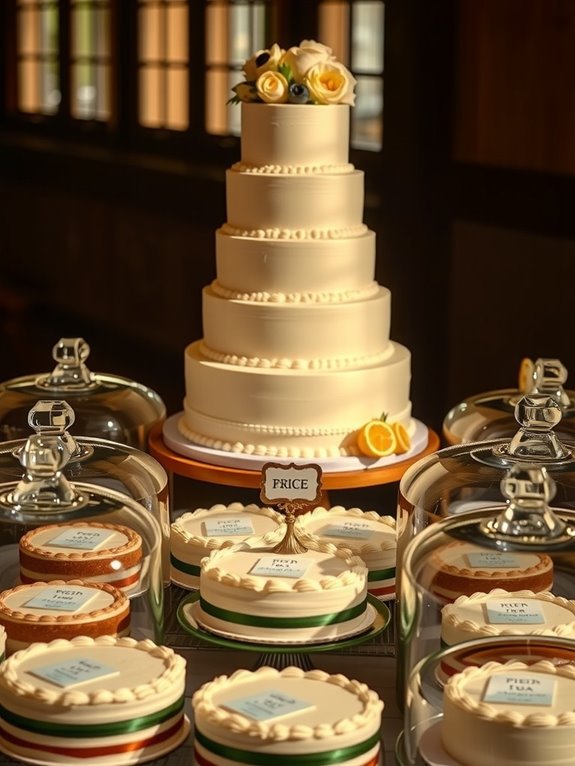
Want a beautiful tiered cake for photos without the price tag of a massive single cake? Sheet cakes paired with your display cake offer a practical solution.
Here’s how it works: your tiered cake serves as the visual focal point during the ceremony and reception, while sheet cakes baked and stored behind the scenes handle most of the actual servings. This hybrid approach costs significantly less than one oversized traditional cake because bakers price sheet cakes per slice, creating predictable costs that match your guest count directly.
The financial advantage is measurable. A custom tiered cake for 150 guests might cost $600 to $1,200, while the same visual display paired with sheet cakes could run $400 to $800 total. You maintain the cutting cake experience—that moment where you and your partner cut the first slice together—without compromising on taste or presentation.
The logistics matter too. Sheet cakes can be prepared earlier and refrigerated without the structural concerns that come with enormous single cakes. This flexibility gives your baker more time to focus on the display cake’s design details, from piping techniques to fondant work.
Your centerpiece remains photogenic and ready for the first dance backdrop or bouquet toss photos. Meanwhile, your guests receive quality cake without you carrying the expense of an impractical serving size that would sit unused on a table.
When Should You Book Your Baker and Request Quotes?
When Should You Book Your Baker and Request Quotes?
Timing your baker search matters more than you might think. Most couples secure their cake maker at least six months before the wedding date, which gives you access to preferred bakers and allows time for tastings without rushing through decisions.
Once you’re ready, request wedding cake quotes from multiple bakers to compare pricing fairly. Ask each baker for a detailed price breakdown that includes the cake itself, delivery fees, setup charges, and any additional costs like specialty stands or long-distance travel fees. This approach prevents surprise expenses from appearing on your final invoice.
Several factors significantly impact your final cake cost. Design complexity, tier sizes, and frosting types—fondant versus buttercream—each carry different price tags. A three-tier buttercream cake for fifty guests typically costs between $250 and $500, while the same design in fondant might run $350 to $650 depending on your location and baker experience.
Money-Saving Tips Without Sacrificing Quality
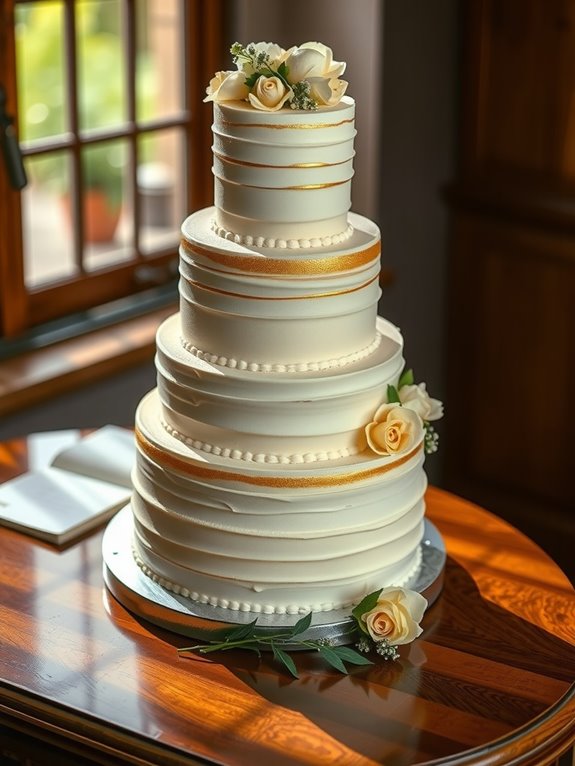
A tiered wedding cake sounds traditional, but it’s not your only option for creating a dessert experience your guests will enjoy. Sheet cakes paired with smaller display pieces reduce your overall spending considerably while maintaining both elegance and flavor. This approach typically costs 30-40% less than a multi-tiered design, according to wedding industry pricing data.
Cupcakes and dessert tables offer practical alternatives that provide the variety most guests appreciate. These options allow you to work with multiple bakeries or mix homemade items with professional pieces, further stretching your budget. Have you considered how much variety might actually enhance your reception compared to a single cake?
When it comes to decorating, expensive sugar flowers and intricate fondant work add significant costs to your final bill. Purchasing your own cake topper—whether a simple wooden design or personalized piece—gives you control over that expense while maintaining visual appeal.
Comparing quotes from multiple vendors matters more than selecting the first baker you contact. Cottage bakeries and independent decorators often charge 20-35% less than established wedding cake businesses while delivering comparable quality. These smaller operations typically have lower overhead costs and more flexible scheduling.
The timing of your order affects your pricing substantially. Planning six months in advance secures standard rates, while booking within two months usually triggers rush fees ranging from 15-25% above regular pricing. This advance planning protects both your budget and your ability to negotiate with preferred vendors.
Why Location Affects Wedding Cake Pricing
Your wedding cake quote shifts dramatically based on geography, since regional market rates, local living expenses, and the number of competing bakeries all influence your final price. In expensive metro areas such as New York or San Francisco, you’re choosing among numerous established bakeries while facing higher operational costs. Rural regions, by contrast, frequently feature home-based bakers offering significantly reduced pricing.
Where you’re hosting the reception matters equally. Delivery fees and logistics for difficult-to-reach venues can add several hundred dollars to your total cost. A baker traveling to a downtown hotel with loading access faces far fewer complications than one navigating a barn venue down a gravel road.
Consider the specific breakdown: metropolitan areas typically charge $4 to $8 per slice for custom cakes, while rural bakers might offer $2 to $4 per slice. Affluent suburbs often fall somewhere in the middle, ranging from $3 to $6 per slice. These prices assume a basic buttercream design; specialty flavors, structural complexity, or dietary accommodations push costs upward across all regions.
The venue’s location also determines whether your baker charges travel fees, setup charges, or coordination premiums. Some bakeries build delivery into their per-slice pricing, while others charge $50 to $200 as a separate line item depending on distance. Asking whether your baker’s quote includes delivery, setup, and cutting services prevents unexpected charges later.
Regional Market Price Variations
When you’re shopping for a wedding cake in Manhattan versus rural Montana, you’re not just paying for flour and frosting—you’re paying for geography itself. Your location directly impacts what you’ll spend because local labor costs, ingredient availability, and demand shape pricing structures.
| Region | Per-Slice Cost | Design Complexity | Typical Guest Count |
|---|---|---|---|
| Major Urban Centers | $8–$15 | Elaborate, multi-tiered | 150–300 |
| Suburban Areas | $5–$10 | Moderate detail | 75–150 |
| Rural Markets | $3–$7 | Simple designs | 50–100 |
| High-Tourism Zones | $10–$18 | Highly intricate | 100–250 |
| Mid-Size Cities | $6–$11 | Mixed styles | 80–180 |
Urban bakeries charge premium rates because they navigate higher overhead expenses and customer demand for sophisticated designs. A New York City baker working in a $5,000-per-month commercial kitchen passes those costs to clients through per-slice pricing of $8–$15. Meanwhile, a rural Montana baker operating from a home kitchen with minimal rent can offer cakes at $3–$7 per slice by keeping operational expenses low.
High-tourism zones like Las Vegas and Miami command even steeper prices, ranging from $10–$18 per slice. These areas attract destination weddings where couples expect intricate work and are willing to pay accordingly. The competition between bakeries remains fierce, but so does the clientele’s budget.
Suburban markets split the difference. You’ll find per-slice costs between $5–$10 with moderate design detail suited to weddings of 75–150 guests. These areas offer reasonable pricing without sacrificing quality because bakeries balance reasonable overhead against strong local demand.
Regional variations also reflect ingredient sourcing. Urban centers have access to specialty suppliers for imported fondant, exotic flavorings, and premium butter, which increases material costs. Rural areas rely on standard grocery suppliers, naturally limiting both expenses and design possibilities.
Guest count expectations shift by region too. Major cities typically see 150–300 guests, requiring larger cakes and complex structural engineering. Rural weddings average 50–100 guests, allowing bakers to create simpler, less labor-intensive designs while still meeting client expectations.
Cost Of Living By Area
Cost Of Living By Area
Why does a wedding cake cost nearly double in San Francisco compared to Des Moines? The answer lies in regional pricing driven by cost of living differences. Metropolitan areas command higher wedding cake quotes because ingredient sourcing, skilled labor availability, and venue delivery logistics substantially increase baker expenses.
San Francisco bakers charge premium rates reflecting elevated commercial rent and wages. A baker operating in San Francisco might pay $3,000 to $5,000 monthly for storefront space, while a Des Moines baker might pay $800 to $1,200. These overhead differences directly translate to cake pricing, where a San Francisco wedding cake might cost $400 to $600 versus $200 to $300 in rural Iowa.
When comparing quotes across regions, you’re really comparing local economic conditions and operational realities. A baker’s price reflects their area’s tax requirements, regulatory compliance costs, and what workers earn in their local labor market. Rural bakers operate with lower overhead, resulting in significantly reduced per-slice pricing. Understanding these geographic factors helps explain why your neighbor’s wedding cake price differed dramatically from another couple’s quote. Location fundamentally shapes what you’ll pay for the same product and service level.
Local Baker Competition Dynamics
The number of bakers operating in your area significantly affects pricing and what you can negotiate. In saturated markets with many competitors, bakers differentiate through premium customization and aggressive pricing to win business. You’ll encounter more design options across multiple price points, giving you genuine leverage during negotiations. Areas with fewer bakers operate differently—limited competition means they can maintain higher prices without offering substantial discounts or incentive programs.
| Market Type | Competition Level | Typical Pricing | Customization Options |
|---|---|---|---|
| Major Metro | High | $3–$8/slice | Extensive |
| Suburban | Moderate | $2.50–$6/slice | Moderate |
| Rural | Low | $2–$4/slice | Limited |
| Emerging Urban | Growing | $3–$7/slice | Expanding |
How does your local market structure actually work? In major metropolitan areas, you might find 15 to 20 qualified bakers within a reasonable distance. This density creates natural price competition and encourages bakers to offer elaborate design work, specialty flavors, or dietary accommodations to stand out. Suburban markets typically have 5 to 10 established bakers, reducing your comparison options but still providing reasonable choice. Rural areas often have only one or two bakers, which means pricing flexibility becomes minimal—you either work with what’s available or travel significant distances to other towns.
Understanding your specific market position helps you set realistic expectations for quotes. Couples who compare estimates from at least three bakers gain clearer perspective on what represents fair pricing versus overcharging. This comparison process also reveals which bakers offer the customization level you actually want, preventing situations where you pay premium prices for services you didn’t specifically request.
Alternative Desserts and Complement Options
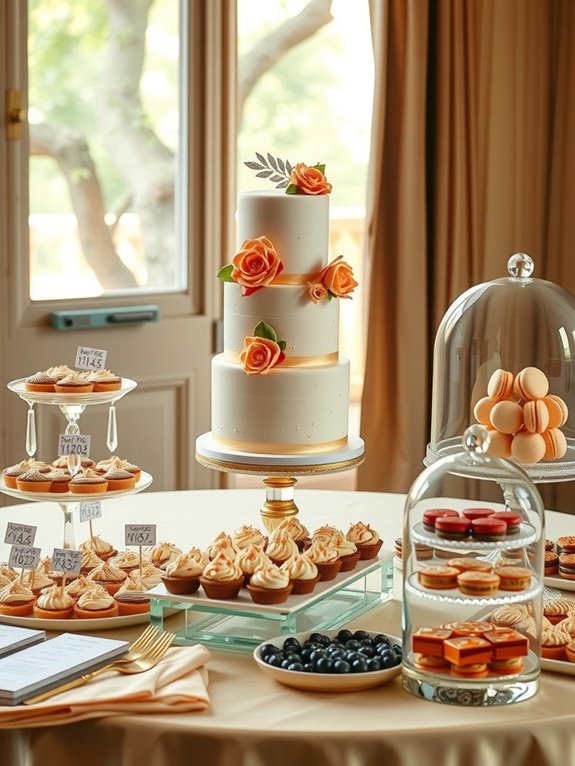
Want to offer your guests something beyond a single cake option?
About 54% of couples select dessert alternatives that work alongside their main cake. Cupcakes provide a practical, scalable choice at roughly $3 per cupcake, typically paired with a smaller cutting cake reserved for ceremony photos. A dessert table featuring bite-sized selections like cake pops, cookies, or pastries accommodates various dietary preferences while potentially reducing your per-serving costs.
Groom’s cakes let you incorporate themed designs that reflect personal hobbies or interests. Whether you’re serving 100 or 300 guests, mixing different mini desserts maintains variety across your reception without straining your budget.
Consider these specific options when planning your dessert strategy:
- Cupcake displays work well for cocktail hours or late-night snack stations
- Dessert tables reduce plating demands on your catering staff
- Groom’s cake selections range from sports themes to hobby-based designs
- Dietary accommodations like gluten-free or vegan options fit naturally into mixed dessert approaches
These complement options create layered dessert experiences that guests remember beyond the traditional cake service.