


You’ll work with several key professionals who each contribute specific expertise to your venue’s appearance. The wedding decorator serves as your primary design lead, managing the overall aesthetic vision and coordinating with other vendors. Florists create centerpieces and floral installations tailored to your color scheme. Lighting specialists design and install systems that control ambiance throughout different areas. Your day-of coordinator handles the execution timeline, ensuring each element appears when scheduled.
Wedding decorators typically charge between $1,500 and $5,000 for their services. This investment covers design consultation, vendor coordination, and hands-on work during setup and teardown—usually six or more hours on your wedding day. What does that fee actually include? The decorator oversees installation of all décor elements, monitors how everything looks throughout the event, and makes adjustments in real time if needed.
Hiring professionals requires larger upfront spending than a DIY approach, but the payoff comes from having someone accountable for the complete vision. You’re purchasing their experience in solving unexpected problems, their established relationships with reliable vendors, and their ability to execute details while you focus on guests and ceremonies. A decorator knows which florists deliver quality arrangements, which lighting company owns equipment that performs reliably, and how long setup actually takes for your specific venue layout.
Five Roles in Wedding Decoration
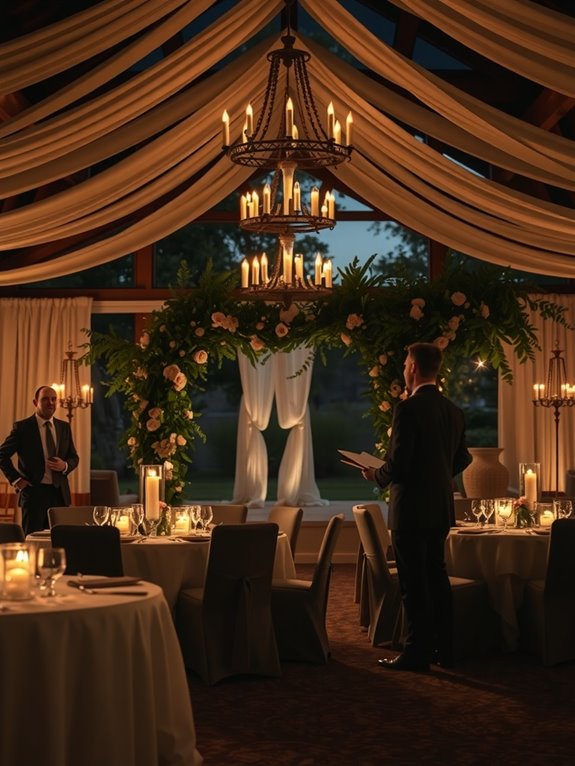
How does an empty venue become a coordinated celebration space? Multiple skilled professionals work together, each handling specific responsibilities that build on one another.
Your wedding decorator serves as the creative lead, designing both ceremony and reception layouts while managing the overall aesthetic direction. This role requires budgeting for decor costs, which typically range from $1,500 to $5,000 depending on venue size and design complexity, and overseeing installation and removal. The decorator coordinates with florists for centerpieces and installations, lighting specialists for ambient effects, and rental companies providing linens and furniture.
Your wedding decorator serves as the creative lead, managing aesthetic direction and coordinating with florists, lighting specialists, and rental companies.
The day-of coordinator handles on-site execution, adjusting setups as circumstances change and confirming that all vendors work compatibly. Rather than designing new concepts, this person manages timeline logistics and problem-solving during your event. “The coordinator’s role is really about real-time management,” explains a seasoned wedding planner. “Things shift, vendors run late, and someone needs to keep the day flowing smoothly.”
Florists contribute botanical elements through carefully designed centerpieces and installations, while lighting specialists use strategic illumination to establish mood throughout the space. Rental companies supply the foundational decor pieces—linens, chairs, tables, and decorative accents—that define the room’s bones.
Most venues provide basic setups included in your rental fee, typically covering table placement and standard linens. Professional decorators, however, bring customized design and vendor management that reduces your planning burden. The difference between in-house setups and hired decorators often comes down to personalization level and coordination complexity rather than a single transformative element.
What Each Role Costs and How Long It Takes
When budgeting for wedding decorations, understanding who handles what and what they charge becomes essential to your planning timeline. Professional decorators typically cost $1,500–$5,000+, requiring weeks of consultation and design work before the big day arrives. Day-of coordinators run $500–$2,000, focusing primarily on setup and real-time adjustments throughout your event.
DIY decorating saves money but demands substantial personal time—often 40+ hours for planning, sourcing, and installation combined. That’s roughly equivalent to a full-time job for a week, so consider whether your schedule allows that commitment. Friends and family can contribute at minimal cost, though you’ll need to provide clear instructions and maintain realistic expectations about their availability and experience level.
Venue teams often include basic in-house decorations as part of your rental fee, which streamlines logistics considerably. Your final pricing depends on three main factors: the complexity of your design, your guest count, and how broad your vision scope extends. When calculating total costs, factor in both vendor fees and your personal time investment to determine what balance works for your wedding vision and budget.
Choosing the Right Decorator: Budget, Vision, and Timeline
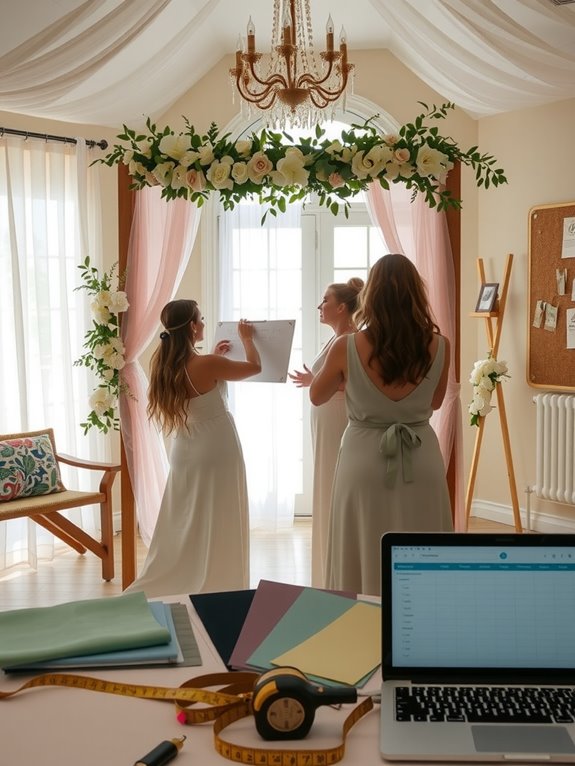
Finding your ideal wedding decorator requires matching three key elements: design compatibility, financial parameters, and realistic scheduling. A decorator’s fees typically range from $1,500 to $5,000 or higher based on venue size and design complexity. The investment reflects their expertise in spatial planning, vendor coordination, and installation execution.
Review past work with honest assessment of whether their aesthetic direction aligns with your preferences. Request mood boards and client references to verify they can deliver cohesive designs consistently. This prevents discovering mismatched expectations after deposits are paid.
Timing significantly impacts both quality and cost. Professional decorators recommend three to six months of planning before your wedding date. Why does this matter? Compressed timelines limit their ability to source specific materials, coordinate with florists and rental companies, and execute careful setup without rushing. Installation day itself requires adequate hours for proper placement and detail work.
Direct conversations about process specifics prevent later friction. Ask how they handle coordination with other vendors, manage installation schedules, and divide teardown responsibilities. Who manages removal of décor elements after the reception? Does their fee include breakdown, or do you hire separate crews? These details, while less glamorous than initial design discussions, directly affect your final costs and post-wedding cleanup burden.
Communication clarity throughout the planning process stops costly surprises. A decorator who asks detailed questions about your venue layout, lighting conditions, and specific preferences demonstrates the thoroughness that translates into successful execution.
Questions to Ask Before Hiring a Decorator
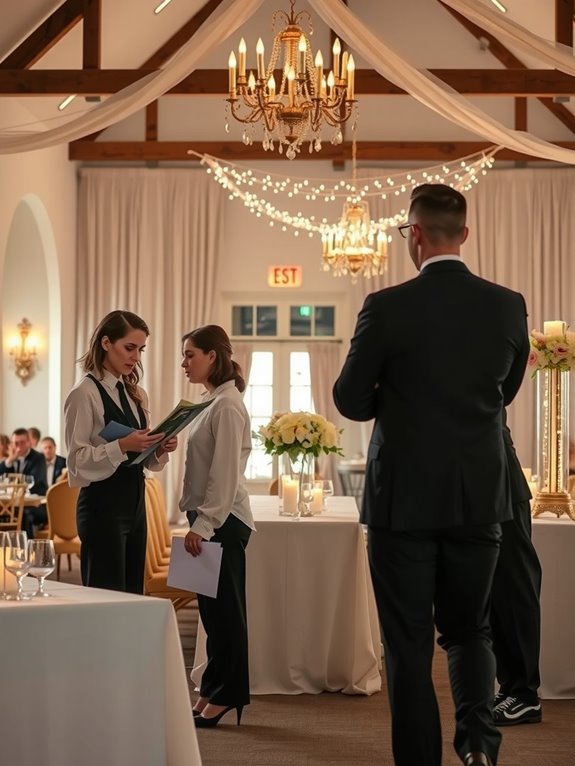
Once you’ve narrowed down your decorator candidates based on budget and timeline, serious evaluation begins. Ask potential decorators about their hands-on experience with venues similar to yours and design styles matching your vision. How do they apply design principles—balance, color theory, focal points—when building cohesive themes across spaces.
Ask potential decorators about their hands-on experience with comparable venues and how they apply design principles to create cohesive themes.
Request portfolios showing at least five past weddings comparable to your event in scale and aesthetic. Review their vendor relationships carefully. Strong decorators work regularly with florists, lighting specialists, and rental companies, which means faster problem-solving when issues arise. Ask directly: “How do you communicate with vendors when something changes mid-setup?”
Understanding their process matters more than their answer. Do they handle both setup and teardown, or do they manage only decoration installation? Some decorators charge $1,500 to $5,000 for coordination alone, while full-service packages run $5,000 to $15,000 depending on guest count and complexity. Clarify exactly what labor is included.
Weather and unexpected problems happen at outdoor events. What’s their contingency plan if rain threatens your backyard reception or a rental arrives damaged? How quickly can they pivot if a client requests significant changes the morning of the event?
Finally, review the fee breakdown line by line. Confirm they understand your non-negotiable requirements—whether that’s specific color palettes, cultural traditions, or budget limits. A decorator who asks detailed questions about what matters most demonstrates they’re listening to your priorities, not just executing a template design.
Setup, Maintenance, and Teardown Timeline
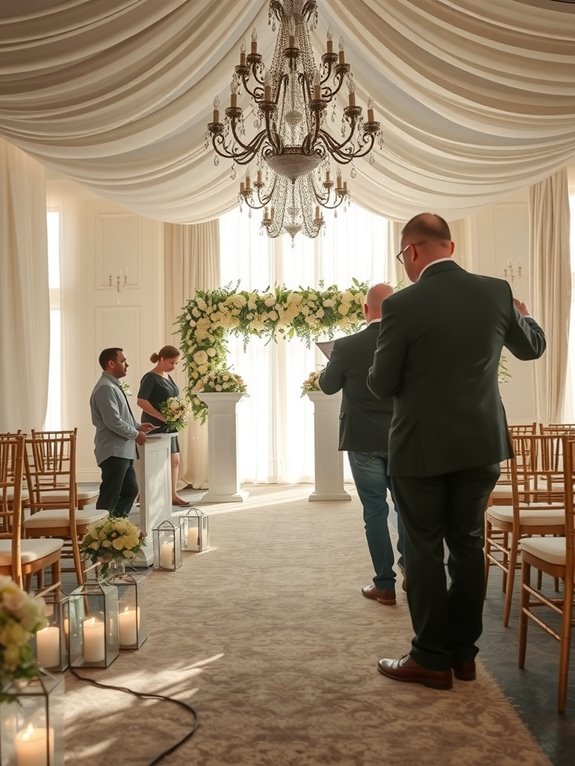
Decoration timing affects your wedding day experience more than most couples realize, which is why establishing a concrete schedule with your decorator weeks in advance matters significantly. Most venues offer a six-hour setup window, though intricate installations like suspended floral arrangements or custom lighting designs require additional time. You’ll need to coordinate directly with venue staff to develop clear timelines that accommodate everyone—decorators, caterers, photographers, and other vendors who may need access to the same spaces.
| Phase | Duration | Key Tasks | Coordinator |
|---|---|---|---|
| Setup | 6+ hours | Install centerpieces, florals, lighting | Professional decorator |
| Maintenance | Event day | Monitor décor, make adjustments | Coordinator or planner |
| Teardown | 2-4 hours | Remove all items systematically | Original setup person |
Why does continuity matter between setup and teardown? The same person who installs your decorations typically handles removal, reducing the likelihood that rental items or borrowed pieces get left behind. Professional decoration teams frequently include teardown in their service packages, which costs between $500 and $2,000 depending on complexity and venue size. This approach eliminates the stress of managing cleanup yourself while still holding someone accountable for returning everything to its original condition, a detail many couples overlook when budgeting for their event.