
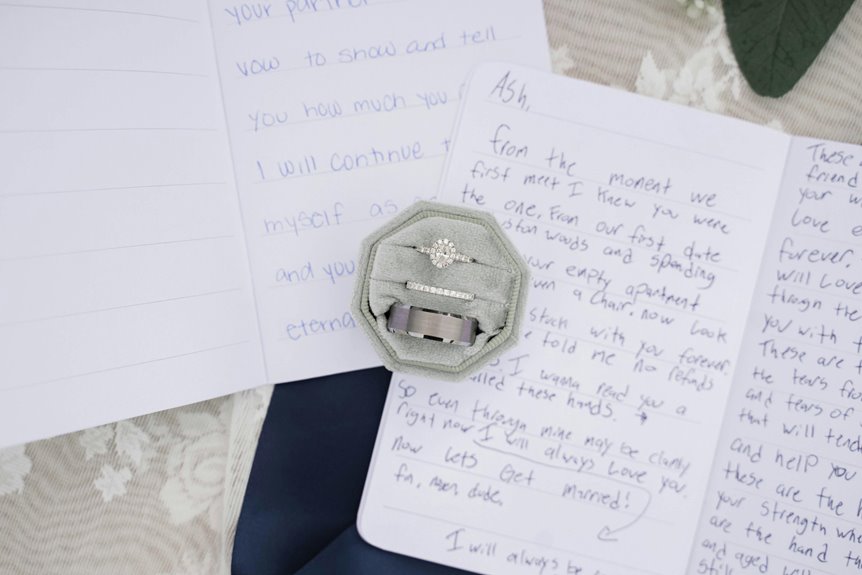
Wedding vows are solemn promises you make publicly that convert private emotion into social and legal commitment. By speaking vows aloud before witnesses, you activate psychological accountability that goes beyond internal feelings. You’re making an intentional declaration, setting specific expectations for partnership across decades of unpredictable life events.
Why do vows matter? They serve as concrete reference points during conflict, giving you language to return to when disagreements arise. Rather than relying on temporary romantic feelings, vows anchor commitment in steady, daily faithfulness. When couples face hardship—job loss, health crises, or simply the routine friction of shared life—these spoken promises provide a foundation beyond emotion.
The performative aspect of vowing is significant. Marriage and family therapist Harriet Lerner notes that “saying words out loud in front of people you care about creates a different kind of accountability than thinking them privately.” This public declaration distinguishes durable partnerships from relationships that drift with changing circumstances.
What separates vows from casual commitment? The specificity. Standard vows address sickness and health, richer and poorer, and better or worse—acknowledging that marriage includes genuine hardship, not just pleasant moments. Custom vows allow couples to articulate personal values, whether that’s supporting ambitions, handling finances transparently, or raising children with shared principles. These concrete promises give both partners clarity about what they’re agreeing to, reducing misunderstandings later.
What Are Wedding Vows? A Clear Definition
Ever wonder why couples throughout history have exchanged similar promises during their ceremonies. Wedding vows are solemn promises made during your ceremony that create binding obligations shaping your married life. They function as performative utterances—words spoken aloud that carry weight and meaning beyond simple emotional expression.
Wedding vows are solemn promises that function as performative utterances, carrying weight and meaning beyond emotional expression.
The content of vows varies considerably by religion, culture, and personal choice. Traditional Christian vows might include phrases like “for better, for worse, for richer, for poorer,” while other couples write personalized promises reflecting their specific relationship. You’re essentially declaring lifelong commitment before God, family, and friends as witnesses to the agreement.
Your vows serve purposes beyond romantic sentiment. They establish clear expectations for your marriage and publicly demonstrate your intentional commitment to another person. Whether you choose ceremonial scripts provided by your officiant or craft custom-written promises, the vows create a documented moment where your relationship becomes officially recognized and witnessed by your community.
The Historical Origins of Modern Wedding Vows
Your wedding vows likely trace back to Thomas Cranmer’s 1549 Book of Common Prayer, which converted Latin Catholic traditions into English Protestant language. Rather than inventing vow-making entirely, Cranmer translated the medieval Sarum rite’s formal declarations into accessible English that ordinary couples could understand and speak. This shift established the structured ceremonial framework you’d recognize in modern ceremonies.
The move from Catholic Latin to English Protestantism fundamentally changed how couples expressed lifelong commitment. Ornate ecclesiastical language gave way to clear, mutual promises that emphasized free will and personal intention. Did you notice that modern vows still follow this pattern of mutual declaration rather than one-sided pronouncements?
Medieval Catholic vows operated differently than their Protestant successors. The older Latin tradition featured elaborate theological language accessible primarily to clergy and educated nobility. Cranmer’s innovation placed the couple’s own voices at the ceremony’s center, requiring both partners to speak their commitment aloud. This represented a significant shift in how English-speaking cultures understood marriage itself—moving from a sacrament administered by the church to a covenant enacted by two individuals making conscious choices about their future together.
Cranmer’s English Translation
When Thomas Cranmer translated the medieval Sarum rite into English during the 1540s, he did far more than convert Latin phrases into another language. He fundamentally reshaped how English-speaking couples could express their marital promises through accessible, declarative statements rather than ornate liturgical formality.
Cranmer’s 1549 Book of Common Prayer established a formal framework centered on clear intention. Instead of requiring couples to navigate complex Latin terminology, he created wedding vows that ordinary people could understand and speak with confidence. This shift proved significant because marriage ceremonies suddenly became emotionally resonant for everyday couples rather than exclusive performances conducted in a language most attendees couldn’t follow.
The structure Cranmer developed persisted through the 1552 edition and influenced Anglican ceremonies for centuries afterward. His emphasis on direct declaration over ceremonial complexity meant that couples could focus on the weight of their commitment rather than struggling through unfamiliar language. This approach democratized sacred vows in ways that earlier medieval traditions never permitted.
When you recite modern wedding vows today, you’re speaking words shaped by Cranmer’s decisions about accessibility and clarity. The English wedding service he created established patterns that contemporary ceremonies still follow. Most couples exchanging vows in English-speaking countries inherit his legacy whether they realize it or not, using structures and phrasings that trace directly back to his 1549 translation work.
Medieval Catholic Foundations
Modern wedding vows didn’t develop randomly—they emerged directly from centuries of Catholic ceremonial practice, specifically the medieval Sarum Rite used throughout England. This particular liturgical tradition established the structural framework couples still follow when exchanging vows today.
The Sarum Rite introduced several elements that remain central to contemporary ceremonies. Couples made formal declarations within designated sacred spaces, using Latin sacramental language designed to emphasize covenant commitment rather than casual promises. The exchange followed a structured call-and-response pattern between bride and groom, with ecclesiastical officials present to validate the vows through institutional authority. Community members served as witnesses, their presence confirming the validity of the commitment.
Medieval Catholic leaders recognized that vows required three components to hold meaning: formal language, sacred context, and institutional recognition. The ritual didn’t function as mere ceremony—it connected personal promises to something larger than the individuals involved. By grounding vows in religious tradition and community validation, the Sarum Rite created a structure that linked individual commitment to communal and spiritual significance.
This medieval framework explains why contemporary wedding ceremonies still incorporate similar elements. Couples exchange vows in formal settings, use traditional language patterns, involve witnesses, and seek official validation through licensed officials. The foundational architecture established nearly a thousand years ago continues shaping how modern couples structure and understand their marriage commitments.
What Wedding Vows Do: Performative Promises Explained
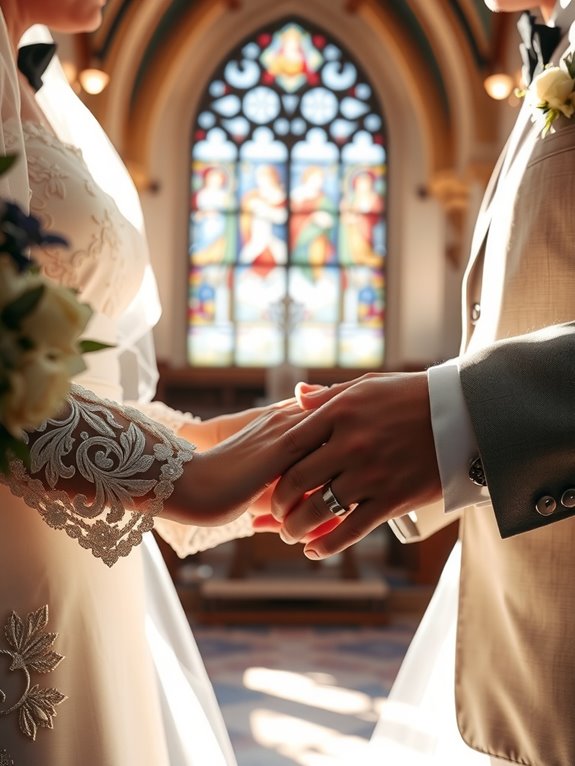
How do words spoken in front of witnesses actually change your legal and emotional status? Your vows function as performative utterances—linguistic acts that create binding obligations through the ceremony itself rather than serving as mere poetic expressions. When you declare promises aloud, you’re executing a commitment device that anchors your future actions to present intentions.
Public declaration strengthens resolve in measurable ways. By stating your promises before your partner and community, you’re communicating a deliberate choice. Traditional vows follow action-oriented patterns—”I promise to love and cherish you” specifies future behaviors rather than momentary feelings.
The structure of formalized vows matters considerably. When promises occur within ceremony’s established authority and ritual framework, they create psychological anchors that sustain commitment during periods when motivation naturally fluctuates. This ritualized declaration shifts your relationship status from dating to a legally and emotionally bound partnership.
Why does this mechanism work so effectively? The combination of public witness, formal language, and structured environment creates multiple reinforcement layers. Your spoken words serve as a reference point you both can return to when navigating relationship challenges or changes. Witnesses add social accountability—people heard your specific commitments and remember them.
The deliberate phrasing matters here as well. Rather than vague declarations of love, specific behavioral promises give you concrete checkpoints. “I will listen when you speak” provides different guidance than “I promise to cherish you always.” Action-based language helps couples track whether they’re meeting their stated intentions throughout the years ahead.
The Declaration of Intent: Affirming Free Will

Why do officiants ask “Do you take this person to be your spouse?” before your vows even begin? This moment—the declaration of intent—serves a dual purpose that’s both legal and deeply personal.
You’re actively choosing your partner rather than passively accepting a predetermined outcome. Your “I do” or “I will” carries actual weight because it centers your agency in the commitment. The declaration establishes several critical elements:
Legal and Personal Foundations
Most U.S. states require an explicit declaration of intent as a legal prerequisite for marriage. This isn’t merely ceremonial—it’s a binding statement that both partners consent to the marriage without coercion. The declaration proves mutual agreement existed at the moment of the ceremony, which protects both spouses legally and establishes clear documentation for marriage licensing purposes.
Timing in the Ceremony
When the declaration happens depends on your tradition and officiant preference. Some ceremonies place it before vows, allowing you to affirm your choice before making specific promises. Others position it after vows, letting your spoken commitments precede the binding declaration. Regardless of sequence, the declaration always prioritizes one fundamental principle: you’re choosing this freely and with complete awareness of what marriage entails.
This moment distinguishes between the emotional promises you make (your vows) and the legal agreement you’re entering (your declaration of intent).
Traditional Vow Language and What It Means
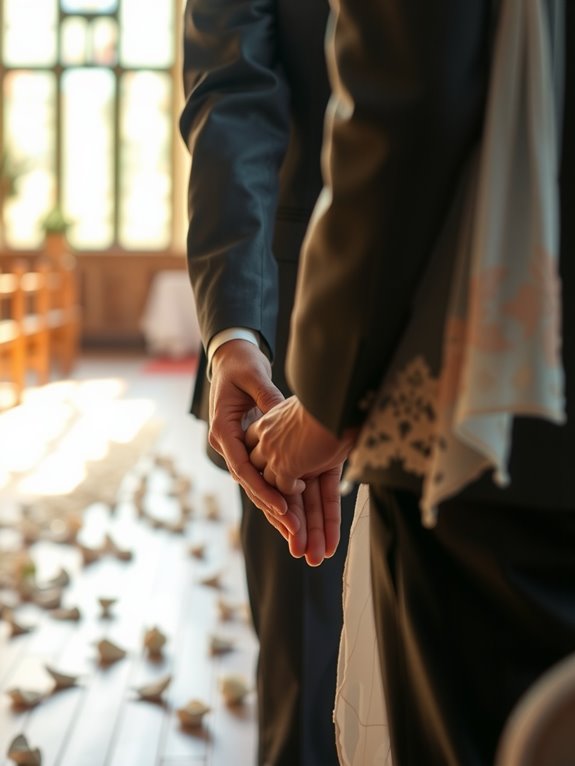
When you exchange traditional vows, you’re making performative utterances that legally bind you, not merely expressing feelings. These aren’t casual promises but formal statements that carry legal weight in most jurisdictions. You’re publicly affirming your free will to commit through life’s varied circumstances. The “for better, for worse” language directly addresses how you’ll maintain faithfulness regardless of what unfolds.
What makes traditional vows distinct from casual declarations of love? They’ve been refined over centuries of ceremonial use, which means they carry specific meanings rooted in legal and religious history. Most traditional vows include four key components: the commitment itself, acknowledgment of challenges ahead, promises of fidelity, and acceptance of the other person’s changing self over time.
These words move personal promises into communal acknowledgments of your lifelong union. When you speak vows before witnesses—whether two people or two hundred—you’re creating a social contract that your community recognizes. Religious traditions often include specific language about “till death do us part,” which carries additional weight within faith communities. Civil ceremonies typically use simpler language but maintain the same binding function.
The vow exchange itself serves a practical purpose beyond emotional expression. Judges and legal systems recognize vow language as evidence of intentional commitment, which matters during divorce proceedings or inheritance disputes. You’re not just saying words; you’re creating a documented record of your intentions on your wedding day.
Free Will And Personal Choice
At the heart of every traditional wedding vow lies a declaration with real weight behind it. You’re choosing this commitment freely, without pressure or some predetermined path mapped out for you.
When you say “I take thee,” you’re asserting personal choice over circumstance. This matters because responsibility lands squarely on your shoulders, not on destiny or fate. The vow accomplishes several practical things that shape how you’ll approach your marriage moving forward.
What Your Vows Actually Do****
Wedding vows reject the soulmate myth—that one perfect person exists somewhere waiting for you. Instead, they establish accountability to both your partner and your community for keeping the promises you make. By emphasizing voluntary agreement rather than obligation or coercion, vows counter unrealistic expectations about predestined relationships. They reinforce your individual agency within the ceremony’s formal structure, making clear that you’re choosing this actively.
Your free will isn’t ceremonial language tucked into tradition. It’s foundational to how you’ll function as a couple. By choosing marriage actively, you acknowledge that relationships require ongoing commitment, not passive acceptance of fate. This framework prevents blame-shifting later when conflicts arise. Your partnership rests on genuine personal responsibility rather than romantic destiny, which means you’re both accountable for the effort required to make things work.
Lifelong Union And Commitment
Once you’ve claimed your free will in choosing marriage, you’re ready to examine what you’re actually promising. Traditional vows anchor your commitment through specific language: “for better, for worse, for richer, for poorer.” These phrases aren’t poetic decoration—they’re actionable promises covering life’s unpredictable seasons.
When you speak these words, you’re creating a covenant-like declaration binding you to mutual obligations. This lifelong union represents something beyond emotions or circumstances. You’re essentially saying, “I choose you regardless of what happens.”
The clarity of traditional vows matters more than their age. Rather than vague promises, they outline concrete commitments acknowledging that marriages face real challenges. You’re choosing to stay anyway. That’s where the power lives—in transforming personal responsibility into shared promise.
Consider what happens when couples write custom vows without this framework. A 2022 survey by The Knot found that 57 percent of couples who personalized their entire vow language reported struggling to articulate their deepest commitments without structured guidance. The traditional language does that work for you. It names the seasons you’ll actually face—financial hardship, health crises, disappointment—and declares your intention to navigate them together.
Religious officiant Sarah Chen notes that couples often underestimate what they’re committing to. “People hear the words at rehearsal and think they understand,” she explains. “But standing at the altar saying them aloud—that’s when the weight settles in. The specificity forces that reckoning.”
What makes this language endure across centuries? It works because it doesn’t pretend marriage stays constant. Instead, it acknowledges change as inevitable and positions commitment as something you choose repeatedly, not just once.
Faithfulness Through All Circumstances
Why does “for better, for worse” carry more weight than “I promise to love you forever“?
When you speak traditional vows, you’re anchoring yourself to covenant faithfulness that transcends fleeting emotions. Your promises extend beyond romance’s initial rush—they’re commitment devices guiding your behavior during life’s inevitable trials. This language reflects divine steadfastness, modeling a loyalty that persists despite personal change or failure.
Traditional vows address faithfulness through specific circumstances rather than abstract declarations. The phrase “for richer, for poorer” requires financial transparency during prosperity shifts and economic downturns. “In sickness and in health” demands vulnerability when one partner faces serious illness or disability. “For better, for worse” acknowledges that emotional seasons will test your resolve long after the wedding reception ends.
Speaking vows before community witnesses creates accountability that extends beyond just two people in a room. When family and friends hear your promises, they become informal guardians of your commitment. Renewal practices—whether annual vow-reading or anniversary ceremonies—help you revisit and reaffirm your original promises rather than treating them as one-time statements.
You’re not simply declaring love on your wedding day. You’re building a foundation designed to hold steady when endorphins fade and external stress rises. That foundation distinguishes between the temporary emotional high of early romance and the durable commitment that sustains partnership through decades of change.
Personalizing Your Vows: When Tradition Isn’t Enough
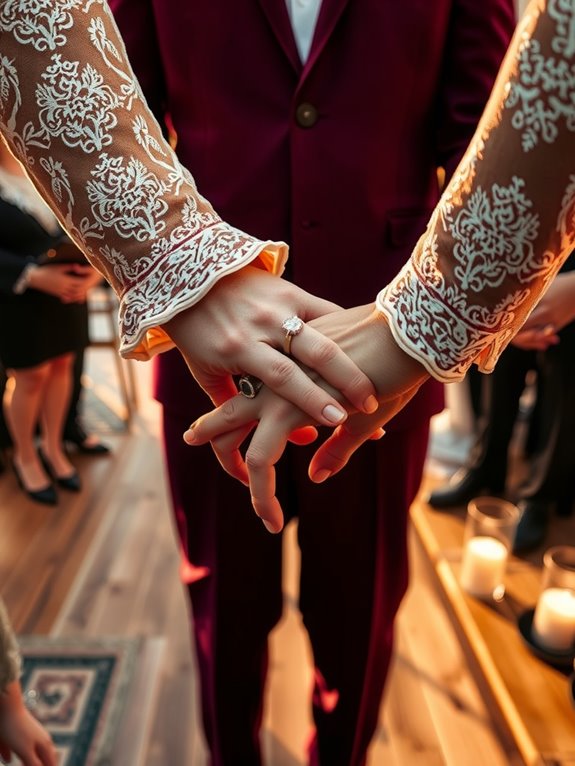
How many couples recite the same vows they’ve heard a hundred times before?
Traditional vows offer stability, yet they might not capture your unique relationship. Personalizing vows allows you to blend time-honored promises with values that genuinely reflect your partnership. Instead of generic phrases, you’re crafting commitments from moments that matter—inside jokes, shared dreams, specific promises about how you’ll show up daily.
Your officiant can guide you through this process, ensuring your personalized vows align with ceremony structure and legal requirements. Real-couple examples and printable templates provide direction without dictating your words.
The real strength of personalized vows emerges when you balance heartfelt emotion with actionable commitments. Rather than only expressing how you feel, you’re declaring what you’ll actually do. This specificity strengthens your vows’ longevity, giving your marriage both meaning and practical direction.
“To Have and to Hold”: Beyond Romantic Sentiment
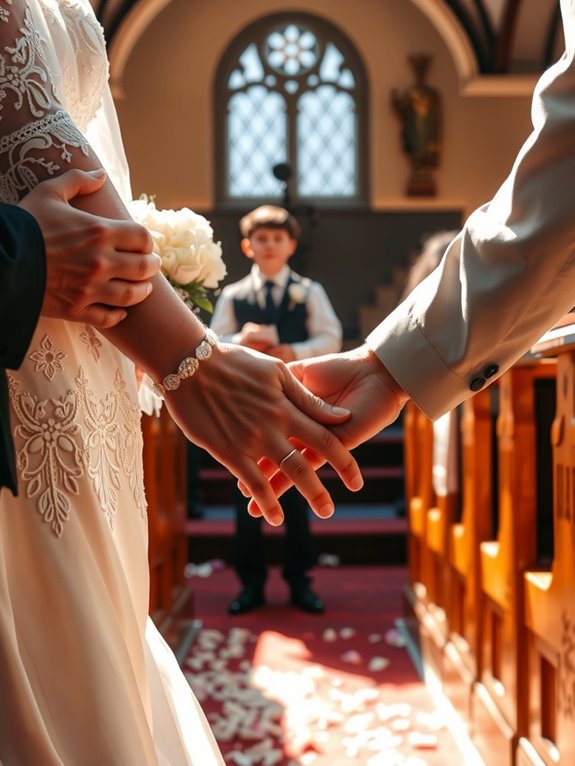
The phrase “to have and to hold from this day forward” carries far more weight than most couples realize when speaking it aloud. You’re not merely expressing affection—you’re making a traditional commitment rooted in covenant language that fundamentally shifts individual lives into shared partnership.
This pledge encompasses several interconnected commitments. “To have” means building shared knowledge and deepening relational intimacy over decades rather than months. “To hold” requires providing care, nourishment, and protection through life’s unpredictable seasons. The broader pledge joins two people into one flesh, echoing Genesis 2:24, while establishing mutual responsibility that anchors expectations about ongoing commitment and support. This enduring partnership framework transcends temporary emotions through changing circumstances.
When you speak these words, you’re reframing ownership into lifelong companionship. The Greek term proskollaó—meaning to join or unite—captures this concept precisely. You’re pledging vigilance and sustained care, not just the warm feelings associated with early romance.
What distinguishes this commitment from casual relationships? The vow creates legal, emotional, and often spiritual accountability that casual partnerships deliberately avoid. Most couples don’t recognize that speaking this particular phrase signals acceptance of responsibility across financial planning, health decisions, household management, and conflict resolution. These aren’t romantic elements—they’re the operational infrastructure holding a marriage together during ordinary Tuesdays, unexpected job losses, and parenting disagreements.
Understanding the full weight of this language before saying it helps couples approach marriage with appropriate seriousness rather than assumption.
“For Better, for Worse”: Covenant Through All Seasons
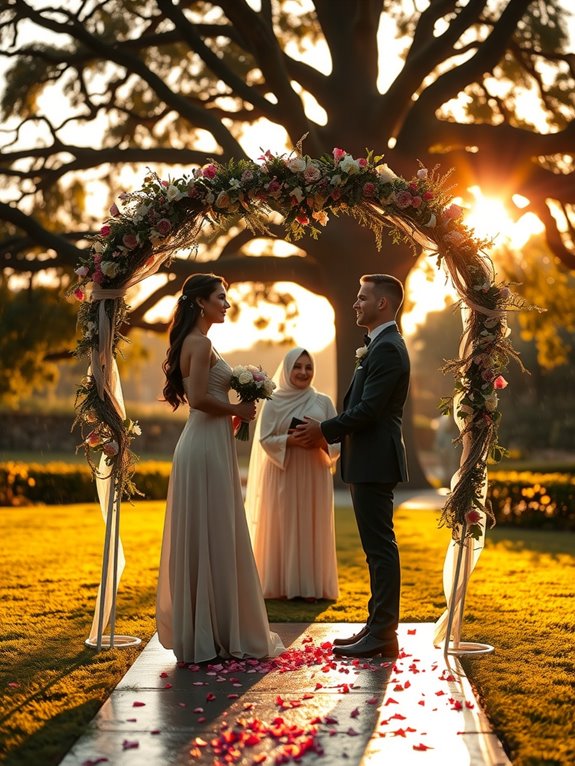
When you pledge “for better, for worse,” you’re committing to navigate life’s unpredictable seasons together beyond just celebrating the joyful moments. This covenant faithfulness means sustaining love through genuine hardship—financial setbacks, health crises, or personal struggles—rather than abandoning the relationship when circumstances shift. Your commitment transcends external conditions, grounding your marriage in steadfast dedication rather than fleeting emotion.
Marriage researcher John Gottman has found that couples who explicitly acknowledge difficulty during their vows show stronger long-term stability than those focusing exclusively on romance. Why do couples often avoid discussing the harder parts of commitment during their ceremonies. Perhaps because acknowledging struggle feels contrary to wedding day celebration. Yet research suggests the opposite approach strengthens marriages.
This pledge requires practical preparation beyond emotional sentiment. It means establishing financial conversations before crisis hits, creating healthcare directives together, and developing conflict resolution strategies you’ll actually use when tension rises. Couples who address these mechanics during engagement planning report feeling more secure during their first five years of marriage. Consider working with a marriage counselor before your wedding to build these foundations; pre-marital counseling typically costs between $100-300 per session and runs four to eight sessions.
The “for worse” vow acknowledges that marriage isn’t a constant high but rather a commitment to show up consistently. How will you support each other when one partner faces job loss or illness. These conversations, though uncomfortable, create the framework for genuine partnership rather than conditional attachment.
Commitment Through Life’s Changes
Life rarely follows the narrative arc couples imagine on their wedding day. Your vows must accommodate seasons you cannot foresee, stretching across decades of unpredictable circumstances. Your commitment isn’t a fixed declaration—it develops as both partners change, grow, and confront unexpected obstacles together.
Several pivotal moments will test the depth of your lifelong commitment:
- Career shifts that fundamentally reshape your priorities and daily routines
- Health crises that demand vulnerability, patience, and mutual medical and emotional support
- Financial pressures requiring transparent conversations and collaborative problem-solving across household decisions
- Personal growth where each partner becomes a notably different version of themselves
- Family transitions spanning parenthood, grief from loss, and managing aging parents’ needs
Your vows function as an anchor during dramatic circumstantial shifts. They represent promises to choose each other despite changing feelings, not pledges to experience identical emotions indefinitely. This distinction carries genuine weight. You’re essentially committing to navigate transformation as a team, deepening your relationship through seasons of significant change rather than letting those seasons dissolve it.
Covenant Faithfulness In Adversity
How do you honor commitment when your spouse becomes someone neither of you fully anticipated? Your marriage vows function as anchors through life’s unpredictable seasons, transcending the temporary emotions that fluctuate with circumstances.
Covenant faithfulness means keeping promises when conditions shift dramatically—when health deteriorates, finances tighten, or life plans require reshaping. This commitment isn’t about willpower alone. Instead, you’re bound to promises that exist independent of personal circumstances.
| Season | Challenge | Your Vow Response |
|---|---|---|
| Sickness | Physical limitations | “In sickness, I choose you” |
| Poverty | Financial strain | “In poorer times, I remain steadfast” |
| Conflict | Relational distance | “Grace enables my recommitment” |
| Growth | Changed perspectives | “I covenant through transformation” |
Marriage counselors often note that couples who revisit their vows during difficult periods experience renewed accountability and faith-centered perspective. When you consciously recommit to your vows during adversity, you’re not ignoring the real challenges you face. Rather, you’re placing those challenges within a framework larger than individual circumstances or emotional states.
Adversity doesn’t dissolve covenant—it tests whether your commitment extends beyond favorable conditions. Revisiting specific vow language during trials anchors both partners to shared promises and community support systems that extend beyond the marriage itself.
Sustaining Love During Trials
What separates couples who thrive through hardship from those who merely endure it? Your vows anchor you when life becomes difficult.
The phrase “for better, for worse” doesn’t promise smooth sailing—it promises you’ll sail together. Your commitment becomes the stability framework guiding you through storms. When shared purpose replaces blame during conflicts, couples shift their energy toward solutions rather than resentment. Intentional problem-solving requires both partners to identify the real issue instead of attacking each other’s character.
Covenant faithfulness models biblical endurance through change, meaning you show up consistently even when feelings fluctuate. Research on long-term marriages suggests couples who regularly revisit their vows strengthen commitment during vulnerable seasons. Anniversary vow renewals serve this purpose—whether formal ceremonies or quiet reflections during dinner. Your faith community provides accountability and encouragement when weariness sets in, offering perspective beyond your immediate struggles.
When hardship feels heaviest, revisiting your vows reminds you why you promised forever. These aren’t poetic words frozen in time; they’re guardrails preventing destructive choices when temptation or exhaustion whispers otherwise. Your commitment transforms trials into opportunities for deeper intimacy. Together, you don’t merely survive hardship. You emerge stronger and more united, shaped by faithfulness through difficulty rather than despite it.
Why Public Vows Deepen Your Commitment
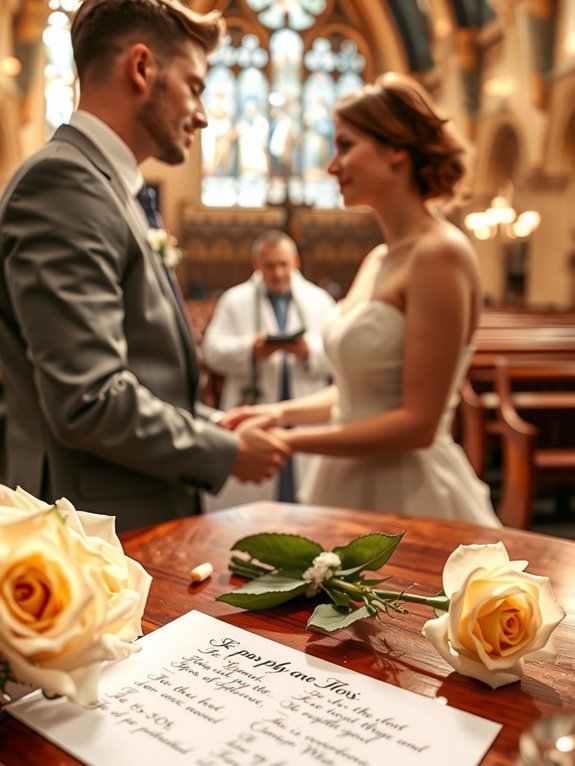
There’s something measurable that happens when you speak your promises aloud before people who matter. Public vows create accountability that private promises struggle to establish. When you vocalize commitment before witnesses, you’re signaling to your community and yourself that this relationship deserves serious investment.
Your brain processes spoken promises differently than silent ones. Research in cognitive psychology indicates that verbalizing commitments activates additional neural pathways compared to thinking them privately. You’re not just informing your partner—you’re declaring intentions to everyone present, which intensifies the psychological weight of those words.
This public declaration serves as an anchor during difficult periods. When challenges arise, you’ll recall standing before loved ones and making those promises. That memory reinforces commitment when emotions feel uncertain or relationships experience strain.
The accountability factor extends beyond the ceremony itself. Wedding industry professionals often note that couples who exchange public vows report higher follow-through on stated relationship goals over the first year. Your community witnesses become informal accountability partners simply by virtue of hearing your words directly.
How does memory function in moments of marital difficulty? The specificity of having named individuals present—your mother, best friend, siblings—creates multiple touchpoints you can mentally revisit. Rather than remembering a general commitment, you remember the particular faces watching you promise.
Why You’ll Return to Your Vows on Hard Days
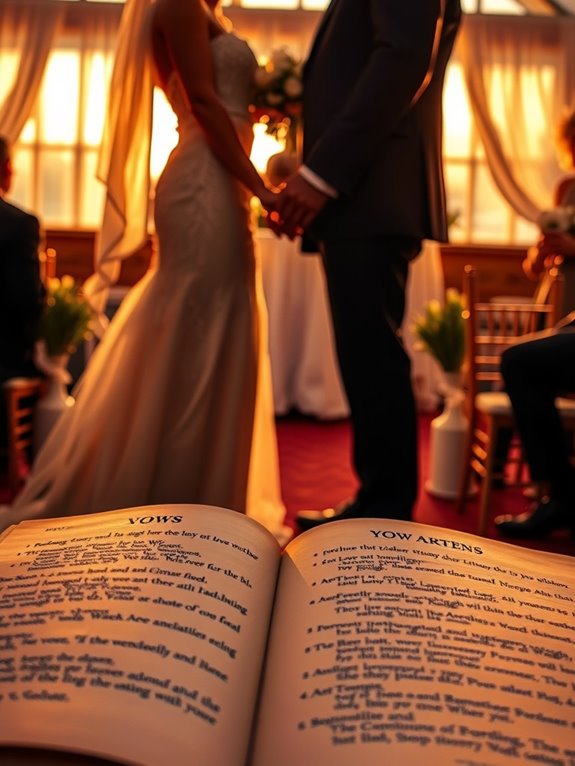
You’ll find yourself mentally returning to those spoken promises long after the ceremony ends, particularly when your relationship hits turbulent ground. When emotions run high and commitment wavers, your vows become an anchor that holds you steady.
Your promises function as stability devices during challenging seasons. They refocus your priorities when conflict clouds your perspective and remind you why you chose this person despite present difficulties. Rather than chasing fleeting feelings, your vows provide concrete actions to pursue and pathways for forgiveness and mutual renewal.
Your vows refocus priorities when conflict clouds perspective, providing concrete pathways for forgiveness and mutual renewal.
Revisiting your vows transforms abstract commitment into daily practice. You’re not relying on emotion alone—you’re honoring the deliberate choice you made during that ceremony. This deliberate return reinforces accountability and belonging within your partnership through intentional recommitment during struggles.
What happens when you actually pull out those vows during a difficult week and read them aloud together? The specificity of your language—those particular promises you made about supporting each other through career changes or family challenges—grounds you in something beyond the current conflict. You’re reminded that this partnership was built on deliberate decision-making, not just initial attraction or convenience.
Living Your Vows: Everyday Faithfulness
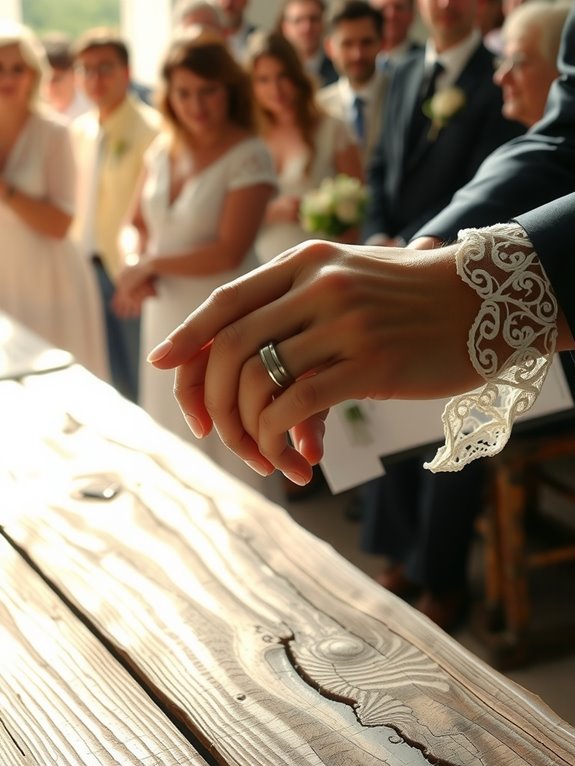
Keeping your vows isn’t a one-time performance—it’s a daily choice that shapes who you become as a partner. Your commitment unfolds through countless small decisions: choosing kindness during conflict, showing up when exhausted, forgiving when holding grudges would be easier.
Living your vows means anchoring yourself in something deeper than emotions. When feelings fluctuate—and they will—your promised behaviors remain steady. You’re not relying solely on personal strength; you’re drawing on grace itself.
What does this look like in practice? It means revisiting your vows during anniversaries or difficult seasons, realigning your daily life with your deepest promises. Each act of faithfulness witnesses to something larger than yourselves. Rather than waiting for grand moments, you transform ordinary interactions into sacred practice through consistent effort and intention.
Think of your vows as channels through which divine faithfulness flows into your marriage. When you choose to show up for your partner on difficult days, when you extend grace instead of judgment, you’re practicing something that extends far beyond the two of you. These small choices compound over years, creating the foundation that holds a marriage steady through seasons of change.