

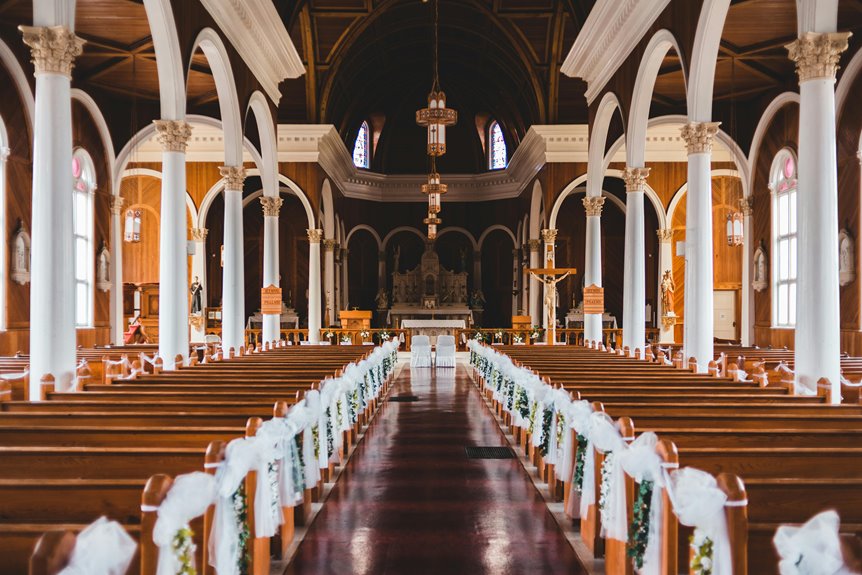
Start by contacting your church office to understand their specific decoration policies, since every congregation protects its sacred space differently. Rather than competing with the existing architecture, highlight what’s already there through thoughtful additions like eucalyptus garlands, flameless candles, and pew-end arrangements that naturally guide guests toward the ceremony space.
Since you’ll spend roughly 30–40 minutes in the ceremony but 3–4 hours at your reception, plan decorations that serve double duty between both locations. This approach means allocating 30–40 percent of your floral budget toward reception impact where guests will actually spend most of their time. A simple welcome sign on an easel at the entrance requires minimal setup while establishing tone.
Coordinate vendor load-in times directly with church staff well before your wedding day. This prevents scheduling conflicts and allows staff to prepare the space properly without last-minute scrambling. Strategic placement decisions combined with a clear timeline can markedly streamline your entire setup process, reducing stress during what’s already a busy day.
Know Your Church’s Decoration Rules
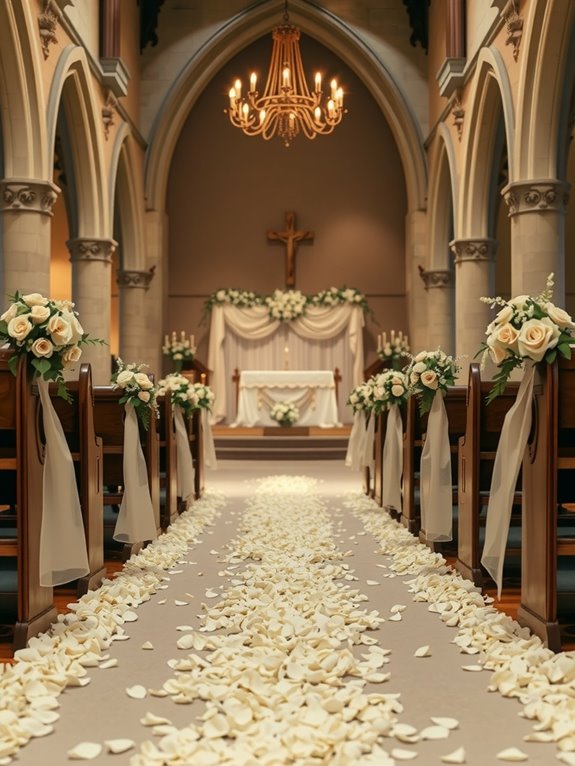
Before planning any decorations, contact your church office directly to understand their specific policies. Every congregation maintains different rules that protect their sacred space, and these restrictions vary considerably.
Contact your church office directly—every congregation maintains different decoration policies to protect their sacred space.
Ask about limitations on florals, wired candles, and pew attachments during your initial conversation. Find out whether the church permits garlands, ribbons, or signage, and learn if they provide complimentary decor as part of their service package. That built-in decor option can reduce your costs by 15-30 percent, depending on what’s included.
Request written approval that outlines exactly what you can bring, where placement is allowed, and who handles cleanup. This documentation protects both you and the congregation by establishing clear expectations beforehand.
Church architecture demands respect, so ask about placement guidelines for aisle elements and altar arrangements upfront. Questions should address where you can position floral arches without obstructing sight lines for guests or blocking the pastor’s view during the ceremony. Some churches restrict decorations entirely on the altar itself, while others allow tasteful arrangements in designated areas only.
Understanding these guidelines prevents costly mistakes and ensures your vision aligns with what the building actually permits.
Let the Church’s Natural Beauty Shine
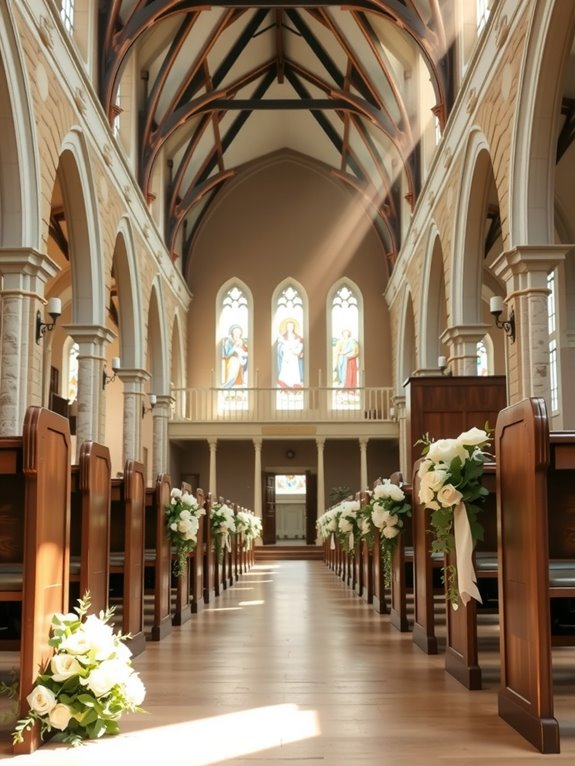
Why conceal architectural features that already command attention? Your church’s soaring arches, stained glass windows, and ornate columns merit prominence on your wedding day. Rather than competing with these existing elements, you enhance them through intentional restraint and strategic placement.
Decor Choices That Complement Rather Than Compete
| Decor Element | Purpose | Impact |
|---|---|---|
| Eucalyptus bunches with tulle | Frame focal points without overwhelming sightlines | Soft, elegant accents that cost $3-8 per bunch |
| Flameless candles | Create ambient warmth while adhering to church fire codes | Preserves clear views of architectural details |
| Discreet garlands | Direct visual attention upward toward ceilings | Reinforces existing structural beauty |
Simple, timeless pieces work best when they respect the space rather than demand attention. Garlands adorning the aisle can transition into centerpieces at your reception, maximizing your rental budget and reducing waste. Understated pew-end accents—typically involving greenery and ribbon rather than elaborate arrangements—establish an elegant ceremony path while honoring most churches’ decoration policies.
The Philosophy Behind Restraint
This approach isn’t about doing less work during planning; it’s about making smarter decisions about where your decor budget goes. You’re highlighting the space’s existing architecture rather than obscuring it. How might your photographer capture different angles if they’re not navigating around elaborate installations?
Consider consulting your church coordinator early in the planning process, ideally six to nine months before your wedding date. Most churches have specific guidelines about what adhesives, nails, or fixtures you can use on walls and pews. Understanding these restrictions from the start prevents costly redesigns closer to your date.
Decorate Pew Ends and Aisles
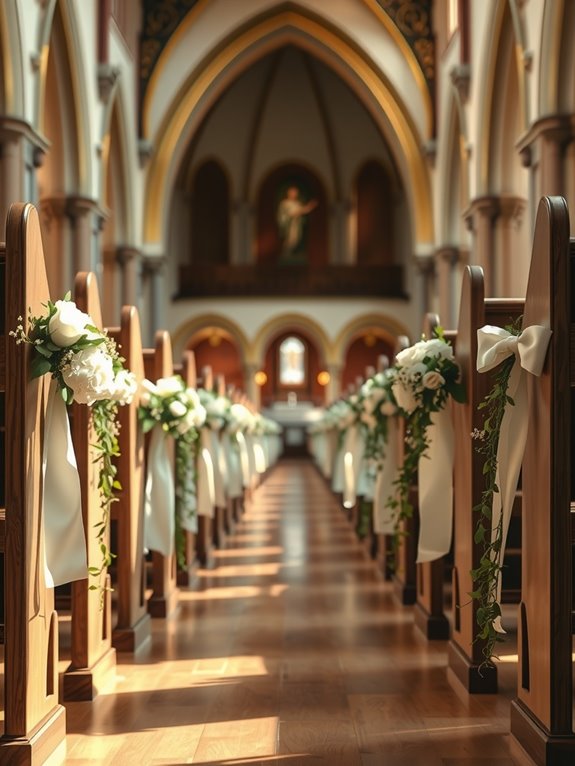
How do you guide guests’ eyes from the entrance toward your ceremony without creating visual clutter? Thoughtfully decorated pew ends and aisles establish a cohesive pathway that naturally draws attention forward.
Strategic Placement and Design
Place small arrangements on every other pew to establish rhythm without overwhelming the space. This alternating pattern costs less than decorating each pew while maintaining visual continuity. Choose decor that mirrors your aisle design—eucalyptus sprigs, coordinated garlands, or similar botanicals work well for $15 to $40 per pew end, depending on complexity and material quality.
Adding Ambient Light and Texture****
Lightweight, flameless candle wraps or fabric bows add warmth along the processional route. Flameless options run $8 to $20 per wrap and eliminate fire safety concerns many churches require. Fabric bows made from your ceremony colors or patterns typically cost $5 to $15 each, and you can reuse them at the reception.
Installation and Venue Respect
Use removable attachment methods—ribbon, twine, clips, or adhesive-free strips—that respect your church’s guidelines. Contact your venue coordinator at least four weeks before your wedding to confirm which attachment methods are permitted. Most churches prohibit nails, staples, and permanent adhesives on their woodwork.
Budget Efficiency
Repurposing pew decorations as reception centerpieces maximizes your budget while reducing waste. Many couples move garland sections to cocktail tables or use candle wraps around reception centerpiece bases, extending your investment across multiple areas of the event.
Plan Setup Around Your Church’s Timeline
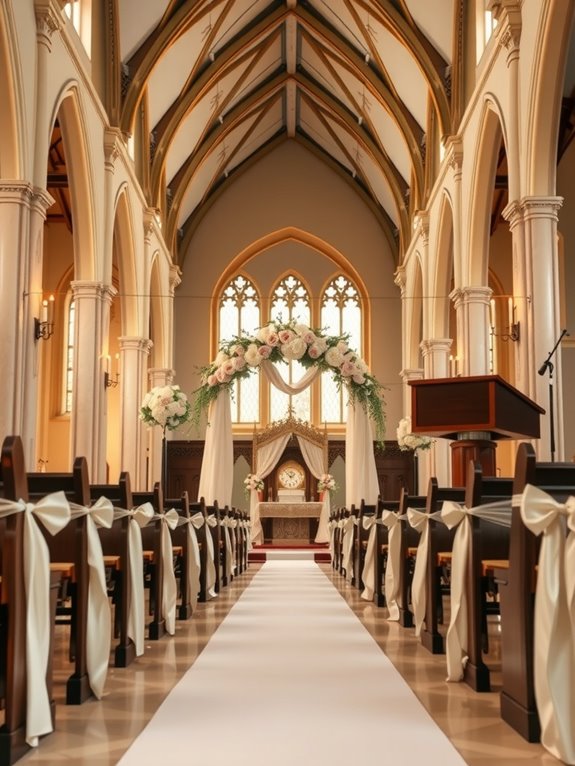
Coordinate your decoration timeline with the church’s service schedule, particularly if multiple weddings occur the same day. Your setup window might compress significantly—sometimes only one or two hours between ceremonies—making advance confirmation of arrival times and load-in access essential to avoid last-minute complications.
Contact your venue coordinator about several specifics before booking your decoration crew. Ask whether early arrival is permitted for prep work, what security or usher requirements you’ll encounter, and when all decor must be completely removed. These details prevent scheduling conflicts with other services or events using the same space.
Churches often operate on tight turnarounds between weekend services. If your wedding falls on Saturday, the venue might host Friday evening rehearsals, Saturday morning services, and potentially other ceremonies or events. Understanding this full schedule helps you identify realistic setup windows rather than discovering constraints on your wedding day.
Request a written confirmation of your exact load-in time and access details. This document becomes your reference point if miscommunications arise with church staff or your decoration vendor. Include specifics like which doors unlock for vendor access, where vehicles can park, and whether elevator or stairwell use is restricted during certain hours. Some churches charge additional fees—typically $100 to $300—for extended access beyond standard wedding booking times, so clarify pricing upfront.
Coordinate With Service Schedule
Timing matters significantly when decorating a church—and your setup window depends entirely on the building’s other scheduled activities. You’ll need to coordinate directly with your officiant and church coordinator to confirm exactly when you can access the space without conflicting with other services or weddings.
Start by pinning down these specific details immediately:
Service Timeline and Access
Confirm the exact start and end times for your ceremony, plus any events happening before it. Ask whether the church has standard silence periods or lighting restrictions that affect your setup work. Request a dedicated early-arrival window—typically one to two hours before your ceremony begins—to complete decorating without rushing.
Teardown and Exit Plan
Establish a specific timeframe for removing all decorations after your guests depart. Some churches have strict evening closing times or next-day events that limit how long you can stay. Knowing this boundary prevents conflicts with staff schedules or other weddings using the same space.
Building in Realistic Time
Vendors often arrive later than scheduled, and you might need adjustments once you see the actual lighting or sight lines. A church coordinator once noted that couples who planned for 30% extra time avoided the scrambling that happens when someone runs behind. This buffer keeps your decorating manageable and respects the church’s operational needs, which staff members genuinely appreciate when you demonstrate consideration for their schedule.
Work Around Multiple Events
Multiple weddings on the same day create a scheduling puzzle that demands attention to detail and coordination. Your decoration timeline’s success hinges on knowing exactly when other events occupy the ceremony space and how their schedules affect your access windows.
Start by requesting explicit confirmation from church coordinators about three specific details: your setup window, the teardown deadline, and other service schedules that might restrict your movement. Many venues require written agreements listing these times. Ask whether other events have similar setup needs—this information shapes your entire plan.
Portable decorations work well in shared spaces because they reduce setup friction. Garlands secured with command hooks, flameless candles in varying heights, and fabric draping transition easily between ceremony and reception areas without requiring permanent installation or extensive rigging time that conflicts with other events.
Build a detailed load-in and load-out schedule that accounts for all vendors: florist, caterer, photographer, and rental company. Assign specific arrival times with 15-minute buffers between each vendor. Share this timeline in writing with your church contact at least two weeks before the wedding. Include contingency blocks—typically 30 minutes per major setup phase—to absorb unexpected delays without disrupting other ceremonies using the venue.
Choose Decor That Works Twice
Smart couples strategically select pieces that earn their place twice—once during the ceremony and again at the reception. You’ll maximize your budget and minimize waste by choosing décor with genuine versatility.
Consider these dual-purpose options:
- Pew-end garlands with flameless candles that relocate to reception tables effortlessly
- Eucalyptus bouquets and simple wreaths complementing church architecture and transferring seamlessly
- Altar arrangements transforming into elegant centerpieces for dining spaces
- Aisle runners and fabric draping repositioned as reception backdrop elements
Plan your setup timeline strategically. Early-arriving teams can decorate the ceremony space, then efficiently transition pieces between rooms. This coordinated approach eliminates redundant purchasing while creating cohesive visual flow throughout your celebration. Rather than purchasing separate décor for each space, you’re orchestrating an integrated design experience that serves both locations meaningfully.
A typical timeline works like this: your florals and garlands arrive two hours before the ceremony, get positioned in the ceremony space, then move to reception tables during the cocktail hour. This requires coordination with your florist and venue staff—discuss logistics during your planning meetings to identify who handles transitions and how pieces will be safely relocated.
What specific elements in your ceremony space could reasonably work in your reception area? Starting with this question helps identify realistic dual-purpose pieces rather than forcing incompatible items to serve double duty.
Save Money by Shifting Funds to Reception
Your guests will spend roughly three to four hours at the reception compared to thirty to forty minutes at the ceremony. This time difference alone suggests a practical reallocation of your floral and décor budget toward where guests actually spend their evening.
Most churches offer limited decorative flexibility due to architectural guidelines or existing permanent arrangements. Rather than investing $800 to $1,200 in ceremony florals that guests experience briefly, consider redirecting 30 to 40 percent of that budget—roughly $240 to $480—toward your reception space instead.
What specific elements justify this shift? Dramatic centerpieces for six to ten tables typically cost $150 to $300 per arrangement when sourced through full-service florists. Professional uplighting, which transforms a plain venue into an intentional environment, runs $500 to $1,500 depending on your space size and color scheme preferences. Personalized touches like custom menu cards, monogrammed napkins, or a memory display of family photos cost $200 to $600 combined and create genuine connection points throughout the evening.
The mathematics work in your favor here. A modest ceremony setup with greenery garlands and a basic arch ($400 to $600) paired with upgraded reception décor ($1,500 to $2,000) yields more visual impact than distributing $2,200 equally between both spaces. Your guests interact with the reception environment continuously—they eat, converse, dance, and photograph moments there—making it the logical focus for your design investment.
Church Decor Budget Reality
Where should your wedding florals actually make the biggest impact? Your reception deserves the lion’s share of your floral budget because guests spend significantly more time there, and the décor directly influences their experience and photographs.
Consider these budget-conscious strategies for allocating your florals strategically.
Minimize Church Flowers
Many couples discover that their church’s existing architecture requires minimal enhancement. Rather than investing in elaborate arrangements for a 30-minute ceremony, let the venue’s built-in beauty shine naturally. This approach typically saves $400 to $800 depending on your location and florist pricing.
Redirect Savings to Reception Centerpieces
Reception centerpieces command visual attention where guests actually linger and photographs happen. A $600 savings from eliminating church flowers could upgrade 10 reception centerpieces from basic ($30 each) to premium arrangements ($90 each). This creates substantially more visual impact than ceremony décor alone.
Explore Dual-Purpose Options****
Garlands that flow from ceremony space to reception area serve both locations without doubling your costs. Greenery garlands typically run $3 to $8 per linear foot and can frame an aisle, then be repositioned along reception tables or a buffet line.
Choose Budget-Friendly Alternatives
DIY wreaths for church doors cost roughly $25 to $50 per piece compared to $75 to $150 from florists. Shared church arrangements with another wedding on the same day can split floral costs roughly in half, though coordination requires advance planning and written agreements with both couples and the florist.
Redirect Florals To Reception
Smart couples allocate their floral budget strategically, concentrating funds where guests spend the most time and where photography captures meaningful moments. Your church already possesses inherent beauty through architecture, stained glass, and existing lighting that requires minimal floral enhancement.
Consider the practical math: guests typically spend 20-30 minutes in the ceremony space but 4-5 hours at the reception. The return on investment shifts dramatically when you redirect those dollars toward elaborate centerpieces and focal arrangements at your venue rather than decorations seen briefly during the processional.
Most churches charge $500-1,500 for ceremony florals, while that same budget applied to reception arrangements yields noticeably more impact. Bridal consultant Sarah Chen notes that couples often overlook the efficiency of simple ceremony flowers paired with dramatic reception displays. Why purchase duplicate garlands and arrangements when a single elevated installation creates the visual focal point guests actually experience throughout the evening?
Transport church garlands, pew markers, and bouquets to your reception after the ceremony rather than purchasing separate arrangements. Many florists build this transition into their service for an additional $200-400 fee. A lush sweetheart table, statement head table, or entrance display becomes the visual anchor that justifies your floral investment.
This approach typically saves 30-40% on overall floral costs while concentrating your visual impact where it matters most. Photograph backdrops, cocktail hour displays, and table arrangements receive far more attention from your guests and wedding photographer than ceremony decorations ever will.
Maximize Reception Impact Investment
Your ceremony lasts roughly 30 minutes, while your reception spans several hours with guests present. The reception hall is where people actually spend their time eating, talking, and celebrating together. This reality means your decor budget should reflect where guests experience the most moments.
Consider redirecting florals from the ceremony space to reception elements that hold guest attention longer. Tablescape arrangements using eucalyptus and candles create sophistication without requiring premium floral pricing—expect to spend $15-30 per table versus $75-150 for elaborate ceremony arrangements. Ambient lighting through string lights or uplighting costs $300-800 for rental but covers the entire space, whereas ceremony flowers concentrate impact in one location.
Statement centerpieces encourage conversation and photograph naturally in the background of guest photos. Greenery installations positioned as backdrops for photo moments serve dual purposes: they define your reception aesthetic while creating the settings where memories actually get captured. These installations typically range from $400-1,200 depending on complexity and size.
Your guests retain memories of the reception’s atmosphere and details far longer than ceremony decor they observed briefly. What specific reception moments matter most to you—the meal experience, dancing space, or photo opportunities? Answering this question helps you allocate funds where they’ll generate the experiences you actually want to remember and share with guests.
Add a Welcome Sign Without Overdoing It
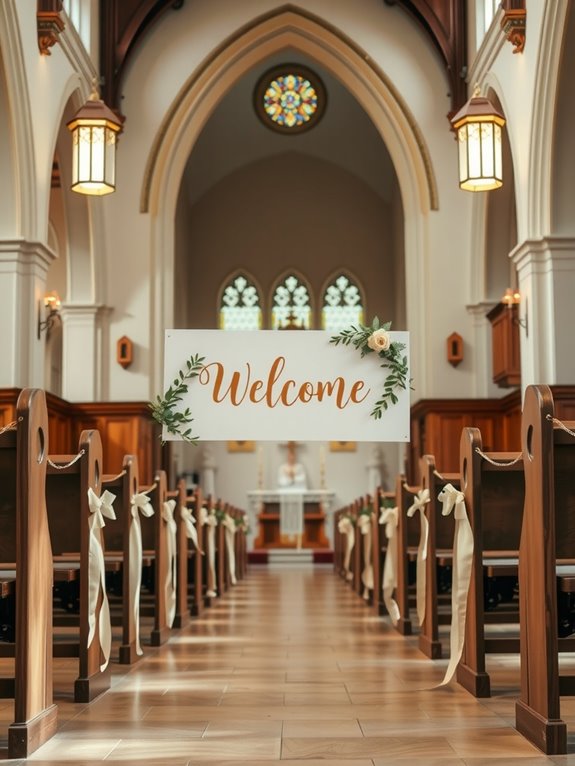
Why leave church doors bare when a thoughtful welcome sign greets arriving guests with intention?
A thoughtful welcome sign greets arriving guests with intention, transforming bare church doors into a warm entrance.
A simple, weather-resistant sign on an easel balances hospitality with appropriate restraint for a religious space. Include your names, wedding date, and a brief message such as “Welcome to our wedding ceremony” without visual clutter. Most couples find that three to five text elements work well on standard 24×36 inch signs, which cost between $40 and $150 depending on materials and customization.
Select minimal formatting using colors that complement your wedding palette while respecting church guidelines. Many venues have specific restrictions about signage materials, placement duration, and mounting methods. Before ordering, confirm whether your church permits easels, adhesive materials, or freestanding structures.
Position your sign where guests notice it immediately upon arrival, yet it won’t block entrances or obstruct staff operations. The ideal spot typically sits three to five feet from the main doors, angled toward the parking area or walkway. This placement delivers personal warmth while maintaining the architectural integrity of the sacred space your guests are entering.
Set Up Your Church Decoration Quickly
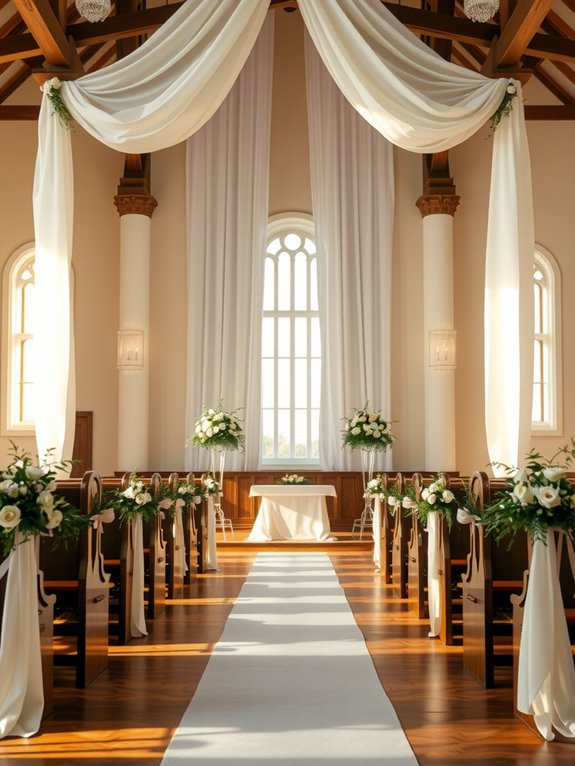
Once your welcome sign’s in place, attention shifts to the ceremony space itself—where timing matters significantly. Smart couples coordinate setup windows with their church’s service schedule to work within available hours. Many churches host two weddings daily with strict teardown deadlines, so planning ahead prevents last-minute scrambling.
Time-Saving Installation Strategies
Quick-install decor options reduce setup complexity. Pew-end garlands or eucalyptus bunches tied with tulle avoid the need for full seating rearrangement. Rather than replacing these elements at the reception, choose dual-purpose decorations that work in both spaces and eliminate redundant installation work.
Flameless candles and lightweight arrangements streamline the process. These options minimize setup complexity while reducing fire risk—a concern many churches enforce strictly. Lightweight pieces also mean fewer people needed to position decorations, which speeds up the overall timeline.
Verify church restrictions before purchasing anything. Many venues prohibit certain materials, limit where decorations attach, or require removal of specific elements before their next service. Knowing these requirements upfront prevents discovering conflicts during setup and allows you to plan alternatives that fit both your vision and the church’s policies.
What setup constraints does your venue impose? Identifying these early shapes your entire decoration strategy and prevents costly timeline disruptions on your wedding day.