
Black-tie events call for floor-length gowns paired with statement clutches that command attention. Midi dresses with polished heels work well for cocktail receptions and semi-formal gatherings. Beach weddings require lightweight fabrics like linen or silk that breathe in warm weather.
Jewel tones such as emerald and sapphire photograph exceptionally well in wedding photos. These colors also convey sophistication without requiring you to wear traditional black or white. Consider the wedding’s venue and time of day before selecting your color palette.
Accessory coordination requires intentional decision-making rather than random layering. Delicate pearl earrings complement classic, minimalist dresses and keep focus on your outfit’s silhouette. Sculptural gold pieces work better with bold, structured gowns that can handle visual competition. The goal involves letting your dress remain the focal point while accessories enhance your overall appearance rather than competing for attention.
Each dress code presents different styling requirements based on formality level and setting. Understanding these distinctions helps you navigate invitation guidelines with confidence. When in doubt about what counts as cocktail attire or semi-formal dress, contact the couple or check the invitation’s specific wording for guidance.
Formal Black Tie: Floor-Length Elegance With Statement Accessories
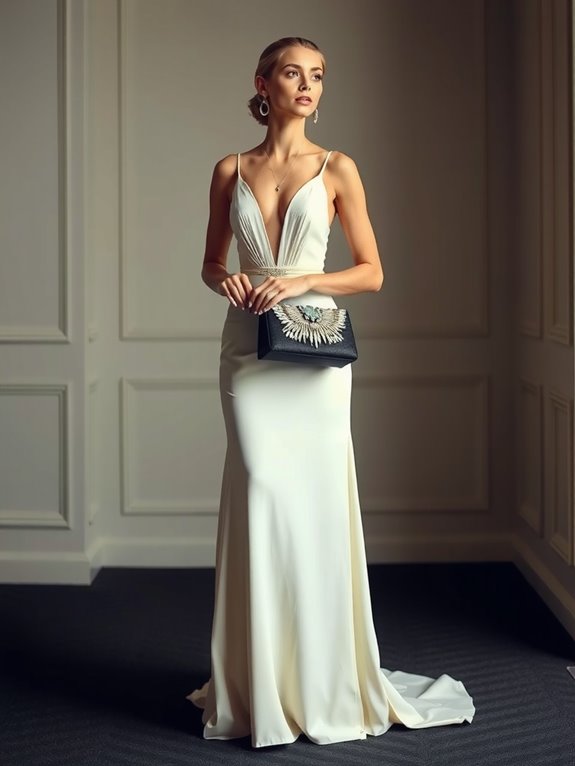
Commanding attention at prestigious wedding celebrations requires understanding how floor-length gowns work with intentional accessories. Your formal foundation starts with a floor-length gown in a standout color, though midi dresses offer a modern alternative if you prefer less traditional silhouettes.
The actual sophistication emerges through your accessory choices. Crystal clutches paired with beaded sandals create visual interest without overwhelming your gown. A coordinated handbag and heel pairing demonstrates thoughtful styling—these details signal whether you understand formal dress codes. Delicate earrings should complement rather than compete with your neckline or gown’s design elements.
Consider the Kate Barton sequin maxi dress as a reference point: it balances glamour with wearability across a formal evening. Your accessories aren’t afterthoughts but deliberate selections that reflect your personal style. This cohesive approach—where each piece serves a purpose—distinguishes guests who understand black-tie expectations from those who simply wear formal clothes.
What separates polished formal dressing from merely wearing expensive pieces? The restraint to let your gown remain the focal point while accessories enhance rather than dominate the overall look.
Cocktail Weddings: Midi and Knee-Length Dresses That Strike Balance
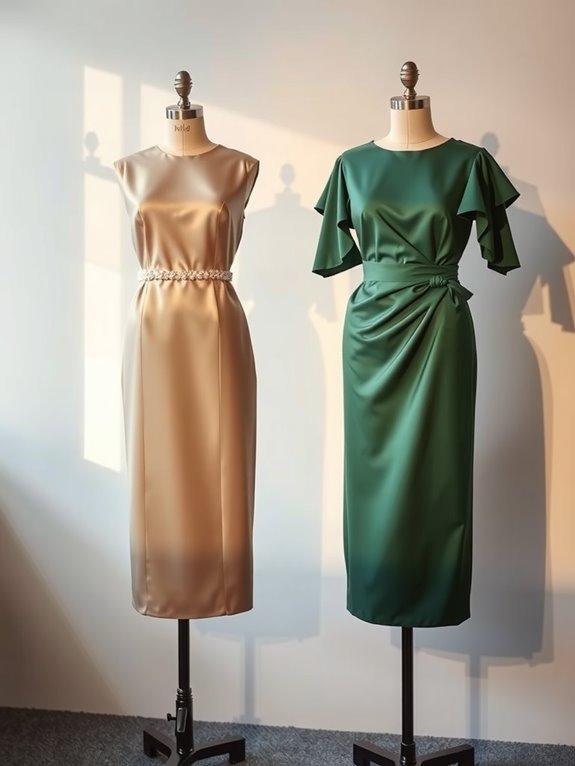
Knee-length and midi dresses work particularly well for cocktail weddings because they hit that middle ground between casual and formal. The dress length you choose should align with the venue’s dress code and your personal comfort level.
Your footwear selection matters more than you might think. Polished heels convey formal sophistication, while quality flats offer practicality if you’ll be standing or dancing for hours. What matters is matching your shoes to both the venue’s formality and the overall aesthetic of your outfit.
Accessories complete the look without excess. An elegant clutch in metallics or neutrals holds your essentials while maintaining a refined appearance. Subtle jewelry—perhaps delicate earrings or a simple bracelet—keeps attention on the dress rather than overwhelming your silhouette. This balanced approach to styling demonstrates thoughtfulness about the occasion without appearing overdressed for a cocktail setting.
Dress Length Guidelines
Dress Length Guidelines
When selecting a cocktail wedding outfit, dress length significantly impacts how polished and appropriate you appear. Getting proportions right means choosing a length that matches both the event’s formality level and your personal style.
Midi dresses work exceptionally well for cocktail events because they balance formal elegance with festive flair. This length—typically hitting mid-calf—reads as sophisticated without the formality of floor-length gowns. Knee-length options pair beautifully with refined accessories like beaded sandals or metallic pumps, creating a cohesive silhouette that feels intentional rather than casual.
Your invitation provides the most reliable guidance for dress selection. If the card doesn’t specify black-tie or formal attire, floor-length gowns typically overshoots the mark. Cocktail dress codes specifically call for shorter hemlines that showcase your footwear and overall proportions.
The event’s tone should drive your final decision. An afternoon garden wedding reads differently than an evening celebration at an upscale venue. When you’re uncertain about expectations, midi and knee-length styles keep you appropriately dressed without second-guessing. Adding embroidery or metallic details to either length provides the sophistication cocktail hours demand while allowing your accessories and grooming to complete the look.
Footwear and Styling Options
Footwear and Styling Options
Once you’ve chosen a midi or knee-length dress, your shoes become the foundation for your entire cocktail appearance. Embellished sandals or pointed-toe pumps work well without dominating the overall look. Metallic or neutral heels create sophisticated contrast against bold colors such as raspberry, papaya, burgundy, and teal.
Your footwear pairs strategically with accessories that refine your presentation. A structured clutch like the Simkhai Marion Imitation Pearl Shell Clutch ($395-450 range) and delicate jewelry pieces complete the styling effectively. These details signal to other guests that you appreciate refined craftsmanship.
Structured fabrics like satin, crepe, and lightweight jacquard already demonstrate solid fashion knowledge. These materials hold their shape while remaining breathable for extended wear throughout the evening. Your shoe and accessory selections communicate both confidence and an appreciation for the occasion’s significance.
Beach and Destination Weddings: Bright Colors and Comfortable Sandals
For beach weddings and warm-weather destinations, balancing color with comfort requires thoughtful choices about fabrics, silhouettes, and footwear. Coastal celebrations benefit from a fresh approach that keeps you cool while maintaining a polished appearance.
Building Your Beach Wedding Wardrobe
Color and Pattern Selection
Tropical patterns and candy-bright tones work particularly well against ocean backdrops and photograph distinctly in natural sunlight. Jewel tones like emerald, sapphire, and coral also perform well in beach settings while avoiding the washed-out appearance that sometimes occurs with pastels near water. Consider how your chosen hue will read in midday versus golden-hour lighting if your event spans multiple times of day.
Fabric Considerations
Lightweight cotton, linen blends, and performance fabrics allow air circulation and reduce heat retention during outdoor ceremonies and receptions. These materials typically cost between $30 and $80 per yard if you’re having something custom made, while ready-to-wear options start around $100. Avoid heavy silks or thick polyester blends that trap moisture and create discomfort during extended outdoor time.
Footwear and Movement
Wedges and flat sandals prevent sinking into sand while providing stability on uneven terrain better than traditional heels. Metallic sandals ($45-$120) offer sophistication without sacrificing practicality, while dressy flip-flops and embellished thong sandals ($30-$65) provide casual alternatives. Going barefoot works for very informal ceremonies, though some guests prefer the security of footwear during cocktail hours or dancing.
Silhouette and Hemline Options
Midi and tea-length dresses create breezier silhouettes than floor-length gowns while offering more coverage than short styles. A-line cuts and fit-and-flare designs work well with salt air, as they move freely without clinging to your body. Shop specific examples: the Aqua Pleated Floral Dress ($148) offers tropical appeal in breathable cotton, while J.Crew’s pink midi ($165-$195) delivers understated elegance in similar materials.
Garden and Outdoor Weddings: Breathable Fabrics for Daytime Grace
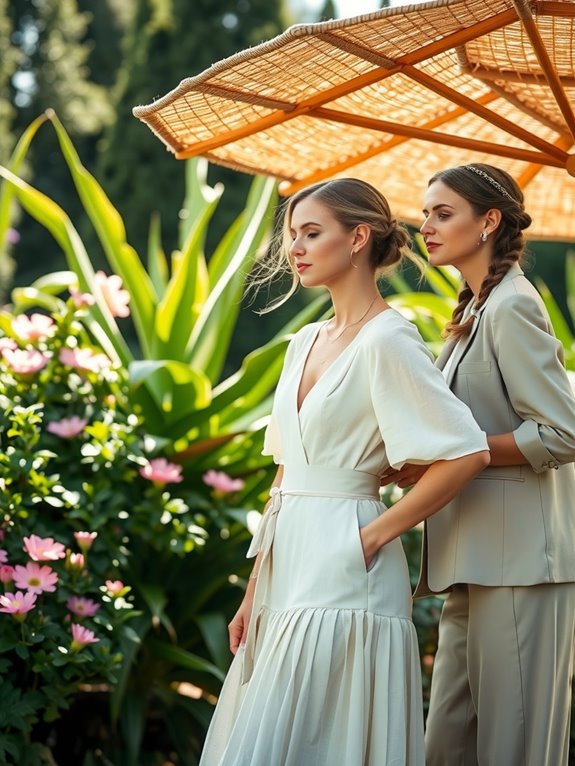
Garden weddings require different fabric strategies than beach celebrations since you’ll navigate shade, grass, and variable temperatures rather than sand and saltwater. Cotton and lightweight silk fabrics keep you cool while preserving a polished appearance throughout the day. A bubblegum pink cotton midi from J.Crew ($98-$128) delivers cheerful semi-formal charm, while semi-sheer black dresses with embroidery work for evening transitions without causing overheating.
Fabric Selection Guide
| Fabric Type | Best For |
|---|---|
| Cotton | Daytime comfort and breathability |
| Lightweight silk | Breathable elegance with drape |
| Silk satin | Ceremony and formal transitions |
| Semi-sheer blends | Evening events and temperature flexibility |
| Linen blends | Heat management in hot climates |
Cotton performs well for outdoor daytime events because it absorbs moisture and allows air circulation. Lightweight silk ($45-$85 per yard when custom made) provides an elegant appearance without the heat retention of heavier fabrics. Linen blends handle humidity better than pure cotton, though they wrinkle more noticeably throughout the event.
Footwear Considerations
Wedges or flat sandals prevent your heels from sinking into grass while maintaining stability on uneven ground. This practical choice lets you move through the celebration without constantly readjusting your shoes or worrying about your footing during toasts and dancing.
Jewel Tones and Bold Colors: Stand-Out Wedding Guest Looks
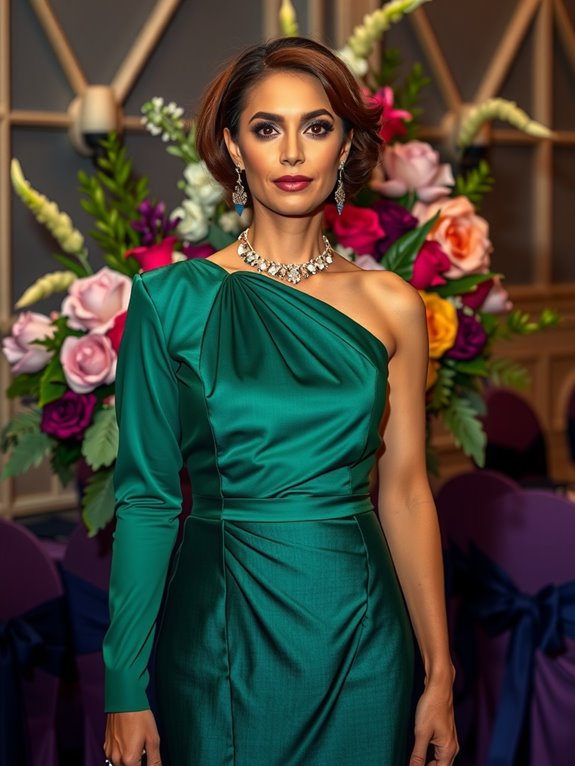
Wearing rich jewel tones like raspberry, emerald, and sapphire gives you a notable presence at wedding celebrations. These deep colors naturally draw attention without requiring loud patterns or excessive embellishment. A teal satin clutch paired with coordinating beaded accessories creates visual cohesion across your outfit. Color psychology research suggests that jewel-toned fabrics photograph well in both natural and flash photography, which matters if you’re featured in wedding photos.
The key difference between a forgettable guest look and a memorable one often comes down to fabric choice and color saturation. Satin and velvet fabrics in jewel tones reflect light differently than matte materials, creating dimension that catches attention on the dance floor. Consider the wedding’s formality level when selecting your shade—sapphire works for black-tie events, while raspberry suits daytime celebrations.
Pairing your jewel-tone dress with metallic accessories in gold or silver provides balance rather than visual chaos. A beaded clutch or embellished shoes in coordinating tones ties your complete look together. You might spend thirty to seventy dollars on quality satin accessories that complement your main piece.
Jewel tones work across different seasons and wedding venues because they maintain their richness regardless of lighting conditions. Unlike pastels that can wash out in certain settings, these colors hold their own at evening receptions and afternoon garden ceremonies. Your fashion confidence comes through when you’ve selected colors that suit your complexion and the wedding’s overall aesthetic.
Rich Jewel Tone Palettes
Rich jewel tones command attention at weddings because they communicate sophistication through color alone. These saturated, luxurious hues work across different dress codes and venue types without appearing overdressed or casual.
Why Jewel Tones Work for Wedding Guests
Jewel tones succeed because they’re inherently formal yet feel contemporary. Unlike pastels that read as seasonal or neutrals that blend into backgrounds, saturated colors like raspberry, teal, and deep papaya make a deliberate statement. Wedding photographers typically report that jewel-toned attire stands out clearly in group photos and candid shots without requiring extreme styling.
Specific Color Options and Styling
Raspberry gowns paired with black satin sandals create a classic contrast that works for evening ceremonies and receptions. This combination costs between $150 and $400 for a quality dress and complements most skin tones. Papaya-hued ensembles benefit from nude accessories that let the fabric remain the focal point rather than competing with multiple accent colors. Teal floor-length dresses with beaded embellishments suit black-tie events and formal afternoon weddings.
The sun-faded blue suit option—occasionally seen in modern wedding collections—pairs effectively with bright accents like pocket squares or ties in coral or gold tones. This approach works particularly well for guests attending outdoor spring or summer weddings where the faded quality suggests intentional styling rather than age.
Accessory Pairing Strategy
Statement earrings in gold, silver, or pearl finishes enhance jewel tones without overwhelming them. Crystal clutches typically range from $80 to $250 depending on embellishment level. Beaded or fringe bags add texture while maintaining the formal aesthetic that jewel tones establish. The selection principle remains consistent: choose pieces that emphasize your color choice rather than introduce competing visual elements.
Bold Color Impact Strategies
Why do saturated hues like raspberry, papaya, and teal consistently outperform muted tones at weddings? Bold colors command attention and create memorable photos while sparking genuine conversations among guests. The key lies in strategic pairing rather than wearing color alone.
Combine vibrant sheath dresses with neutral black sandals or gold jewelry to balance visual impact without overwhelming your frame. Accessories play a supporting role—beaded sandals and pearl drop earrings enhance jewel tones while keeping focus on your outfit’s main color statement. Garden weddings work particularly well with bright cotton pieces such as bubblegum pink midi styles, while a floor-length poppy red gown or sun-faded blue suit demonstrates how refined tailoring amplifies color impact across evening venues.
| Color | Fabric Style | Key Accessory | Best Venue |
|---|---|---|---|
| Raspberry | Zigzag Sheath | Gold Clutch | Formal |
| Papaya | Vibrant Sheath | Pearl Earrings | Cocktail |
| Teal | Cotton Blend | Black Sandals | Garden |
| Poppy Red | Floor-Length Gown | Metallic Jewelry | Evening |
The color you select should align with both venue type and your personal comfort level. Consider lighting conditions—indoor formal venues benefit from jewel tones that photograph well under artificial light, while garden settings showcase bright, natural fabrics. Your tailor can suggest specific fabric weights and finishes that enhance color saturation without appearing costume-like.
Clutches and Heels: Designer Accessories That Elevate Your Outfit
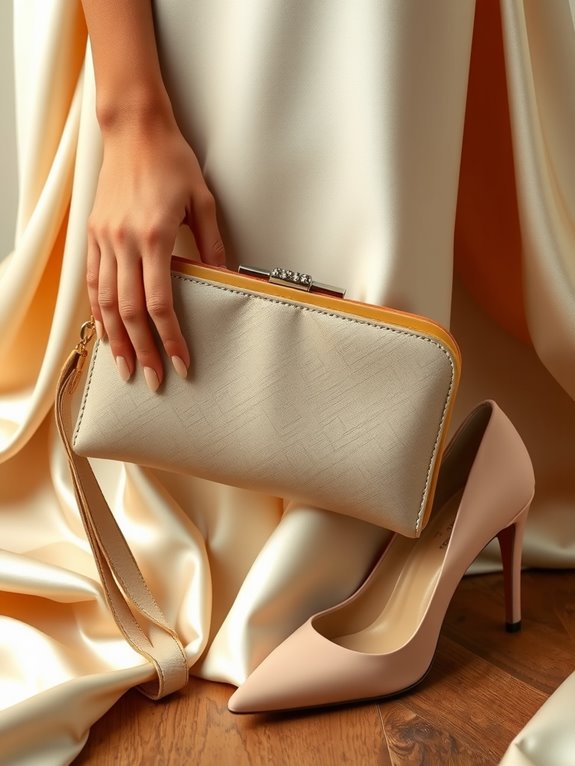
The right accessories can transform an ordinary wedding outfit into something truly memorable. Strategic selection of clutches and heels matters because they either complement or clash with your dress and the event’s formality level.
Essential Accessory Pairings for Wedding Attire
Beaded clutches like Judith Leiber ($1,500-$4,000) work best for formal black-tie affairs, adding sparkle and sophistication to dark evening gowns. These pieces typically feature hand-sewn crystals and measure 6-8 inches wide, holding only essentials like lipstick and a phone.
Embellished sandals such as Ferragamo satin ankle-strap heels ($650-$900) pair beautifully with floor-length dresses, particularly those in flowing fabrics. The structured ankle strap prevents slipping during lengthy ceremonies and receptions where you’ll be standing for several hours.
Metallic chainmail bags including Rabanne 1969 styles ($2,200-$3,500) add glamorous shine to cocktail-length ensembles. These structured pieces work particularly well with sleek, modern wedding attire rather than romantic or vintage-inspired dresses.
Structured leather clutches like Gabriela Hearst’s burgundy styles ($1,800-$2,600) transition across multiple wedding settings because their neutral tones coordinate with both warm and cool color palettes. A structured clutch maintains its shape throughout the event, preventing wrinkles and looking polished in photographs.
Each accessory choice influences your overall polish and how comfortable you feel wearing your complete outfit. When your shoes fit properly and your clutch holds your necessities securely, you can focus on enjoying the celebration rather than worrying about logistics.
Jewelry and Earrings: Final Details for Wedding-Ready Style
How you finish a wedding outfit often determines whether guests remember your polished appearance or overlook your ensemble entirely. The jewelry choices you make in those final moments carry significant weight in completing your look.
Selecting Pieces That Complement Your Ensemble
The right jewelry moves your appearance from ordinary to noteworthy. Sophie Buhai’s freshwater pearl earrings offer understated elegance through their soft luster and classic appeal. Erdem’s gold rosebud designs make bolder statements for formal black-tie events where sculptural details work well. Consider pairing delicate diamond drops with beaded fringe bags for a cohesive approach, or select sculptural gold pinky rings as refined finishing touches that speak to your personal style.
Strategic Use of Metallic Accents
Metallic pieces require thoughtful placement rather than random layering. A Rabanne chainmail bag paired with gold-toned jewelry adds shine without overwhelming your outfit. These pieces coordinate effectively with floor-length gowns and cocktail dresses because they catch light without competing with fabric textures. The key lies in choosing one statement piece—either the bag or multiple jewelry items—rather than combining several bold metallics that dilute each other’s impact.
What Your Jewelry Choices Communicate
Your selections reflect how deliberately you approach wedding attendance. Pieces that complement your ensemble while maintaining appropriate elegance demonstrate respect for the occasion and consideration in your planning. Whether you opt for pearls, gold, or diamond details, each choice contributes to the overall impression you leave with other guests.