
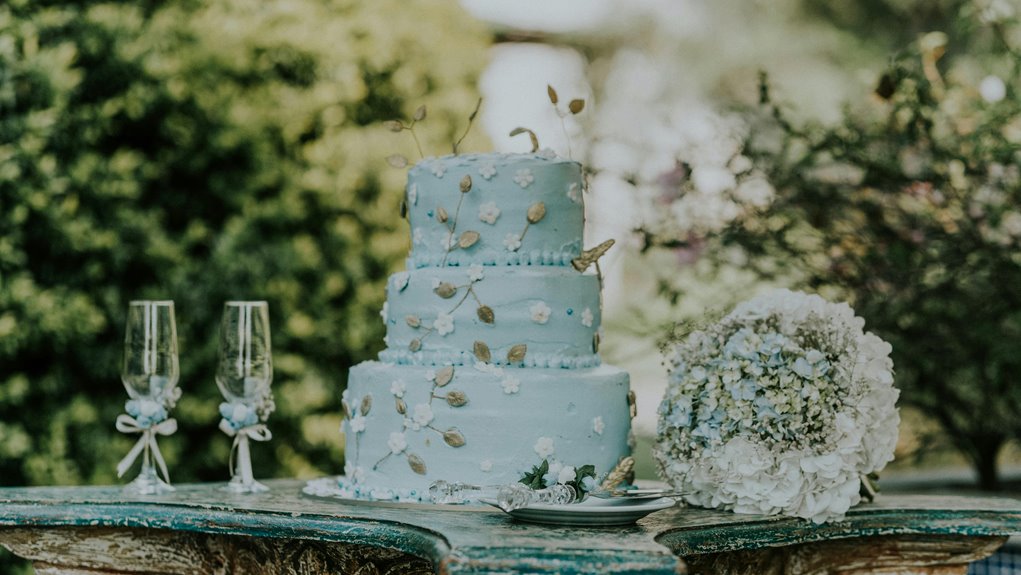
A wedding cake balances three critical elements: flavor, visual design, and structural integrity. This isn’t simply dessert—it’s your reception’s ceremonial centerpiece that requires professional expertise beyond what home bakers typically provide.
Your first decision involves flavor selection. Chocolate, vanilla, citrus, and red velvet remain popular choices, though many couples now explore options like lavender, Earl Grey, or salted caramel to reflect personal taste. Each flavor choice carries equal weight in the overall experience.
Dietary accommodations present another consideration. Gluten-free, vegan, and nut-free options typically increase costs between 15–25% due to ingredient sourcing and preparation protocols. Communicating these needs early prevents last-minute complications with your baker.
Design complexity directly affects both aesthetics and price. Simple fondant finishes cost less than hand-painted details, sugar flowers, or tiered structures requiring internal support systems. Your cake’s design should align with your wedding theme while remaining structurally sound for transport and display.
Timeline matters significantly here. Order your cake six months in advance, particularly if your wedding falls during peak season (May through October). This lead time allows bakers to secure specialty ingredients and schedule their workflow appropriately.
Budget between $2–$15 per slice depending on design complexity, ingredient quality, and local market rates. A 100-guest wedding with mid-range pricing typically costs $400–$800 for the cake alone.
Coordinate delivery timing with your venue and catering team. Your baker needs specific setup location details, table dimensions, and whether they’ll assemble the cake on-site or deliver it fully constructed.
What Is a Wedding Cake: Definition and Core Purpose
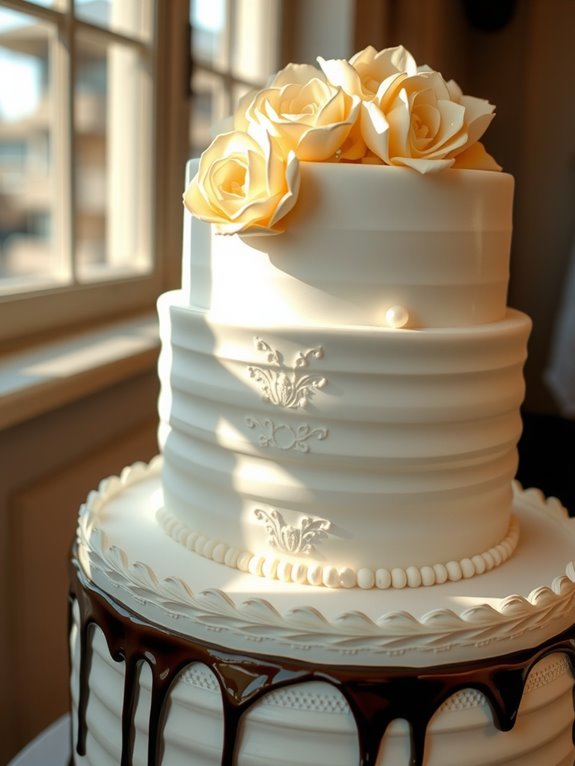
A wedding cake differs fundamentally from a standard sheet cake in both purpose and construction. While a birthday cake simply needs to taste good, a wedding cake must balance flavor, visual design, and structural strength to remain stable during hours of display and photography. Your wedding cake serves as the reception’s visual anchor and ceremonial centerpiece, requiring professional expertise that goes beyond basic baking skills.
The tiers themselves carry social significance within your reception’s landscape. Working with a professional baker means negotiating flavor options, aesthetic choices, and budget constraints into a unified design that reflects your vision. The cake-cutting ceremony taps into traditions that mark significant life milestones, transforming this dessert into something beyond its practical function as food.
What makes a wedding cake distinct from everyday desserts? The answer lies in the intersection of technical precision, artistic execution, and symbolic weight. A professional baker must understand load-bearing requirements for stacked tiers, appropriate frosting applications, and decoration techniques that withstand temperature changes and handling. Your wedding cake becomes the edible representation of your celebration’s joy and personal significance, which explains why couples invest considerably more in this element than they would in a standard bakery cake.
Cake Flavors, Designs, and Dietary Needs: What to Choose
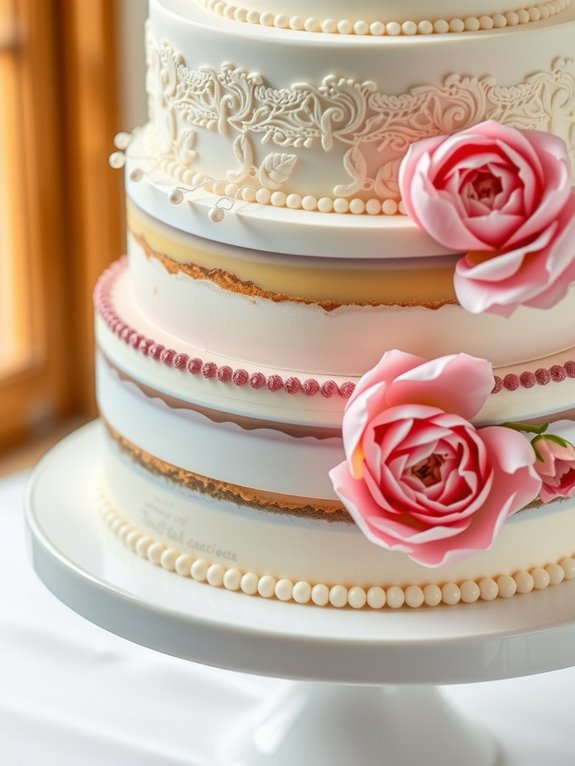
Narrowing down wedding cake options requires a systematic approach to flavor, design, and guest accommodations. Your cake tasting is where exploration happens—citrus, chocolate, vanilla, and gluten-free bases paired with fillings like passionfruit curd or raspberry give you concrete options to evaluate. Each flavor combination affects both your budget and the overall aesthetic you’re building.
How early should you address dietary restrictions? Ideally, at your initial baker consultation. Discuss whether your baker can create gluten-free tiers, separate cakes for allergic guests, or label systems for service. Many bakers charge 15–25% more for gluten-free layers due to ingredient costs and preparation protocols that prevent cross-contamination.
Some couples layer different flavors across tiers—chocolate on the bottom, vanilla in the middle, lemon on top—creating visual interest while letting guests choose their preference. This approach reflects personal taste without requiring multiple cakes. Design moves beyond traditional white fondant; consider color patterns, texture elements like buttercream swirls, or metallic accents that align with your vision.
Practical execution at the reception matters. Collect allergy information from your RSVPs or during final headcount confirmations, typically two to three weeks before your wedding. Work with your baker and caterer to mark dessert stations or individual plates clearly—something as simple as small cards reading “contains nuts” or “dairy-free option” prevents accidents and shows thoughtful planning toward all your guests.
When to Order and Choose Your Baker
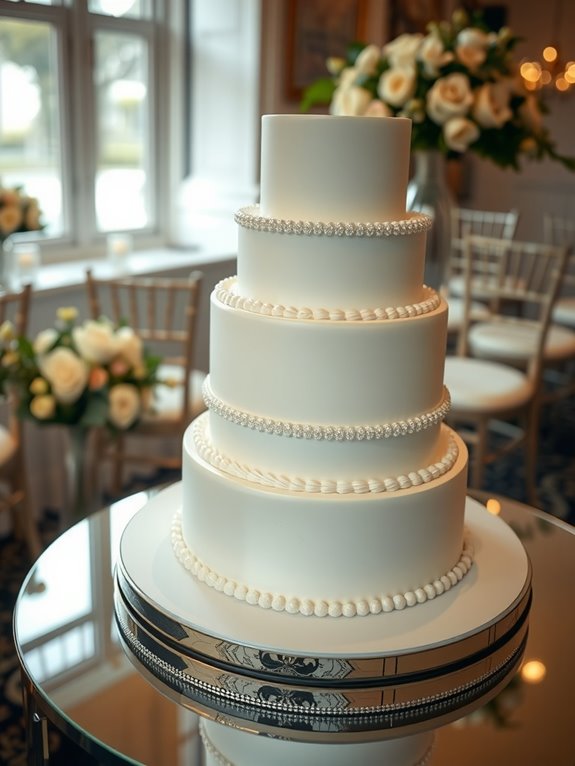
Once you’ve chosen your flavors and design direction, the next phase involves locating a baker equipped to handle your vision. Plan to order your wedding cake at least six months in advance, particularly during Atlanta’s busiest seasons—March through May and September through November. Most professional bakers book their weekend slots months ahead during these periods.
Start your search using online bakery marketplaces or local directories that filter by venue location. Schedule tastings after you’ve selected your caterer and confirmed your guest count, since cake quantities and pricing depend directly on these numbers. Bring inspiration photos, a list of preferred flavors, and any dietary restrictions (allergies, vegan preferences, religious observances) to these tastings.
Moving forward requires securing your date with a deposit. This payment—typically ranging from $100 to $300—locks in your baker’s availability and demonstrates your commitment. Weekend slots disappear quickly, sometimes within weeks of a baker opening their calendar. Review the complete pricing breakdown against your budget before signing the contract. This step protects your financial investment while confirming the baker has reserved time specifically for your wedding.
Wedding Cake Budget and Delivery Setup
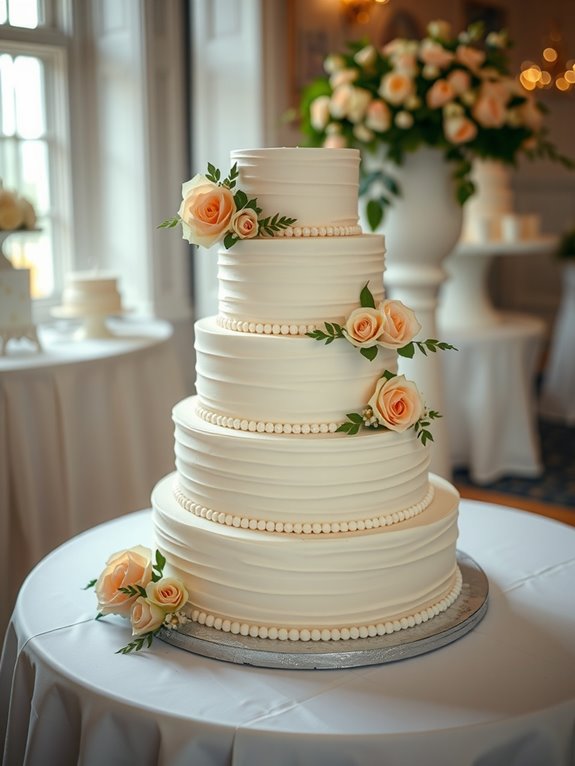
Your wedding cake expenses hinge on several interconnected factors working together. Guest count, design complexity, flavor selections, and delivery logistics all influence your final bill. Most bakers charge between $2 to $15 per slice, with customization and their experience level determining where you land within that range.
Your wedding cake cost depends on guest count, design complexity, flavor choices, and delivery logistics—typically $2 to $15 per slice.
Delivery requires specific planning and equipment. A refrigerated van keeps your tiered cake at proper temperature during transport, with most bakers requesting a two-hour arrival window before your reception begins. Your baker typically handles on-site assembly at your reception table, positioning the cake near optimal lighting to showcase the design work.
During cake tastings, bring a list of dietary restrictions your guests have mentioned. This conversation allows your baker to suggest flavor combinations and fillings that work for everyone rather than discovering limitations later. Request a detailed cutting chart showing portion sizes and cutting lines before your reception day—this simple tool reduces waste and helps your catering staff serve consistent pieces.
The question of what happens to your top tier matters for long-term planning. Some couples freeze their top tier for their first anniversary, while others order a fresh cake at that time. Confirm your baker’s specific recommendations about freezing methods, storage duration, and whether they offer anniversary cake services.
When to Cut the Cake: Timing and Etiquette
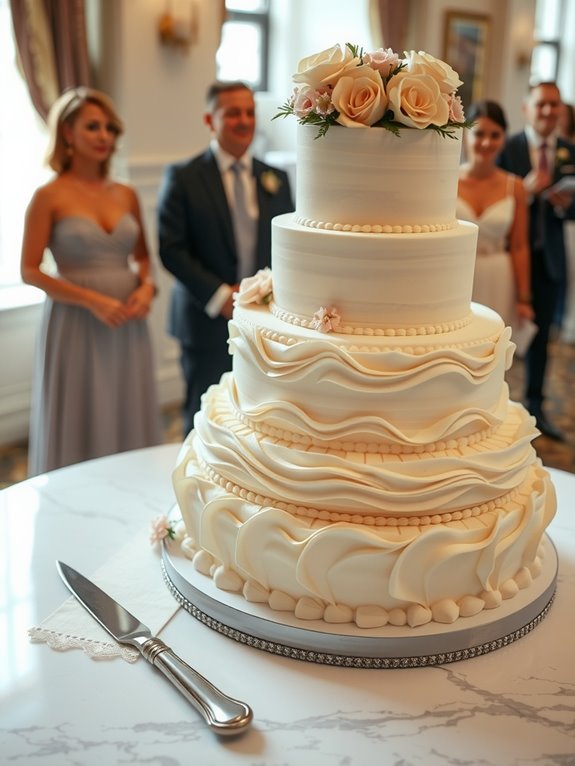
Wedding cake cutting doesn’t follow a single prescribed moment—instead, it’s a deliberate scheduling choice that affects how your reception flows and what your photographer captures. Most couples cut their cake after dinner concludes, though preferences vary considerably based on guest composition and reception length.
Timing the first cut right after your first dance or speeches tends to work well for several practical reasons. Early scheduling guarantees your photographer documents the moment while lighting remains optimal and guests still have energy. Late cuts, conversely, often prompt some guests to leave early, which affects the overall celebration momentum and may require rushing the service process.
A cake cutting song traditionally accompanies this moment, providing a natural focal point for photos and guest attention. Your baker or caterer usually coordinates specific timing details during final planning meetings, typically occurring two to four weeks before your wedding.
You and your partner will make the symbolic first cut together—this part matters because it photographs well and creates a clear moment for guests to watch and photograph themselves. Your catering team handles the actual cutting and plating once you’ve completed those initial cuts. The entire ceremony typically takes between five and ten minutes from start to finish.
Think about where the cake cutting fits within your overall reception schedule. This decision influences when guests perceive major events concluding, which shapes the energy and atmosphere during your remaining reception hours. Working backward from your desired reception end time helps determine an appropriate cutting moment that doesn’t feel either premature or rushed.