


Send invitations 6 to 8 weeks before your wedding. This timeline gives guests enough notice to arrange schedules and make travel plans without feeling rushed. You’ll also avoid the awkward situation where invitees claim they didn’t receive enough notice.
Planning a destination wedding requires different math. Extend your invitation window to 12 weeks minimum, particularly if international guests need to secure passports, arrange time off work, or book flights. Airfare typically drops 2-3 months before travel dates, so this lead time helps guests find better prices and locks in their commitment earlier.
Skipping save-the-dates adds complexity to your timeline. Without that preliminary announcement, move your formal invitation date to 10 to 12 weeks before the wedding. Save-the-dates exist specifically to buy you extra planning time, so eliminating them means compressing your overall schedule.
Order printed invitations 12 weeks in advance to account for production and shipping delays. Most quality invitation printers require 3-4 weeks for standard orders, and rush fees add 15-30% to costs. Building in this buffer prevents the stress of expedited orders when timelines tighten.
Set your RSVP deadline 3 to 4 weeks before the wedding date. This window gives your caterer and venue coordinator time to finalize headcounts, arrange seating assignments, and order appropriate quantities of food and beverages. Venues typically need final numbers 10-14 days before the event, which means your deadline should land well before that cutoff.
Send Invitations 6 to 8 Weeks Before

The ideal timing for mailing wedding invitations falls between 6 to 8 weeks before your wedding date. This window gives guests sufficient time to arrange travel, request time off work, and coordinate childcare without losing the momentum that comes from an imminent event. Your invitation suite arrives when recipients are mentally prepared to respond rather than setting it aside indefinitely.
Mail invitations 6 to 8 weeks before your wedding to give guests time to plan while maintaining event momentum.
Why does this specific timeline matter? Most couples set their RSVP deadline two to three weeks before the wedding, which means invitations need to arrive early enough for guests to receive them, decide, and mail back their response with a comfortable buffer. Mailing during weeks 6 to 8 accounts for postal delays and gives you time to follow up with non-responders before final headcount deadlines.
If you sent save-the-dates months earlier, formal invitations at this point reinforce your guest count expectations and signal that the wedding is moving from abstract future event to concrete reality. Guests who received save-the-dates will appreciate the formal details about location, timing, and dress code contained in your invitation suite.
Destination weddings and events with international guests require different timing. Pushing your invitation timeline to 12 weeks allows attendees from out of the country to navigate visa requirements, arrange more complex travel logistics, and adjust work schedules accordingly. The extended timeline prevents guests from declining simply because they didn’t have enough notice to make arrangements.
Plan 12 Weeks Ahead for Destination Weddings
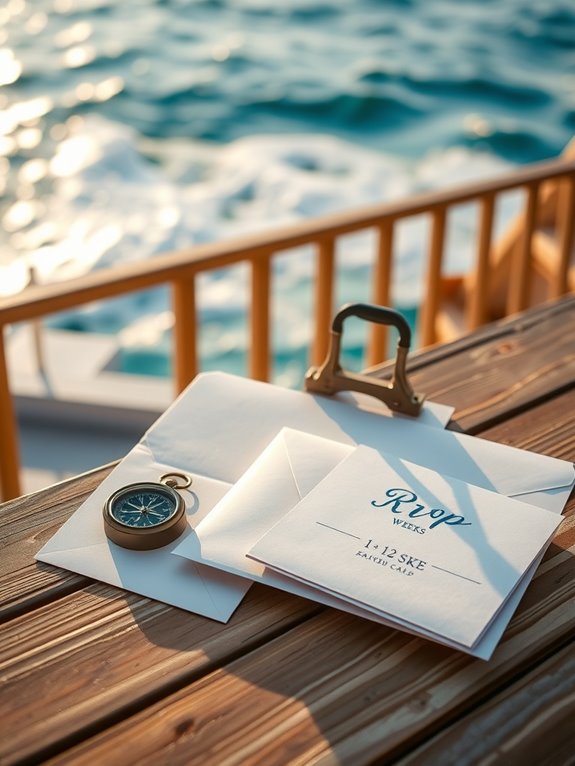
Why does destination wedding timing differ so dramatically from local celebrations? Your guests need significantly more notice to arrange travel, book accommodations, and request time off work. A 12-week invitation timeline for destination weddings contrasts sharply with the standard 6–8 week window for local events.
Travel planning requires substantial lead time that most guests cannot compress. Early invitations allow attendees to secure better flight prices—typically 30–50 percent cheaper when booked 8–12 weeks in advance—and more competitive hotel rates. When guests have adequate notice, they can also navigate employer time-off policies and arrange childcare if needed.
Even when you send a save-the-date announcement months earlier, formal invitations still demand this 12-week minimum. International guest lists or scenarios where most attendees live far from your wedding location may require even longer notice periods. Think of it as the difference between asking someone to rearrange their calendar versus asking them to reschedule their entire financial planning.
This extended RSVP window demonstrates practical consideration for your community’s logistical constraints rather than last-minute scrambling. Your guests will appreciate having time to budget for flights, hotel stays, meals, and activities surrounding the wedding itself.
Extend to 10–12 Weeks Without Save-the-Dates

Skipping save-the-dates doesn’t mean you can compress your invitation timeline—it actually demands the opposite approach. When you’re mailing invitations without this preliminary notice, you’ll need 10 to 12 weeks before your wedding day. This extended lead time gives your guests adequate planning space while allowing you a comfortable RSVP window.
Skipping save-the-dates requires extending your invitation timeline to 10–12 weeks for adequate guest planning and a comfortable RSVP window.
Why does this longer timeline matter? Your invitations carry all the weight when there’s no save-the-date softening the announcement. Guests need sufficient notice to arrange travel, request time off, and adjust their schedules without feeling rushed. International invitations require extra mailing time for postal delivery and customs clearance—often adding two to four weeks beyond domestic delivery. Your wedding planning benefits from earlier confirmations and accurate guest counts, which directly impact catering costs, seating arrangements, and vendor coordination.
Consider the practical logistics. A typical postcard save-the-date arrives four to six weeks before invitations, giving guests a heads-up about the date and location. Without that preliminary touch, your formal invitation becomes the first announcement. Mailing invitations 10 to 12 weeks out acknowledges this responsibility, building trust within your community by showing you’re not expecting immediate responses. This timeline also gives you flexibility if you need to mail a second batch of invitations or send digital reminders to non-responders around the six-week mark.
Order Invitations 12 Weeks Early to Allow for Production
To avoid last-minute panic and production delays, order invitations 12–14 weeks before your wedding. This timeline gives you invitations in hand by the 10-week mark, allowing time to review quality and mail them at 8–9 weeks out.
| Timeline | Task | Details |
|---|---|---|
| 12–14 weeks | Order invitations | Account for production delays |
| 10 weeks | Receive invitations | Ready for mailing invitations |
| 8–9 weeks | Send invites | Allow guest travel planning |
| 6 weeks | Track RSVPs | Confirm final guest count |
Production speed varies significantly based on your invitation choice. Designer stationery typically requires about 10 weeks of lead time before mailing, while online printing services deliver finished invitations in roughly 4 business days. Why the difference? Custom stationery involves multiple design rounds, paper selection, and often hand-finishing details like letterpress or foil stamping.
Destination wedding guests particularly benefit from extended notice. When your celebration requires air travel or hotel bookings, guests need time to request time off work, compare flight prices, and arrange childcare. Starting with a save-the-date 4–6 months ahead gives destination attendees a realistic window for planning.
Mailing your formal invitations at the 8–9 week mark allows guests roughly 6–8 weeks to confirm attendance and make necessary arrangements. This buffer prevents the rushed scenario where guests RSVP days before your wedding, leaving you scrambling to finalize headcounts with your caterer and venue.
Set RSVP Deadlines 3 to 4 Weeks Before
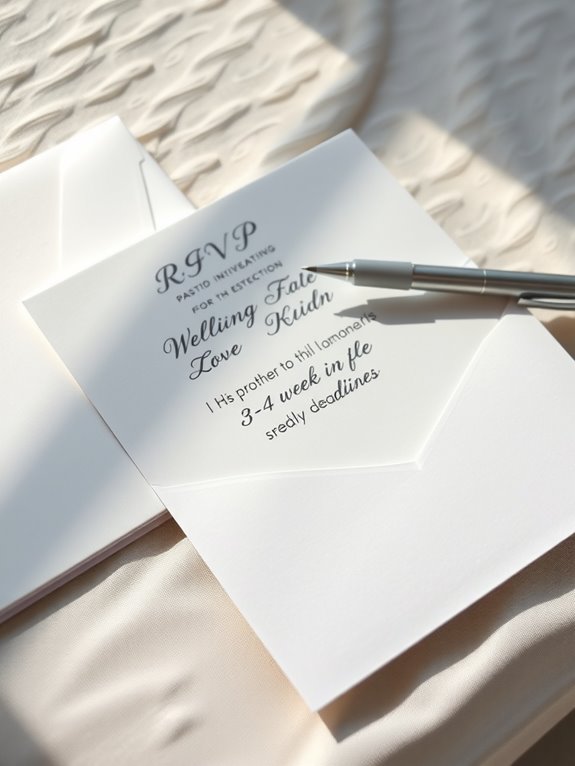
Once invitations reach your guests’ mailboxes, establish a clear response deadline three to four weeks before your wedding. This window provides sufficient time to finalize your headcount and coordinate with caterers, venues, and other vendors about final arrangements.
Your invitation needs to explicitly state the RSVP deadline so guests know exactly when to respond. A confirmed final count allows you to adjust seating arrangements, select meal options, and handle logistics without scrambling during the final days before your wedding.
Plan a follow-up request about one week after your RSVP deadline closes. This gives you time to contact guests who haven’t responded and still meet your vendor deadlines for final numbers.
Destination weddings require different timing. Extend your RSVP deadline to six to ten weeks prior to give guests adequate time to book travel and accommodations. A wedding website with online RSVP capabilities streamlines the response process and lets you send automated reminders as your deadline approaches. This method typically generates faster responses than traditional paper cards and provides a built-in record of who has committed to attending.