
You can personalize your ceremony by layering emerald and green palettes with gold accents, which creates a cohesive visual foundation that feels intentional.
Centerpieces blending cherished photos with greenery run between $15–$35 each and serve dual purposes: they honor your relationship while anchoring the ceremony space.
Handwritten signage reflecting your story adds narrative depth that printed alternatives simply cannot match. Seeded paper place cards priced at $0.50–$1.50 per card offer practical appeal—guests receive a keepsake they can plant afterward, extending your wedding’s presence into their gardens.
DIY wooden signs guide guests with visual impact while costing $20–$40 per piece to construct. How much of your ceremony’s personality comes through in these small, strategic choices? The answer reveals itself in how intentional details work together rather than standing alone.
These elements balance aesthetic appeal with realistic budgeting. Your relationship’s narrative embedded throughout the space feels authentic because it draws from genuine materials and personal touches, not generic decorative trends.
Set the Mood: Emerald & Green Color Palettes for Wedding Decorations
Emerald and green palettes offer sophisticated depth compared to traditional wedding color schemes. When you pair emerald tones with gold accents and natural greenery, you create a cohesive, garden-inspired atmosphere that feels both luxurious and organic.
The layering of varying shades—from rich emerald to soft sage—adds visual dimension across table runners, backdrops, and floral installations. This approach prevents any single color from overwhelming the space while maintaining design harmony throughout your venue.
These palettes perform exceptionally well in wedding photography. Position emerald accents near rings, linens, and other key details so they photograph with clarity and depth. The color reflects light differently than lighter neutrals, which creates natural contrast in close-up shots without requiring additional lighting adjustments.
Balance bold emerald tones by introducing soft metallics and textured fabrics strategically. A champagne or rose gold runner paired with emerald linens, for example, prevents the overall look from feeling too heavy or dark. Textured fabrics like velvet, linen, or silk add visual interest without additional color.
Your color palette becomes a visual framework for personal storytelling throughout the celebration. When guests move through different areas of your reception, the consistent emerald and green elements tie the narrative together while allowing individual design moments to shine.
Design Centerpieces That Tell Your Story
How do you transform a table centerpiece from mere decoration into a personal narrative? The answer lies in layering meaningful objects with natural elements to create visual storytelling that reflects your relationship.
Combine framed photos, cherished books, handwritten quotes, greenery, and candles into a mixed-media display. This approach adds texture while incorporating heirloom objects alongside fresh blooms, which symbolizes growth within your partnership. A florist typically charges $15–$35 per centerpiece when combining these mixed elements, compared to $8–$12 for florals alone.
Mixed-media centerpieces layer meaningful objects with natural elements, symbolizing growth while adding depth and texture to your celebration.
Relationship milestones serve double duty as decoration and conversation starters. Photos from travels or significant dates give guests something to discuss while navigating the reception space, essentially creating a visual timeline across your tables. You might feature a photo from your proposal on one table, an engagement trip on another, and a meaningful location on a third.
Strategic planning makes the difference between scattered items and cohesive design. Choose a color palette like emerald green or navy blue for visual coherence across all photographs. Arrange centerpieces modularly so they photograph well and align with your overall design theme—typically requiring four to six weeks of planning before your event date.
This intentional approach turns ordinary tables into intimate storytelling spaces. Rather than viewing centerpieces as background decoration, you’re inviting guests into the narrative of your relationship, one table at a time.
Make Signage That Speaks to Your Guests
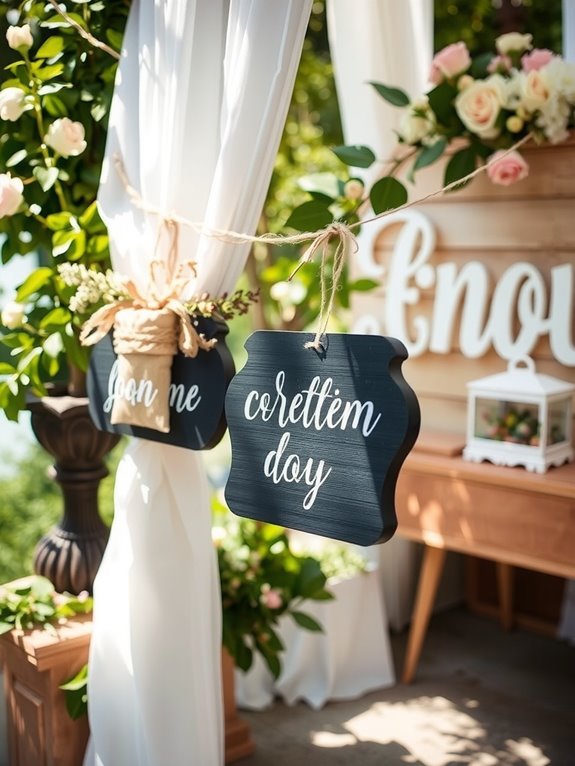
Signage completes your wedding narrative by guiding guests through your celebration with clear intention and purpose. While centerpieces draw people into your relationship story, signs provide the practical framework that helps them navigate your venues and understand the day’s timeline.
Handwritten signage conveys authenticity in ways printed materials cannot replicate. Consider incorporating meaningful quotes or song lyrics that resonate with your journey together—these details create memorable touchstones that reflect your personality and values throughout the reception.
Sign Types and Practical Applications
| Sign Type | Primary Function | Cost Range | Implementation |
|---|---|---|---|
| Wooden directional boards | Guide guests between venues and spaces | $40–150 per sign | Repurpose reclaimed wood or purchase unfinished boards from home improvement stores |
| Chalkboard schedule | Display timeline, menu details, and messages | $25–75 per board | Purchase frames from craft suppliers; reuse for future events |
| Hand-painted quotes | Share meaningful text reflecting your story | $50–200 per sign | Commission a local artist or attempt DIY with acrylic paint and practice lettering |
DIY signage merges practical function with emotional connection by reducing costs through thoughtful repurposing and design choices that feel distinctly personal. A wooden directional sign made from reclaimed barn wood costs significantly less than custom fabrication while maintaining genuine character. Hand-lettered chalkboard messages take roughly two to four hours to complete but remain reusable for anniversary parties or other celebrations.
What specific locations in your venue require directional guidance—the ceremony site, cocktail hour space, reception hall, or restroom areas? Answering this question helps you determine how many signs you actually need rather than creating unnecessary pieces.
Craft Personalized Place Cards and Table Details
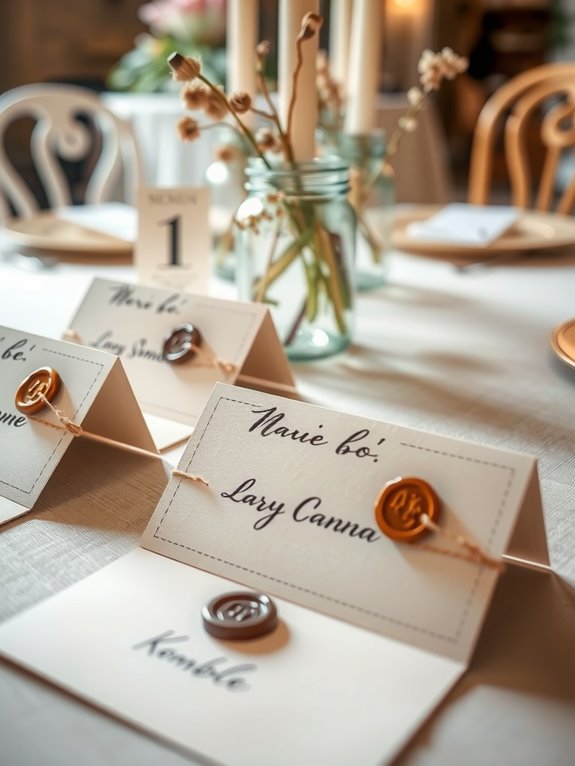
Place cards do more than assign seats—they’re tangible expressions of your relationship that guests take home as physical reminders. The materials and details you choose communicate how much thought you’ve invested in their experience.
Seeded paper place cards offer genuine functionality beyond sentimentality. You handwrite guest names on paper embedded with wildflower or herb seeds, then guests plant them at home. This creates an ongoing connection to your wedding rather than a item destined for recycling. Seeded cardstock costs between $0.50 and $1.50 per card from suppliers like Botanical Paperworks or local print shops, making this option competitive with standard cardstock.
Foil-stamped or watercolor designs on kraft cardstock provide affordable personalization without requiring handwriting skills. A calligrapher charges $1 to $3 per card for names, while DIY watercolor designs take roughly 15 minutes per card if you’re comfortable with painting. Digital printing services can produce watercolor-style designs at $0.30 to $0.75 per card when ordering 75 or more cards.
Small charms attached to cards—vintage keys, miniature books, or custom shapes—deepen the personal connection when they reference shared memories. A charm supplier typically charges $0.25 to $1 per piece depending on customization. You attach them with twine, ribbon, or a small adhesive dot during final assembly.
Pairing place cards with coasters continues the narrative across the tablescape. Hand-stamped cork or wood coasters with your wedding date and a brief gratitude message cost $0.40 to $1.20 each to produce. Setting one at each place reinforces intentional design and gives guests a functional keepsake they’ll actually use.
Handwritten menus or mini photo displays showing your relationship timeline replace generic table décor with storytelling elements. A single 4×6 framed photo at each table requires roughly eight frames and printing costs around $2 to $4 per frame, depending on quality.
DIY Decorations That Cost Less Than You’d Think
You probably think professional wedding décor demands a five-figure investment, but handmade decorations prove otherwise. DIY pieces actually reduce costs while offering personalization that resonates with your guests in meaningful ways. Strategic choices like handmade signage, upcycled centerpieces, and layered lighting make venues feel intentional without the premium price tag.
| Item | Cost Per Unit | Impact Level |
|---|---|---|
| Wooden signage | $20–$40 | High |
| Place cards | $1–$2 | Medium |
| String lights | $100–$200 total | High |
| Repurposed centerpieces | $5–$15 | Medium |
Affordable decorating doesn’t require compromising on how things look. Combining floral arrangements from discount retailers with handmade elements creates an authentic aesthetic that feels intentional. Your upcycled centerpieces carry personal narrative in ways generic florals simply cannot match. Personalized details communicate care more effectively than expensive standardized options ever will.