Seven Wedding Flowers Every Bride Should Know About
Building your wedding vision requires understanding which flowers work within your budget and timeline. Roses deliver timeless romance across any price point, making them reliable for nearly every wedding style. Peonies anchor luxury bouquets at $3–8 per stem during peak season, though their availability narrows to late spring and early summer. Hydrangeas provide visual fullness for $3–5 per stem, allowing you to cover more space without excessive cost.
Ranunculus add delicate spring texture at $1.50–3 per stem, while orchids command higher investment at $15–30 per stem but offer 2–4 week longevity that extends your arrangement’s lifespan. Calla lilies offer modern elegance with clean lines that suit contemporary aesthetics. The seventh choice depends on your personal preference and seasonal availability.
Timing your blooms seasonally cuts costs by 20–40 percent while guaranteeing freshness. Spring flowers like peonies and ranunculus cost less April through June. Summer brings affordable garden roses and hydrangeas. Fall offers dahlias and chrysanthemums at reduced prices.
Each flower serves distinct design purposes beyond aesthetics. Understanding their characteristics, symbolism, and practical constraints means you’re making informed choices rather than decisions based on what looks good in photographs. Roses symbolize love and passion across cultures. Peonies represent prosperity and romance in many traditions. Orchids convey luxury and strength, which influences how guests perceive your overall wedding aesthetic.
Your florist can guide you toward combinations that work with your venue’s lighting, your dress style, and your photography goals. Discussing these details upfront separates well-coordinated arrangements from combinations that simply exist together without intention.
How to Choose Wedding Flowers for Your Style and Budget
Matching Flowers to Your Wedding Aesthetic
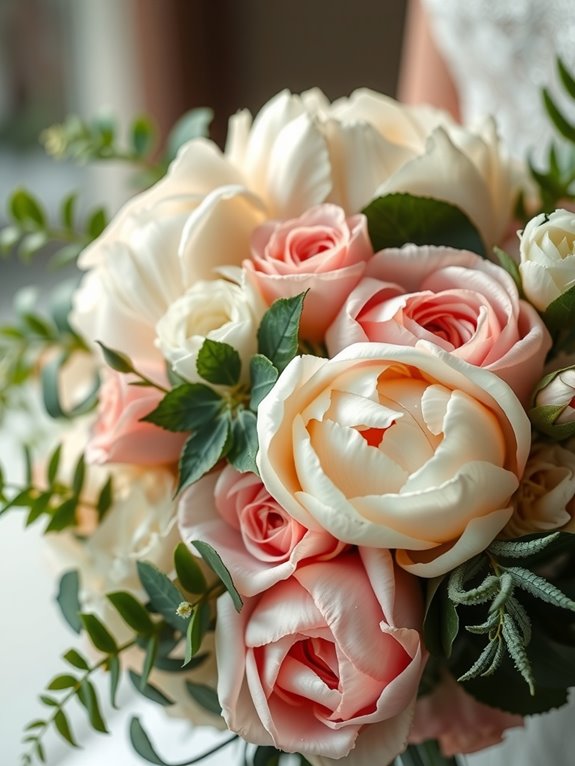
Your wedding style should guide every flower decision you make from start to finish. Classic brides typically choose timeless roses and lilies that have remained popular for generations. Rustic themes call for sunflowers and wildflowers that feel natural and informal. Modern couples often select bold exotics like anemones to add edge and personality to their arrangements.
Your wedding style should guide every flower decision you make from start to finish.
What draws you to certain flowers—their shape, color, or the feeling they create? Answering this question helps narrow your options and ensures your bouquet reflects who you actually are.
Understanding Seasonal Availability and Costs
Seasonality affects both what’s available and what you’ll pay for it. Spring in Massachusetts favors budget-friendly tulips and daffodils, which typically cost $1–3 per stem compared to $3–6 for imported varieties. Summer showcases peonies and daisies at peak freshness, though peonies run $3.50–6 per stem during their short season. Winter requires evergreens and amaryllis instead, since fresh spring blooms aren’t naturally available.
Choosing flowers that grow during your wedding month can reduce costs by 20–40 percent. Your florist can tell you which blooms are locally abundant during your date.
Planning the Right Timeline and Color Strategy
Starting your flower planning six to twelve months ahead secures availability and prevents rushed decisions. Work with your florist early to build a cohesive color palette across your bouquet, ceremony arrangements, and reception centerpieces.
Discuss potential substitutions before your wedding date arrives. Weather or supply issues may limit certain flowers, but having backup options prevents budget overruns or design changes you didn’t anticipate.
Roses: The Romantic Wedding Classic
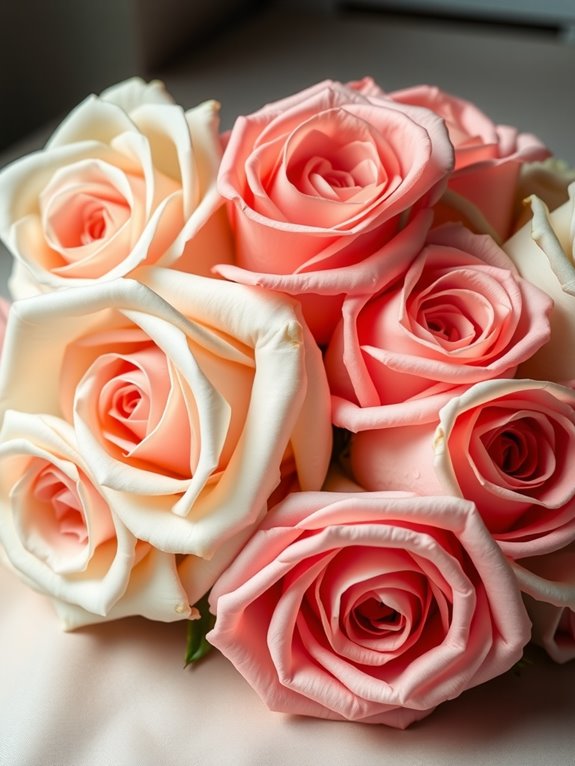
Roses consistently appear in bridal bouquets across nearly every wedding style and budget level. These flowers carry symbolic weight that resonates with couples planning their ceremonies. Red roses convey passionate romance, while white roses signal purity and new beginnings. Pink varieties communicate different messages depending on their shade: light pink expresses admiration, while dark pink signals appreciation and gratitude. Yellow roses express joy and friendship, and orange roses denote sensuality.
Why does rose symbolism matter for your bouquet design? The color you select delivers specific emotional messaging to your guests. When you coordinate roses with complementary flowers, you’re creating a cohesive palette that reflects both your personal style and wedding theme.
Roses have deep historical connections to romance itself—they’re associated with Venus, the planet of love. This botanical heritage gives them particular relevance for couples seeking flowers with meaningful backgrounds. The versatility of roses means you can build your bouquet around a single rose color or layer multiple shades to create visual depth.
Working with your florist to select rose varieties involves understanding availability and seasonal pricing. Garden roses typically cost between $3 to $5 per stem, while standard roses range from $1 to $3 per stem. Your florist can suggest which varieties work best within your budget and timeline, especially if you’re planning your wedding during peak season when rose prices may increase by 20 to 40 percent.
Peonies: The Luxury Wedding Bloom
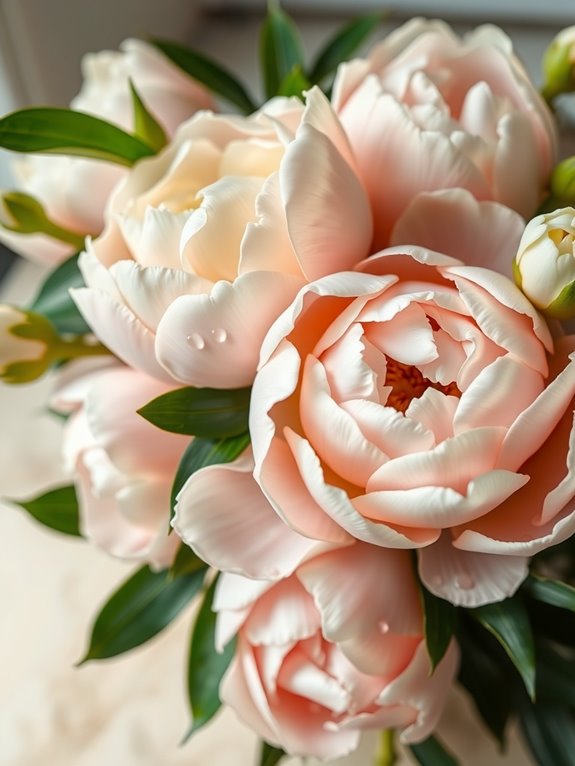
When you select peonies for your wedding, you’re choosing blooms that carry deep symbolic meaning around love, wealth, and romance. These flowers deliver the full, layered appearance that wedding photographers consistently request for their visual impact. Their generous petals create substantial textures that work well as bouquet anchors, particularly when combined with soft greenery and neutral color schemes.
Peonies bloom from late spring through early summer, which shapes your wedding date options considerably. This seasonal window matters because availability directly affects pricing—expect to pay $3 to $7 per stem during peak season, with costs rising 40 to 60 percent outside their natural blooming period. Royal weddings have featured peonies for generations, cementing their association with formal elegance and established taste.
What makes peonies practical for wedding planning, beyond their visual qualities? Their sturdy stems hold up well throughout lengthy ceremonies and receptions, requiring minimal special handling compared to more delicate blooms. Most florists recommend ordering peonies 8 to 12 weeks in advance during peak season, and significantly earlier if your wedding falls outside their natural window.
The pairing strategy matters as much as the flower itself. Soft greenery like eucalyptus or Italian ruscus complements peonies without competing for attention. Muted color palettes—blush, cream, sage, and soft gray—allow the flower’s natural texture to become the focal point rather than bold colors that might overwhelm their delicate appearance.
Romance And Symbolic Meaning
Peonies have earned their reputation as a premium wedding flower choice, and the reasons extend well beyond their visual appeal. These blooms carry symbolic weight that resonates throughout wedding traditions—they represent love, romance, and abundance, qualities that couples want reflected in their celebration. Historical associations tie peonies to royal favor and enduring commitment, positioning them within a lineage of high-status florals.
What draws couples to peonies beyond symbolism? Their large, layered petals create visual fullness that photographs exceptionally well, a practical consideration in an era where wedding images circulate widely across social media. The blooms also symbolize a happy marriage and lasting prosperity in various cultural traditions, adding meaningful depth to your floral selection.
The timing of your wedding matters significantly when considering peonies. These flowers peak during spring and early summer months, roughly April through June depending on your location. Selecting peonies during their natural season costs less than sourcing them during off-peak periods—expect to pay $3 to $7 per stem in season versus $5 to $12 during winter months. A standard bridal bouquet containing 20 to 25 stems might cost $60 to $150 during peak season.
Florists often recommend peonies for couples seeking flowers that align with traditional wedding aesthetics while maintaining a sense of botanical authenticity. The choice communicates your engagement with established wedding conventions and your appreciation for flowers with documented cultural significance rather than those selected purely for momentary trends.
Luxurious Bloom Characteristics
Peonies earn their reputation as luxury wedding flowers through genuine horticultural advantages rather than marketing hype. Their densely packed petals create full, rounded blooms that naturally draw focus in any arrangement, giving florists substantial visual material to work with. A single peony head can measure four to six inches across, commanding attention without requiring numerous stems per bouquet.
The peak season runs from late May through June in most North American growing regions, which directly affects both availability and cost. During peak season, expect wholesale prices between twelve and twenty dollars per stem, while off-season peonies sourced from specialized growers can reach thirty to forty dollars per stem. This seasonal window requires wedding couples to plan their dates strategically if peonies top their preference list.
Color compatibility works in peonies’ favor for coordinated wedding palettes. Their natural soft pink, cream, and white tones blend seamlessly with blush, ivory, and sage green combinations without requiring color manipulation. Florists appreciate this because it simplifies design decisions and reduces the need for supplementary blooms to bridge color gaps.
Symbolism attached to peonies—prosperity, romance, and good fortune—appeals to couples seeking flowers with cultural meaning. This symbolic value, combined with their association with high-profile celebrity and royal weddings, positions them firmly in the luxury category. Whether this perception justifies the higher costs depends on your budget priorities and how important seasonal availability feels for your timeline.
Wedding Bouquet Integration
Peonies work best in bridal arrangements when you plan around their late spring availability and limited growing season. Strategic timing helps you access quality blooms at peak freshness and reasonable cost.
Practical Integration Approaches
Use peonies as your anchor bloom. Positioning them at your bouquet’s center lets blush pinks or ivory tones set the foundation for a cohesive color story. Most florists charge between $3 to $8 per stem for premium garden varieties, so anchoring your design around three to five stems keeps costs proportional to impact.
Layer complementary flowers strategically. Roses and ranunculus pair well alongside peonies because their smaller blooms create textural contrast without competing for visual focus. Why layer at all? Dense, multi-textured arrangements photograph better and last longer in the vase because air circulates between different flower types.
Time your wedding for peak season. If your date falls between late May and June, you’ll find peonies abundantly available from local growers rather than expensive imports. Off-season peonies sourced from overseas markets can cost 40 to 60 percent more and arrive with shorter vase life.
The velvety peony petals deliver a garden-inspired aesthetic that feels intentional rather than trendy. Florists recognize them as a premium choice because they require careful handling, arrive in tight buds that need four to seven days to open, and command respect within any arrangement they inhabit.
Calla Lilies: Modern Elegance for Contemporary Weddings
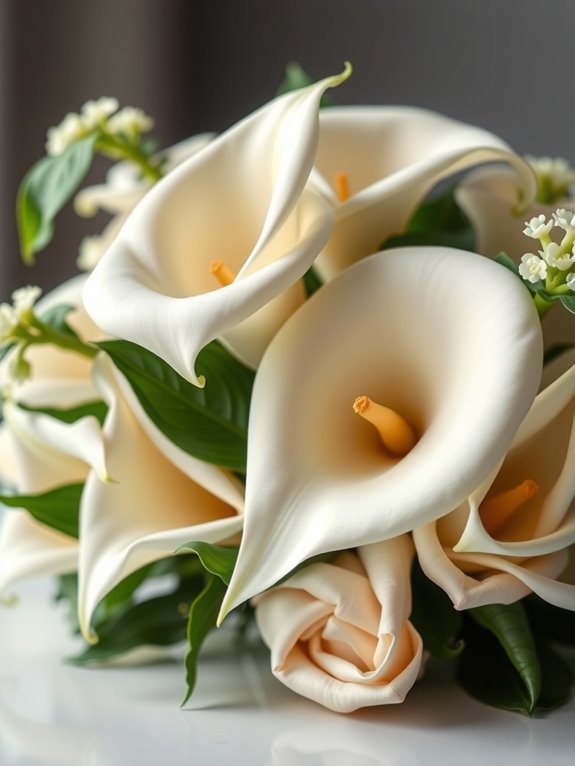
Sleek and sophisticated, calla lilies have become the preferred choice for couples seeking modern elegance that moves beyond traditional floral conventions. These trumpet-shaped blooms originate from Africa and bring contemporary sophistication to wedding bouquets with their glossy, refined texture.
Calla lilies work beautifully in modern floral design because they offer versatile color options that complement sophisticated palettes. Available in classic white, blush, burgundy, and even black varieties, they deliver bold visual impact while maintaining longevity as cut stems—typically lasting seven to ten days in a vase with proper care.
Their contrasting symbolism represents both youth and reflection, which resonates with couples who want layered meaning woven into their wedding design. The elegant form creates dramatic tall centerpieces that work well in contemporary aesthetics, often reaching heights of eighteen to twenty-four inches depending on the variety.
A typical calla lily costs between two and four dollars per stem when ordered through wholesale florists, making them more affordable than premium garden roses while maintaining a luxurious appearance. Choosing calla lilies signals that your wedding prioritizes distinctive beauty and refined taste rather than following conventional floral trends.
Hydrangeas: Volume Without the High Cost
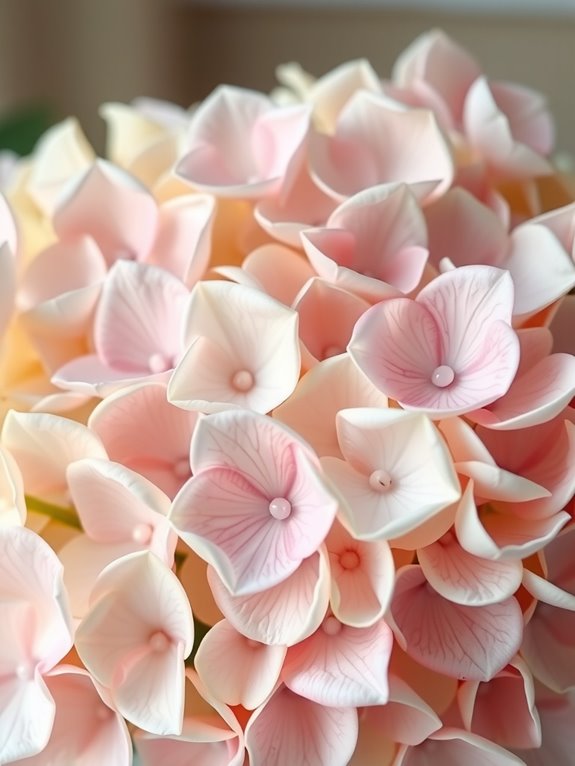
When you’re planning a wedding on a budget, hydrangeas deliver the lush, voluminous look you want without straining your floral expenses. These blooms create dramatic fullness with fewer stems than most alternatives, meaning you get substantial visual density at roughly 30-40 percent less cost than premium roses or peonies. A single hydrangea stem produces multiple florets, so one stem functions like five to seven individual flowers from other varieties.
Pairing hydrangeas with strategic greenery—think eucalyptus, salal, or Italian ruscus—maximizes visual impact while keeping centerpieces and bouquets both polished and economical. Most florists charge between $3 and $6 per stem for quality hydrangeas, compared to $4 to $8 for garden roses. For a typical bridal bouquet requiring 15-20 stems, this difference adds up to meaningful savings before you even consider venue flowers or reception arrangements.
What makes hydrangeas particularly practical for budget-conscious couples? Their architectural structure requires minimal filler material, which florists typically charge separately. You’ll notice that most floral designers can create a fuller-looking centerpiece using hydrangeas and two types of greenery than they could using a scattered arrangement of more expensive single-stem blooms.
The color range matters too. Available in white, cream, soft pink, lavender, and deeper blues, hydrangeas coordinate easily with most wedding palettes without requiring special orders that trigger premium pricing. Consider timing your wedding for June through September when hydrangeas are in peak season—this typically lowers costs by 15-25 percent compared to off-season availability.
Budget-Friendly Floral Volume
Budget-Friendly Floral Volume
Most couples overlook hydrangeas when planning affordable wedding florals, though these flowers quietly deliver substantial volume at reasonable costs. You’re acquiring lush, textured blooms without the price tag attached to premium alternatives—a practical approach for strategic floral planning.
Why Hydrangeas Deliver Maximum Value****
Hydrangeas cost significantly less per stem than comparable high-impact flowers while creating dramatic visual presence in centerpieces and bouquets. Their large, clustered blooms generate depth instantly, meaning fewer stems achieve fuller arrangements than traditional options would require. A single hydrangea head typically ranges from $2 to $4 wholesale, compared to $3 to $6 for garden roses offering similar visual impact.
What makes these flowers particularly efficient for budget planning? Their substantial size means a single stem fills more space than smaller flowers need multiple stems to accomplish. When you pair hydrangeas with seasonal greenery—eucalyptus, ruscus, or leather leaf—you maintain rich aesthetics without requiring additional expensive florals to complete arrangements.
Pink hydrangeas specifically communicate heartfelt gratitude and romance, resonating emotionally while respecting your budget constraints. Rather than purchasing multiple flower varieties to achieve generosity in design, hydrangeas accomplish this visual abundance through volume alone, allowing you to allocate remaining floral budget toward accent flowers or greenery selections.
Fullness And Visual Impact
You’ve probably noticed how some wedding bouquets appear lush while others look thin, even with comparable stem counts. Hydrangeas solve this problem through their substantial flower clusters that deliver significant visual presence. Their oversized heads allow you to build full arrangements using fewer stems than smaller blooms would require, which directly affects your floral budget.
Each hydrangea bloom provides considerable volume and mass to centerpieces and bouquets. When paired with complementary greenery and secondary flowers, they create layered depth that reads as intentionally designed rather than sparse. Pink hydrangeas specifically carry meaning in wedding design—they communicate heartfelt gratitude and emotional sincerity, making them functional beyond their visual contribution.
The economics work in your favor here. Standard hydrangea heads cost between $3 to $5 per stem wholesale, while they occupy visual space equivalent to eight to ten smaller spray roses. A bridal bouquet using five to six hydrangea stems combined with greenery costs roughly $40 to $60, compared to $80 to $120 using primarily smaller blooms for comparable fullness.
Their broad petals dominate designs effectively, positioning them as primary focal flowers rather than supporting elements. This positioning means you’re allocating your floral budget toward impact rather than quantity, which changes how you approach arrangement architecture and vendor negotiations.
Ranunculus: Textured Romance for Spring Weddings
Why do so many spring brides choose ranunculus for their weddings? These blooms deliver textured romance that balances classic sensibility with modern appeal. Their delicate petals stack in layers, creating visual depth that makes any bouquet feel considered and intentional.
Ranunculus bring several practical advantages to spring weddings:
Ranunculus deliver textured romance with practical benefits: ruffled petals add dimension, romantic colors coordinate effortlessly, and symbolic associations with joy perfectly suit spring weddings.
- Ruffled, tissue-paper-like petals that add dimension and movement to arrangements without requiring filler flowers
- A romantic color range spanning creamy whites, blush pinks, coral, and peach tones that coordinate easily with spring palettes
- Symbolic associations with joy and youthful happiness that align with spring wedding aesthetics
The availability window matters for your planning timeline. Ranunculus peak from late winter through early spring, making them reliably accessible for February through April weddings. Pairing them with soft greenery creates full, bouquet-forward arrangements with natural charm. What distinguishes ranunculus from other spring options is their ability to suggest elegance through texture alone, without requiring elaborate design work.
Pricing typically ranges from 1.50 to 3 dollars per stem wholesale, depending on variety and season. If you’re working with a florist, expect ranunculus to cost slightly more than garden roses but less than premium peonies. Their delicate nature means they require careful handling during transport and arrangement, which some florists factor into labor costs. Unlike peonies, which need several days to open properly, ranunculus arrive mostly opened and ready for immediate use in designs.
Orchids: Exotic Drama and Greenery Combos for Impact
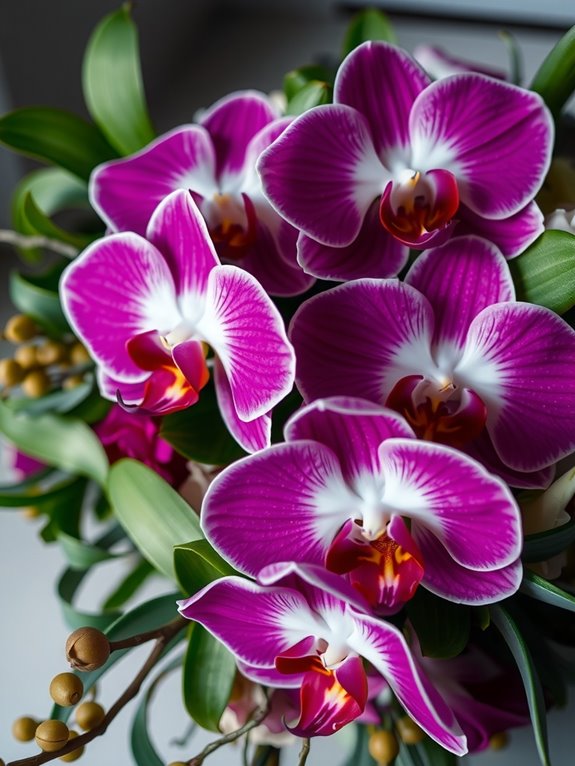
Orchids: Exotic Drama and Greenery Combos for Impact
Orchids deliver unmatched drama and sophistication to modern wedding designs without requiring filler flowers. These exotic blooms symbolize luxury, beauty, and strength, functioning as focal points that naturally command attention in any arrangement.
Why Orchids Work for Contemporary Weddings
The structural longevity of orchids means they maintain their appearance throughout your entire celebration, typically lasting two to four weeks depending on variety. Pairing them with lush greenery creates contemporary bouquets and centerpieces featuring striking glossy texture. Whether you incorporate them into vertical installations or compact sprays, orchids deliver maximum visual impact with minimal additional elements.
Orchid Varieties and Their Applications
Different orchid types pair strategically with specific greenery to achieve distinct effects. Phalaenopsis orchids with eucalyptus create modern elegance suitable for hand-tied bouquets, maintaining visual appeal for three to four weeks. Dendrobium varieties paired with leather leaf produce dramatic height perfect for installation work across two to three weeks. Oncidium orchids combined with ruscus add textured interest for centerpieces lasting approximately three weeks.
For statement-making sprays, Cattleya orchids paired with pittosporum deliver bold romance over two to three weeks. Paphiopedilum varieties combined with aspidistra offer refined drama ideal for formal events, providing the longest longevity at four weeks.
Practical Considerations for Orchid Selection
Orchid costs typically range from fifteen to thirty dollars per stem depending on variety and sourcing, with imported specimens commanding higher prices. Local growers often provide more competitive pricing and fresher product than wholesale distributors. Plan your orchid orders at least six to eight weeks before your wedding date to secure premium specimens and negotiate volume pricing with your florist.