
You’ll cut your wedding cake at one of three strategic moments: right after your ceremony for golden hour photography, during cocktail hour when guests naturally gather, or after dinner when attendance peaks at 85–90%. Each timing affects your lighting, vendor coordination, and guest experience differently.
The post-ceremony slot offers the best natural lighting for your photographer, typically between 4 and 6 p.m. during spring and summer months. Your caterer needs 15–20 minutes to position the cake, arrange the table setup, and prepare serving utensils.
Cocktail hour cutting works well when you want guests to enjoy cake while mingling, though some attendees may still be arriving.
The after-dinner timing maximizes attendance and allows your photographer to capture the entire guest list in the background, though you’ll rely more heavily on artificial lighting or string lights.
Coordinate with your photographer and caterer at least 48 hours beforehand to confirm the exact timing, any music selections, and whether you prefer a polite bite or playful smash. Your photographer should arrive 10 minutes early to scout angles and test lighting conditions. Ask your caterer how long they need between the cutting and plating for individual servings—most venues require 20–30 minutes total for the full process.
The specifics of positioning, hand placement, and music cues matter more than many couples realize. Stand at a slight angle to the camera rather than directly facing it. Place your hands on the knife handle together, with your spouse’s hand resting over yours. Whether you choose an elegant slice or a lighthearted moment of cake contact depends on your personality and the formality of your event.
Choose Your Cake Cutting Timing (Right After, During Cocktails, or Post-Dinner)
When to Cut Your Cake: Timing Options for Reception Flow
Your cake cutting moment shapes how guests experience the celebration and what your photographer captures. Each timing choice carries different advantages for logistics, photography, and energy management.
Right After the Ceremony
Cutting cake immediately after vows capitalizes on natural momentum while light remains optimal. Guests transition directly from the ceremony space to celebration mode without an awkward pause. Your photographer benefits from golden hour conditions, and the couple hasn’t yet experienced the fatigue that comes later in the evening. This approach works particularly well for outdoor venues where daylight is finite. The main drawback involves timing dessert service before dinner, which some couples find logistically backward.
During Cocktail Reception
Positioning cake cutting during cocktails lets guests mingle while you’re featured at the cake table. Natural daylight creates excellent photo conditions without relying on flash or venue lighting. This timing serves as a natural social focal point that brings scattered guests together momentarily. Cocktail hour already expects multiple activities, so cake cutting fits the schedule without disrupting established flow. One consideration: guests holding drinks may photograph less gracefully, and coordinating dessert plates around passed appetizers requires careful planning.
Post-Dinner Timing
Waiting until after dinner keeps guests seated and attentive in one location. This approach signals the reception’s transition into dessert and dancing phases, renewing energy when attention might be waning. Toasts often happen around dessert, creating natural ceremony moments. However, indoor lighting typically requires flash photography, and some guests may have already left by this point in the evening. Post-dinner cutting works best for venues with strong interior lighting or when your reception runs a predictable five-to-six-hour timeline.
Consider your venue’s lighting capabilities, how long guests typically stay, and whether you’re prioritizing photographs or celebration atmosphere when selecting your timing.
The Case for Cutting Right After Your Ceremony
Cutting the Cake Right After Your Ceremony
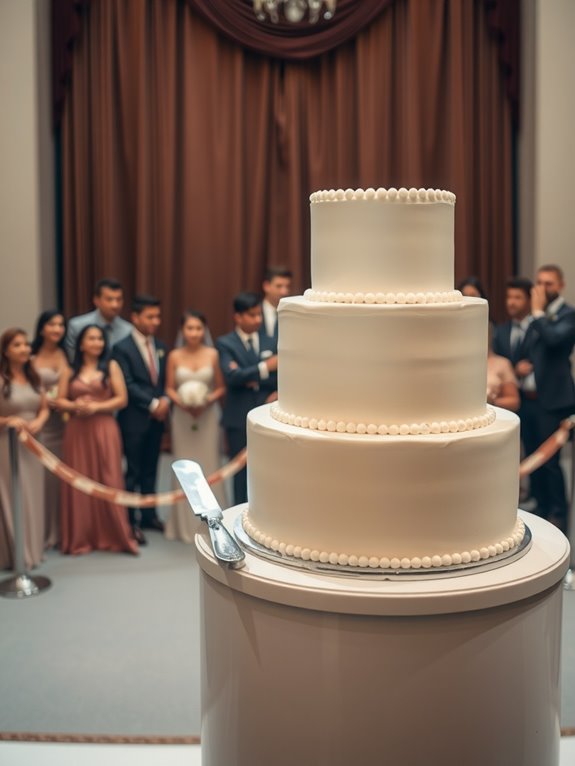
Cutting your cake immediately following your vows offers genuine practical advantages that most couples overlook. The natural light during early afternoon ceremonies typically provides the best conditions for photography, with soft, directional sunlight that doesn’t create harsh shadows on your face or the cake itself. Your photographer can capture the cake-cutting moment while golden hour light is still available, which matters significantly since indoor lighting often requires flash that flattens the image quality.
From a logistical standpoint, this timing keeps your guest list engaged and present. When the cake cutting happens within 30 minutes of the ceremony’s end, your guests remain seated and attentive rather than scattered across cocktail areas or outside on their phones. Your photographer documents genuine reactions in real time, not staged smiles forced later when people are tired or distracted.
The transition also manages your timeline more efficiently. Rather than guests waiting through a lengthy gap between ceremony and reception activities, the cake cutting becomes your natural bridge into the celebration portion of your event. This approach reduces that awkward downtime where your photographer might otherwise struggle to find meaningful moments to capture.
How does this affect your vendor coordination? Your caterer knows exactly when to position themselves, your DJ can prepare the right music cue without guessing, and your planner follows a clear sequence rather than improvising. The energy shift from ceremonial formality to celebration mode happens naturally when people are already standing and emotionally present.
Capturing Dreamy Light Moments
Why Timing Matters for Cake-Cutting Photos
Scheduling your cake cut shortly after the ceremony offers photographers distinct technical and emotional advantages. You’re working with natural light at its most flattering angle while your couple still radiates genuine emotion from recent vows.
The immediate post-ceremony window typically provides soft, directional light between 2-4 PM for afternoon receptions or golden hour glow for evening celebrations. This timing eliminates the need for supplemental lighting equipment that costs $200-500 for a wedding day and often creates harsh shadows on faces.
The Light and Energy Connection
Natural light conditions remain optimal during this narrow window, which is why photographers charge premium rates—typically $2,500-4,500—partly based on their ability to maximize these fleeting moments. Your guests maintain higher engagement levels before hunger and fatigue set in around hour three of your reception.
The cake-cutting sequence works as a natural transition point between ceremony intimacy and celebration energy. Your couple appears more relaxed than during formal portraits but less distracted than during dinner service or dancing. Guests remain attentive enough to offer genuine reactions rather than checking phones or stepping outside.
Concrete Planning Steps
Coordinate your timeline with your photographer during the initial consultation, typically 4-6 months before the wedding. Request a detailed shot list that includes wide reception views, couple close-ups, and guest reactions. Most photographers recommend allocating 15-20 minutes for this segment, allowing time for setup, multiple angles, and candid moments between posed shots.
Seamless Ceremony-To-Celebration Transition
Imagine your couple still glowing from their vows, guests riding the emotional peak of the ceremony, and natural light hitting that perfect golden angle—that’s the ideal moment for the cake cutting right after the processional.
This timing maintains momentum through a seamless transition from ceremony to celebration. The couple’s emotional high remains fresh, guest attention stays focused, and you avoid the energy dip that often occurs during cocktail hour. Rather than letting that initial excitement fade, you’re moving directly into a cake cutting moment that reinforces the celebration’s beginning.
Work with your venue coordinator at least two weeks before the wedding to map out logistics. Request that serving staff position themselves near the cake table, have champagne chilled and ready to pour, and prepare light appetizers for immediate service. This coordination prevents awkward gaps where guests stand uncertain about what happens next.
Pairing the cake cutting with champagne service and passed appetizers reinforces the romantic reception tone your couple wants. The combination signals to guests that the formal portion has concluded and mingling can now begin. This strategic placement also gives your photographer ideal lighting conditions—typically one to two hours after the ceremony—while capturing genuine guest reactions and candid moments between the couple and their families.
Why Cocktail Hour Is Perfect for Cake Cutting
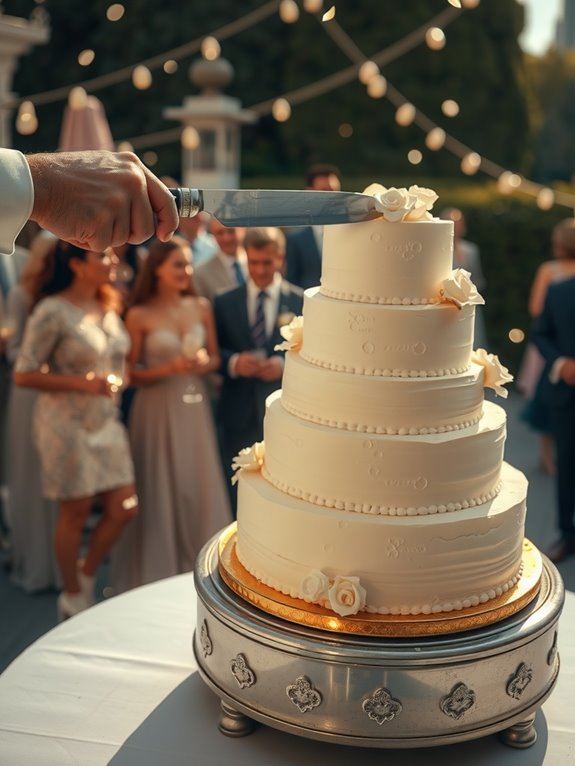
When should you cut your wedding cake? The cocktail hour offers practical timing that works well for both logistics and photos. Your guests naturally gather around the cake, creating a focused moment without disrupting the dinner service that follows.
Key Advantages of Cocktail Hour Timing
Fresh cake guaranteed. Cutting during cocktail hour means your cake stays in optimal condition for dessert service. The cake sits in a controlled environment—typically between one and three hours—rather than sitting out through an entire dinner service, which can affect frosting appearance and structural integrity.
Superior photography. The cocktail hour usually occurs during late afternoon or early evening when natural light is abundant and diffused. Your photographer won’t need to rely on harsh flash photography, which produces shadows and washes out the cake’s detail and color. Better lighting generally translates to images that feel more polished and natural.
Natural guest gathering. Announcing cake cutting during cocktail hour draws people together without feeling forced. Guests already mingling around appetizers and drinks naturally move toward the cake when staff indicates it’s time, creating candid moments rather than posed stiffness.
Preparation alignment. Announcing your cutting time beforehand allows your catering team to stage plates, forks, and serving utensils ahead of schedule. This coordination typically takes 15 to 20 minutes, giving your staff clear expectations and reducing delays between cutting and serving.
The timing creates a distinct moment in your reception flow rather than just another event to check off a list.
Cutting After Dinner and Toasts: The Traditional Option
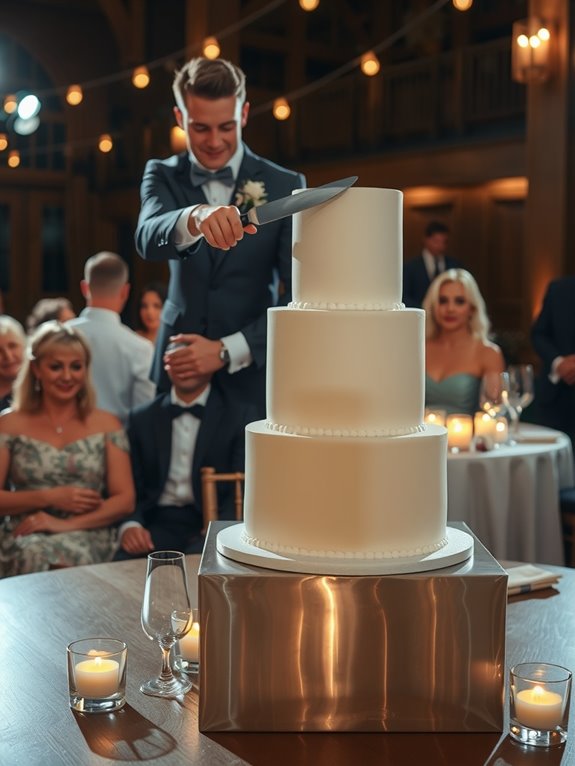
Cake cutting became a post-dinner tradition through practical scheduling rather than arbitrary custom. Positioning this moment after dinner and toasts keeps guests seated and mentally present for a meaningful ritual.
The timing works strategically because it bridges your reception’s formal phase into celebration mode, typically occurring before dancing begins. Your emcee should announce the cake cutting with a specific timeframe—something like “in the next ten minutes“—which gives guests time to gather while energy remains high rather than declining.
Why does this sequence matter beyond tradition. Positioning cake cutting after dinner allows your catering team to serve slices promptly to seated guests, reducing logistics complications. Photographers capture better moments when attendees are already clustered around the couple rather than scattered throughout the venue. The transition from formal toasts to this sweeter activity also signals a shift in reception atmosphere without requiring a full program reset.
The practical steps involve coordinating with your catering manager about plating and serving capacity. Most venues can serve 100 guests within 15-20 minutes if cake is pre-portioned. Your timeline should account for the couple’s first slice together, any remarks from parents or the wedding party, and then general service to tables. This sequence typically takes 20-30 minutes total, keeping your reception schedule on track for your final dancing period.
Timing Your Cake Cutting Around Toasts and Dancing
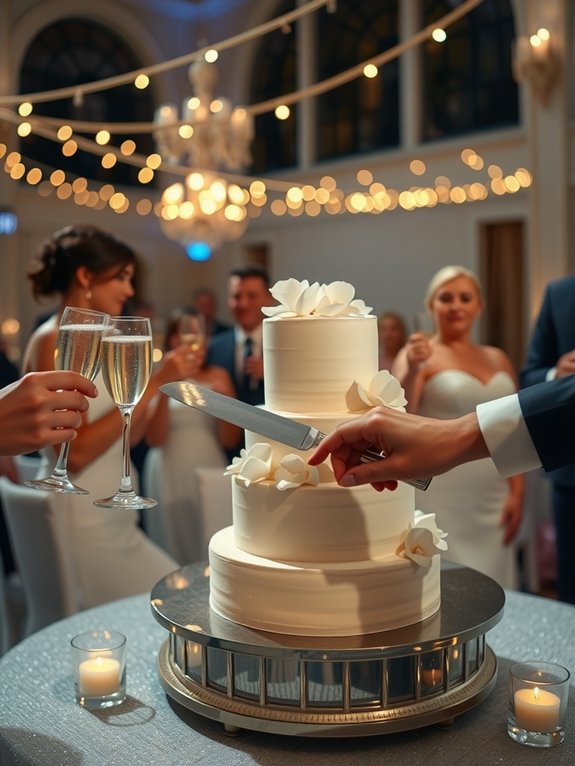
Sequence your cake cutting strategically between toasts and dancing to maximize guest engagement and photo opportunities. Placing the cake moment after heartfelt speeches but before the dance floor opens keeps everyone seated and emotionally invested in this key milestone.
This timing arrangement serves multiple practical purposes simultaneously. Your photographer gains clear sightlines without competing with dancing guests, while your caterer coordinates dessert service without disrupting reception flow. When does your venue typically expect the cake moment to occur. Most reception timelines place cake cutting 45 minutes to an hour after the main course concludes, which aligns naturally with the toasting segment.
Consider your guest composition when finalizing this schedule. Older relatives often prefer seated activities like toasts and cake cutting, while younger guests gravitate toward dancing once the floor opens. By sequencing these elements purposefully, you accommodate both groups’ preferences without forcing anyone to choose between activities.
Your band or DJ should receive a detailed timeline at least two weeks before the wedding. They need to know exactly when toasts end so they can dim lights, cue music, and create atmosphere for your cake moment. This coordination prevents awkward pauses where guests sit in silence wondering what happens next.
The logistical benefits extend beyond aesthetics. Caterers working with a set cake-cutting time can plate desserts efficiently without overcommitting staff to multiple tasks simultaneously. Your florist and rental company also appreciate knowing when centerpieces will be cleared to make room for the dessert course.
Toasts Before Cake Cutting
Timing Your Cake Cutting in the Reception Flow
Scheduling cake cutting right after toasts keeps your reception moving at a natural pace. This placement works because toasts already have everyone’s attention focused on the same moment, which makes the transition to cake cutting feel seamless rather than abrupt.
Why This Timing Works
When you position cake cutting immediately after toasts, several practical things happen. Your guests remain seated and engaged because they’re already in that attentive mindset. The shift from speaking to the cake-cutting ceremony feels like a natural next step rather than an interruption to the celebration’s rhythm.
Your emcee or wedding coordinator can announce the cake cutting while energy is still high: “We’ll cut the cake in about ten minutes, so stay seated and grab your cameras.” This advance notice prevents the awkward moment when guests start leaving tables before you’ve had a chance to cut the cake.
The sequence also bridges your formal program events into the more relaxed phase of your reception. After cake cutting, you can transition into dancing or mingling without guests feeling like the celebration has lost momentum.
Managing Longer Toast Sessions****
If your toasts run longer than expected, pause briefly before cutting the cake rather than rushing through it. A five to ten-minute buffer allows your guests to refocus and lets any restless energy settle. This pacing prevents the cake cutting from feeling hurried or anticlimactic after an extended toast session.
Dancing After The Slice
Timing matters tremendously when you’re orchestrating your reception’s flow. The cake-cutting moment works best approximately 1.5 hours after dinner concludes, which naturally aligns with when your dance floor opens.
| Timing Strategy | Guest Benefit |
|---|---|
| Cut after toasts | Maintains attention throughout the evening |
| Announce via emcee | Builds anticipation effectively |
| Add music cue | Signals shift from formal to celebration |
| Position before dancing | Secures maximum attendance at cake cutting |
Your emcee’s announcement—perhaps accompanied by a brief music cue—signals the transition from formal dining to celebration mode. This sequence keeps guests seated and invested in both the cake-cutting and dancing segments. Why does positioning matter so much? When cake-cutting happens right before your final dancing set, it creates natural momentum that carries people from one activity directly into the next.
You’re essentially threading together three consecutive engagement opportunities: toasts, cake-cutting, and dancing. The announcement itself deserves attention, as many reception coordinators recommend keeping it brief and specific. Rather than a vague “we’ll cut cake soon,” try something like “Please join us in five minutes at the cake table for this special moment.” This gives guests time to wrap up conversations and move into position.
Consider lighting and positioning when planning this sequence. Position your cake table where most guests can see it without standing, and ensure your DJ or band knows the exact moment to cue the music. This coordination prevents awkward silence or guests missing the moment entirely.
Announce the Cake Cutting: Build Anticipation
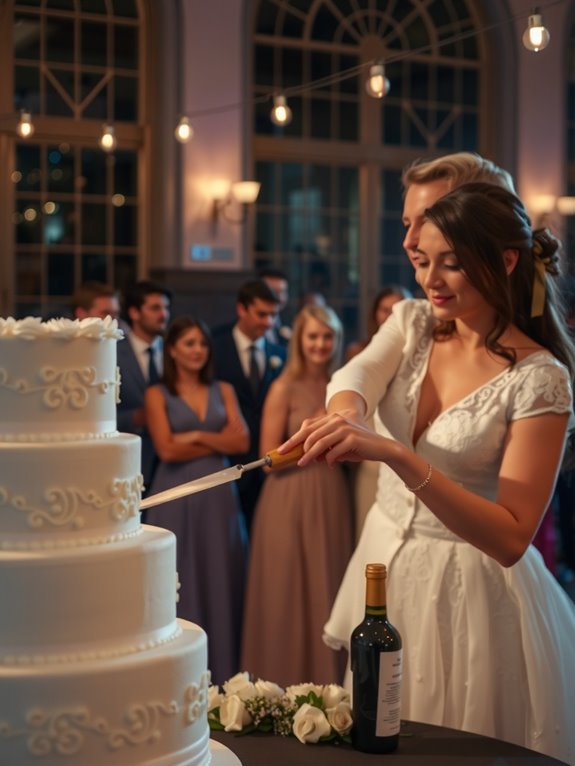
A dessert moment can fade from memory quickly, or it can become a highlight guests reference for years. Strategic announcement throughout your reception determines which outcome happens at your wedding.
Your emcee should publicly declare the cake cutting timing, ideally specifying “in the next ten minutes” rather than vague language. This clear communication helps guests mentally shift from casual mingling to active participation in your moment.
Coordination details that strengthen the announcement:
Your DJ or musician should cue cake-cutting-specific music immediately after the announcement is made. This audio signal reinforces the message and gives guests a sensory marker for the moment. Coordinate the timing so it doesn’t compete with toasts, meal service, or formal photography sessions. When you announce cake cutting while guests are seated after dinner, attendance rates typically reach 85 to 90 percent compared to 60 to 70 percent when announcements happen during cocktail hour.
Consider using a countdown approach starting at ten minutes, then five minutes. This rhythm builds collective anticipation and gives distant guests time to relocate to the cutting area. It also signals to your photographer exactly when action will occur, improving photo quality and composition.
Spacing your announcement at least ten to fifteen minutes before the actual cut prevents guest fatigue while maintaining focused attention. Guests who receive adequate notice experience less disruption to their evening flow and feel more connected to the milestone.
Set the Mood With Music During Your Cake Cut
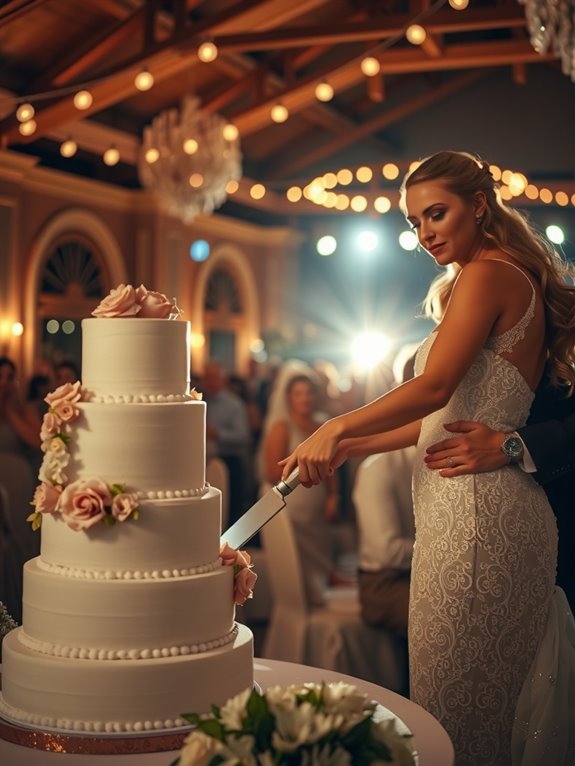
Your DJ’s song selection strategy can shape the cake-cutting moment by choosing tracks that match your celebration’s formality level. Timing your musical transition carefully matters here—switching to slower, softer songs during the cut itself before gradually building back toward dance energy works well for most couples.
This deliberate shift keeps guest attention on your moment while creating a natural musical bridge into what comes next. Rather than jarring transitions that pull focus away, a gradual tempo change from around 80-90 beats per minute during the cut to 120+ beats per minute afterward maintains momentum without feeling disjointed.
Consider asking your DJ about specific song recommendations that fit your taste and venue size. A smaller, more intimate space might call for acoustic or jazz arrangements, while larger ballrooms can handle fuller orchestral versions of popular songs. What mood do you want your guests to experience while watching you cut the cake—reflective and romantic, or celebratory and upbeat?
DJ Song Selection Strategy
Music’s role during your cake cut extends beyond background sound—it shapes how guests experience and remember the moment. Your DJ’s song selection strategy should account for the psychological effect that music has on attention and emotional response.
Consider this three-part musical arc for your cake-cutting sequence:
Start with a slower love ballad during the initial slice. This sets an intimate atmosphere and signals to guests that something meaningful is happening. Once plating begins, shift to an upbeat tempo that naturally energizes the room without overwhelming conversation.
Song selection matters more than you might think. Choose tracks with recognizable melodies that peak between 15 and 30 seconds—long enough for guests to identify the song but short enough to maintain focus on the action. Pair selections that build progressively from soft to celebratory, allowing the energy to rise alongside your cake service.
The timing between your emcee’s countdown, the DJ’s music cue, and the photographer’s positioning directly affects the moment’s flow. A brief announcement gives guests three to five seconds to gather before music begins, which allows your photographer to capture genuine reactions rather than confused faces. This coordination between vendors eliminates awkward silences and maintains momentum through the entire sequence.
Your song choices become part of how guests file this memory away—not just visually through photos, but through the audio landscape they experienced in real time.
Creating Romantic Atmosphere Timing
When Should That First Slice Happen?
Strategic timing converts your cake cutting into a memorable moment rather than a rushed obligation. Schedule this after dinner concludes, when guests remain seated and genuinely attentive throughout the ceremony.
Coordinate with your DJ and emcee to build anticipation roughly ten minutes beforehand. This advance announcement gives your crowd adequate time to gather while the ambiance naturally rises. As the moment arrives, transition to dedicated cake-cutting songs that establish the emotional backdrop you’re aiming for.
Consider adding a gentle spotlight or lighting adjustment to create visual focus on you and your partner. Why does this matter? These coordinated elements—music, timing, lighting—work together seamlessly, maintaining your evening’s momentum without disrupting dancing later on.
The timing window itself matters more than most couples realize. Professional wedding coordinators typically recommend scheduling cake cutting between 8:00 and 9:00 PM for evening receptions, or 2:00 and 3:00 PM for afternoon celebrations. This placement avoids competing with cocktail hour energy while keeping guests engaged before fatigue sets in.
Musical Transition Into Dancing
How does a well-chosen song shift your cake cutting from routine moment into something your guests actually remember?
Your cake cutting needs a musical bridge that moves guests from dinner conversation into active celebration mode. The DJ should switch from ambient background music to upbeat, cake-cutting songs the moment your emcee announces the ten-minute window. This coordinated timing keeps everyone seated and focused on what’s happening.
Tempo alignment matters more than most couples realize. Match the music’s rhythm with your cutting motions and first bite so photographers capture energetic, dynamic shots. A song that builds gradually over thirty to sixty seconds works better than an abrupt tempo change that catches people off guard.
Lighting plays a supporting role in this transition. Strategic brightness changes and spotlight effects during your cake moment create visual interest without overwhelming the scene. Many venues include basic uplighting in their standard package, though premium options like moving lights or color-coordinated effects run an additional two hundred to five hundred dollars.
Flow directly from your toasts into cake-cutting music, then move into the first dance without awkward silence between songs. A three-to-five-second gap between segments feels intentional rather than like a technical glitch. Your DJ should have the cake song queued and ready before the emcee takes the microphone.
The transition signals to your guests that something different is happening, creating a shared moment of attention and participation that dinner conversation alone cannot achieve.
Position Yourselves for the Perfect Photo
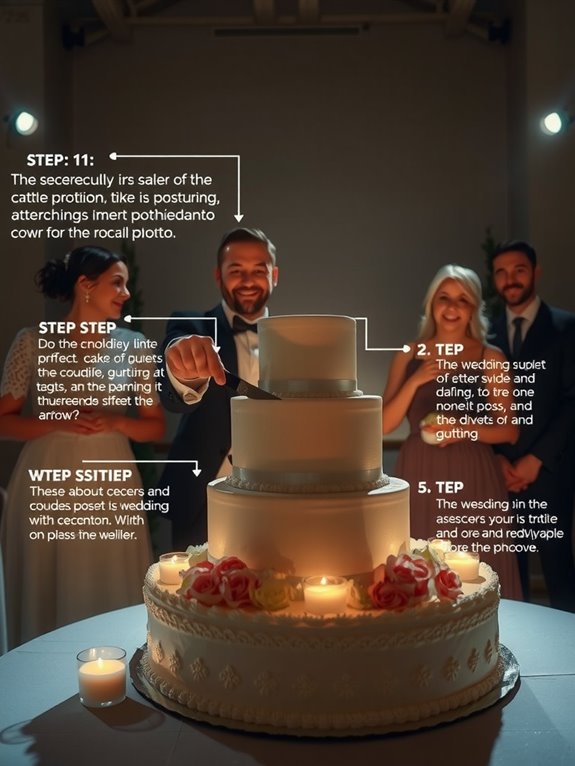
You’re about to slice your wedding cake while cameras flash around you. Knowing exactly where to stand matters more than you might think.
Camera Placement and Positioning
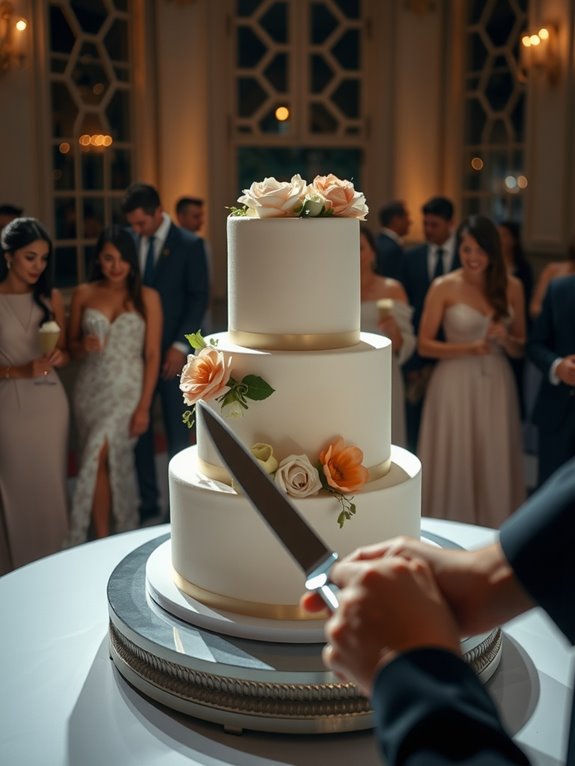
Stand slightly to the side of the cake rather than directly behind it. This angle keeps the cake visible in the foreground while allowing the photographer to capture both of you clearly. Position yourselves in a V-shaped formation so you’re both facing toward the lens directly. Your photographer will want a shoulder-level shot that shows the cake, your hands on the knife, and your faces simultaneously—a positioning that typically takes 15-20 seconds to arrange properly.
The Hand Placement Technique
The bride places her right hand on the knife first, then the groom positions his right hand over hers. Photographers call this the “unity grip,” and it represents the partnership you’re entering. This specific hand arrangement allows both of you to appear equally involved in the moment without one person dominating the frame.
The Cutting Motion and Expression Management
Keep both hands steady as you slice upward from the bottom tier. Make two small, parallel cuts about an inch apart—a tradition meant to symbolize longevity and togetherness. As you cut, look toward the photographer, then glance down at the cake itself. This deliberate shift in focus creates natural-looking poses rather than forced smiles held for too long. The photographer can capture genuine expressions by using this transitional moment between looking at each other and looking at what you’re doing.
The Right Way to Slice: Bottom Tier First
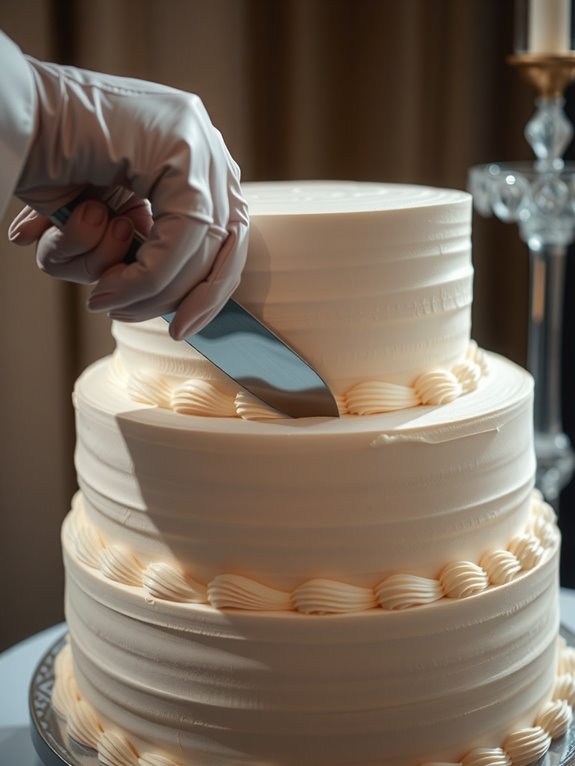
Why does tradition insist you start at the bottom? Starting your wedding cake cutting at the bottom tier symbolizes longevity and stability for your marriage. This practice protects the cake’s structural integrity throughout the ceremony.
The Technique
Make two parallel cuts about an inch apart on the bottom tier, then complete your cut with a smooth, horizontal motion using the wedge’s back. This approach prevents upper tiers from becoming unstable during slicing, which matters because collapsed fondant or broken layers create awkward moments during photos.
What Happens Next
After you and your partner feed each other the first slice, your caterer handles subsequent serving. Most catering companies charge between $3 to $8 per slice for standard wedding cakes, depending on complexity and ingredient quality. The bottom-tier-first approach gives your photographer a clean shot before any structural issues develop. How does it feel knowing your cake will photograph well and your symbolized foundation remains intact?
The Polite Bite vs. the Playful Smash
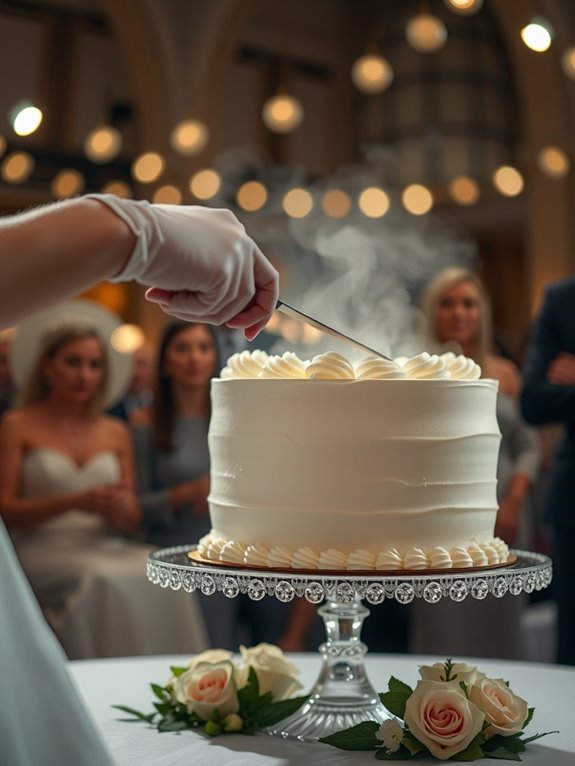
After you’ve safely cut through the lower tiers, you’ll need to decide how to approach that first bite together. Two distinct approaches exist for this moment, each offering different benefits for your reception timeline and photo documentation.
The polite bite maintains elegance and works well for professional photography. Using a fork to take a small piece protects your makeup and keeps your reception aesthetic cohesive throughout your album. Wedding photographer Sarah Pelazzio recommends this method when you want images that flow seamlessly from ceremony through cake cutting. This approach typically takes two to three minutes and allows you to return to other reception activities without needing a cleanup break.
The playful smash represents a pre-planned, lighthearted moment where both partners have agreed to a cake-covered face interaction. This happens later in your celebration rather than during the initial cutting, often after dinner service concludes. The timing matters because guests expect formality during early reception events, then welcome humor as the evening progresses. Many couples schedule this for 30 to 45 minutes before dancing begins, giving them time to clean up before mingling with guests.
Your choice depends on your comfort level and how you want your reception to feel. Consider whether your personality as a couple aligns better with maintaining composure throughout professional photos or creating a memorable moment that shows your playful side to your guests.
Budget for Cake Cutting: Venue Fees and Hidden Costs
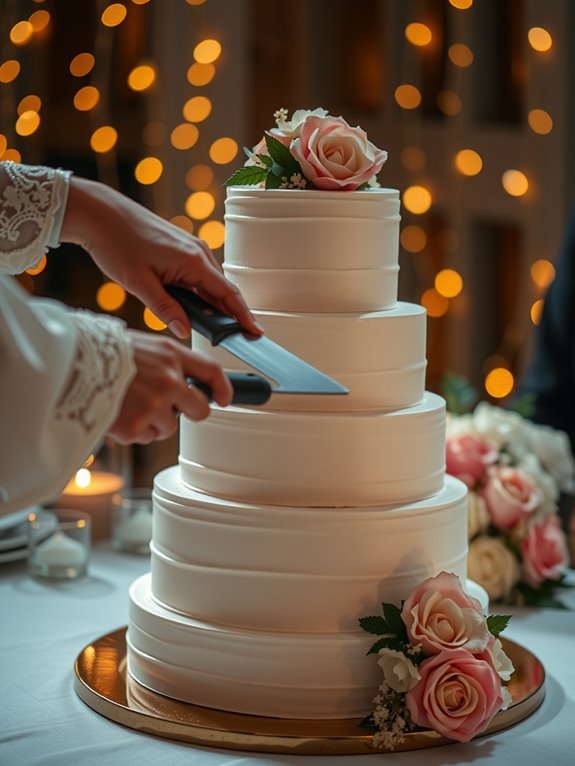
Budget for Cake Cutting: Venue Fees and Hidden Costs
Have you factored cake-cutting fees into your wedding budget yet. Many venues charge between $1.50 to $3 per slice, and these costs can catch couples off guard during final billing. Understanding what you’re paying for helps you allocate your money more strategically across your entire celebration.
Venue charges for cake service typically fall into several categories. Pelazzio venues often bundle cutting service directly into their catering packages, which eliminates surprise fees entirely and simplifies your final invoice. Other venues separate cake-cutting fees from your standard catering costs, adding $50 to $200 depending on your guest count. If you’ve selected an outside bakery, confirm whether your venue requires their staff to handle setup and service or charges additional fees for non-contracted vendors. Some venues impose restrictions on outside desserts altogether.
Beyond the basic cutting service, consider what dessert upgrades might appeal to your guests. Pairing options like fresh berries, whipped cream, or ice cream add $1 to $2 per serving to your overall dessert costs. Premium additions compound quickly with larger guest lists, so calculate these expenses early in your planning process.
All-inclusive coordination packages typically cover bakery setup, plating, and serving logistics, which can lower your per-slice expenses compared to separate vendor arrangements. Before signing any contracts, ask your venue coordinator directly about cake-cutting fees in writing and request a detailed breakdown of what’s included in your catering agreement. Request clarification on whether charges apply per slice, per guest, or as a flat service fee to avoid confusion during your final walk-through.
Coordinate With Your Caterer and Photographer
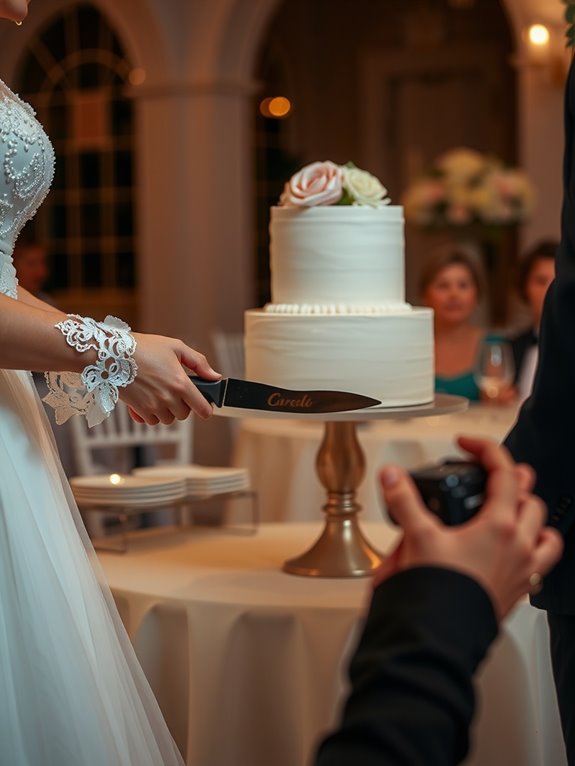
Timing your cake cutting requires coordination between multiple vendors to guarantee everyone’s prepared for the big moment. You’ll want to confirm your planned cut time with both your caterer and photographer well in advance.
Your caterer needs this window to prep portions and stage plating stations beforehand. Most catering teams require at least two hours notice before the scheduled cut to properly plate desserts and position staff members for distribution. This advance notice prevents bottlenecks at serving stations and keeps your timeline moving smoothly.
Photography timing matters equally—your photographer needs this window reserved to capture candid moments and posed shots. Did you know that many photographers charge $50 to $150 extra for events extending beyond eight hours? Communicating your cake-cutting placement in the timeline affects their overall schedule and potentially your final bill.
Whether you’re cutting after dinner or before dancing changes how your vendors organize their efforts. Cutting earlier means your photographer captures natural light around the cake, while evening cuts require additional lighting setup that caterers must coordinate with venue electrical systems.
Schedule a dedicated staging area with a staff member assigned to assist with slicing and distribution. This person should understand your portioning preferences, dietary restrictions to monitor, and any special serving instructions for tiered or specialty cakes.
Share the cake-cutting schedule with your venue team, including your emcee, DJ, and coordinator. Most venues request at least 48 hours notice so they can adjust music timing, lighting adjustments, and guest seating arrangements. This synchronization keeps everyone aligned and prevents delays when that moment arrives.
What Happens After the Cut: Serving and Cleanup
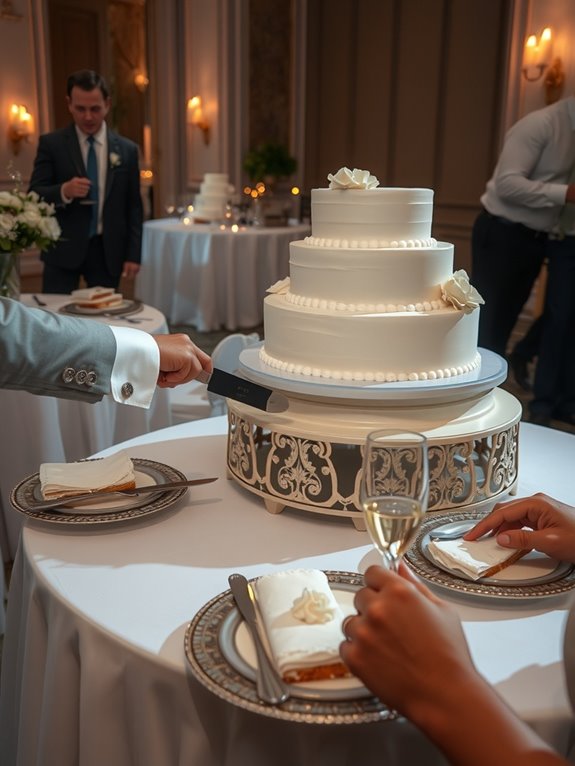
After that first slice, your caterer takes over the serving responsibilities while you step back and catch your breath. Most venues include cake cutting and service in their packages, which means you won’t face unexpected per-slice charges later. The standard approach involves serving the bottom and middle tiers immediately to guests while your baker or caterer carefully preserves the top tier for your first anniversary.
Your catering team typically manages the post-cut logistics through a few coordinated steps. A designated staff member oversees subsequent servings to maintain a smooth rhythm rather than creating a bottleneck at the dessert table. Why does this matter? Without coordination, guests often bunch up around the cake, disrupting the flow of your reception.
Cleanup happens quietly alongside the serving process. Plates get cleared from tables as soon as guests finish, and your caterer tidies the cake stand and cutting area without drawing attention. This background work keeps your guests socializing and dancing without noticing the operational side of dessert service.
The coordination between cutting, serving, and clearing typically takes thirty to forty-five minutes, depending on your guest count. Rather than interrupting your celebration’s momentum, this timing usually falls during a natural lull—perhaps after dinner concludes but before the dance floor picks up again. Your caterer handles the heavy work here, which frees you to focus on what actually matters: enjoying dessert with your guests.