

Traditionally, the maid of honor takes the lead on bridal shower planning, though contemporary weddings often split responsibilities among bridesmaids, family members, and future in-laws. The distribution of tasks depends on availability, location, and individual skill sets rather than outdated hierarchy alone.
Start by asking the bride about her preferences for tone, guest count, and budget range. This conversation prevents costly assumptions—some brides want an intimate gathering of 15 people in someone’s backyard, while others envision 50 guests at a rented venue. Understanding these parameters upfront saves time and avoids awkward budget conflicts later.
Next, assemble your planning team by matching tasks to individual strengths. Assign decorations to someone with design sensibility, food coordination to an organized person comfortable managing timelines, and invitations to someone detail-oriented who tracks responses carefully. This targeted approach works better than dividing tasks equally among all helpers.
Secure written or verbal commitments from organizers before delegating specific duties. Have each person confirm their availability through the shower date and acknowledge their assigned responsibility. Establish a shared timeline with key deadlines: venue booking 6-8 weeks prior, invitations sent 3-4 weeks ahead, and final headcount confirmed two weeks before the event.
These foundational decisions position your team to handle venue selection, manage guest dynamics, and coordinate logistics without constant confusion or overlapping efforts.
Who Traditionally Hosts the Bridal Shower?
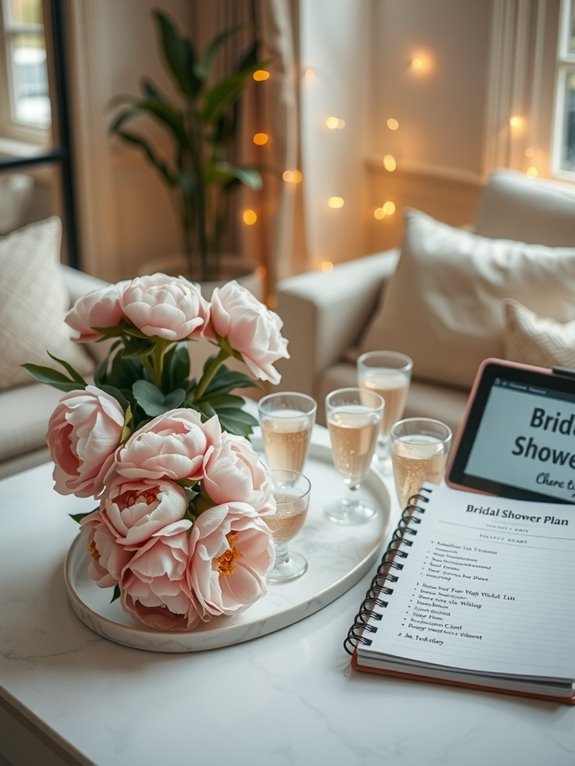
The maid of honor or matron of honor historically assumes primary responsibility for organizing the bridal shower, typically collaborating with the bride’s mother to manage logistics and decision-making. This traditional pairing reflects historical wedding customs where these individuals held specific roles in the bride’s inner circle.
Historically, the maid of honor and bride’s mother collaborate to organize the bridal shower, reflecting traditional wedding customs and defined roles.
Modern bridal shower hosting has shifted toward a more distributed model. Bridesmaids, extended family members, and even future in-laws now frequently share planning duties rather than concentrating responsibility in one person’s hands. A favorite aunt might take the lead while bridesmaids handle specific tasks like vendor coordination or guest communication. The future mother-in-law may volunteer to secure the venue or manage the budget.
What factors should influence who hosts your bridal shower? Consider each potential organizer’s availability, location relative to the bride, and their relationship with her. Someone living in the same city as the bride has obvious logistical advantages over someone two states away. Evaluate whether the bride would prefer a host with close personal connections or someone with strong event-planning experience.
The host or co-hosts typically handle these responsibilities: selecting the date and venue, creating the guest list, managing invitations, arranging catering or refreshments, planning activities, and coordinating with other attendees. Budget considerations matter significantly—hosting expenses generally range from $300 to $2,000 depending on guest count and venue choice, though elaborate events can exceed these figures.
Today’s approach prioritizes flexibility and acknowledges that one person shouldn’t bear the entire organizational load. Your group should align the hosting arrangement with the bride’s preferences and your collective capabilities rather than adhering to outdated formality.
Include the Bride in Planning (Not as Host)

Include the Bride in Planning (Not as Host)
The host traditionally leads shower planning, but the bride’s involvement shapes whether the event actually reflects her preferences. Think of it this way: who better understands what décor themes, guest dynamics, and activity styles align with her personality.
Your input matters on three core areas. First, the overall theme—whether that’s a brunch shower, garden party, or weekend getaway format. Second, the guest list composition, since you likely know which friends and family members genuinely connect with one another. Third, specific event details like timing, location, menu preferences, and activities that matter to you personally.
The math on this collaboration works in your favor. Research from the Knot’s 2023 Wedding Planning Survey found that 73 percent of brides felt most satisfied with events where they had input on major decisions without handling logistics themselves. This partnership approach keeps you informed and heard while allowing your MOH or designated planner to manage vendor coordination, timeline management, and budget tracking—tasks that typically consume 15 to 20 hours of planning work.
How does this actually function in practice? You might attend one planning meeting every two weeks via phone or video call, lasting 20 to 30 minutes. During these sessions, you review theme options, approve guest list changes, and discuss menu samples or activity ideas before vendors are booked. The planner handles outreach to florists, caterers, and other vendors between meetings, presenting you with narrowed-down choices rather than overwhelming you with dozens of options.
This structure prevents the common frustration where brides either micromanage every detail or feel completely sidelined from their own event.
Bride’s Input Shapes the Event
Getting the bride’s preferences early prevents misaligned decisions that cost time and money. Ask her directly about activities, venue style, and guest list priorities before you move forward with bookings. Her answers to questions like “What atmosphere appeals to you?” or “Who from your life matters most at this event?” should inform your theme selection, decoration choices, and activity planning.
Timing and logistics deserve their own conversation. Discuss her work schedule, travel constraints, and any guests with accessibility needs or dietary restrictions upfront. These practical details affect venue selection, date options, and catering choices more than you might realize.
Your role involves balancing her vision with your organizational expertise. You’re not handing over all decisions to the bride, nor are you ignoring her preferences entirely. Instead, gather her input on the major elements, then use your experience to execute those preferences within budget and logistical constraints. This collaborative approach respects who she is while keeping you in control of the actual planning work.
Collaboration With Planning Organizers
After understanding the bride’s vision and preferences, you’re positioned to assemble your actual planning team. The maid of honor and bride’s mother typically serve as co-leads, setting the organizational tone and coordinating efforts across the broader group of bridesmaids and close friends.
Your planning team should divide responsibilities into distinct areas: decorations, games, food setup, and invitations. This structure prevents overlap and establishes clear accountability for each component. Professional wedding planners can supplement your team by managing vendor coordination and logistics, which reduces stress significantly and typically costs between $1,500 to $5,000 depending on your location and event scope.
Regular communication separates functional teams from disorganized ones. Schedule planning meetings every two to three weeks starting three months before the event, use a group chat for quick updates, and assign specific deadlines for each task. The bride participates as a creative director rather than a host, offering input on major decisions while your team handles the execution.
What happens when someone takes on multiple responsibilities without clear ownership? Tasks slip through the cracks, deadlines get missed, and duplicated efforts waste time and money. Assigning one person per category prevents this chaos. Consider documenting decisions in a shared spreadsheet or planning app so everyone references the same information and timeline.
Pick Your Bridal Shower Host or Co-Hosts

The maid of honor traditionally leads bridal shower planning, though the bride’s mother often shares these responsibilities. You might also involve bridesmaids, aunts, or the future mother-in-law to distribute workload based on who has capacity and interest.
Modern hosting embraces a collaborative model where multiple co-hosts divide tasks according to individual strengths. One person manages the invitation list and tracking RSVPs, while another handles vendor coordination for catering or decorations. A third might oversee the timeline and day-of logistics. This distribution prevents any single person from experiencing planning fatigue while deepening connections within your group.
When dividing responsibilities, match tasks to each host’s availability and expertise. Someone organized with spreadsheets might handle budgets and vendor contracts, typically ranging from $300 to $1,500 depending on guest count and location. The person with strong design sense could direct the aesthetic direction. Whoever enjoys socializing might lead games or entertainment coordination.
If you’re unsure about leadership structure, ask the bride directly. What does she envision for her shower’s tone and size? Does she prefer one clear organizer or genuinely want shared planning duties? Her answers will clarify whether a single maid of honor or co-host model serves her needs better. Some brides appreciate having one point person for decisions, while others value distributed responsibility among friends they trust.
One Shower or Multiple Events?

One Shower or Multiple Events?
Most brides choose a single bridal shower, but multiple events work well when your circumstances call for it. Distance between guest groups or family dynamics that create separate circles might warrant hosting more than one celebration. Perhaps the bride’s family plans one shower while the groom’s family organizes another, allowing both sides to participate without overwhelming logistics.
Multiple bridal showers work well when distance or family dynamics create separate guest circles, allowing both sides to celebrate without overwhelming logistics.
Geographic separation often makes the case for multiple showers. When your guest list spans different regions, hosting separate events reduces travel burden and keeps invitation lists manageable. How do you prevent the confusion that comes with coordinating multiple celebrations? Start by keeping guest lists completely separate for each event. This approach eliminates duplicate invitations and prevents registry overlap, where guests might purchase identical gifts across different showers.
Each celebration should reflect its own group’s preferences and expectations. A shower hosted by college friends might have different vibes and gift preferences than one organized by family members. Consider updating your registry details for each event to guide guests appropriately toward what that particular circle typically gives.
Coordinating multiple hosts requires intentional communication before planning begins. Check with the bride about her availability and comfort level hosting multiple celebrations. Does her work schedule allow time between events? Can she handle the emotional energy of several similar parties? Getting her input upfront prevents scheduling conflicts and keeps the process manageable for everyone involved.
Get Family Agreement on Your Shower Plan
Once you’ve decided between one shower or multiple events, securing commitment from those who’ll actually execute the plan becomes essential. Family agreement requires straightforward conversations about what everyone expects and can realistically deliver.
Start by clarifying specific host responsibilities with potential helpers. Who manages invitations, decorations, food preparation, and activities? When multiple family members split planning duties and costs, shared investment typically leads to better follow-through. Ask the direct question: can they commit the necessary time and money without resentment building later?
Discuss logistics early and honestly. Will relatives need to travel, and what’s the realistic budget range? Addressing whether you’re spending $300 or $1,500 prevents awkward disagreements over flower arrangements or catering choices. These practical details matter because vague expectations create friction.
Most importantly, align the shower with the bride’s actual preferences rather than defaulting to family traditions. Does she want an intimate brunch or a larger afternoon event? Prefer games or conversation? Her vision should guide decisions, not family customs that no longer apply. When everyone understands what the bride actually wants—not what they assume she should want—the planning process moves forward with genuine solidarity rather than obligation.
Nail Down the Bride’s Vision: Theme, Size, and Budget

Once family members have committed to the plan, direct your attention toward the bride’s actual preferences. Three foundational elements deserve your focus: the theme that establishes your event’s atmosphere, the guest list size that dictates venue selection and spending parameters, and the budget framework that determines what’s financially possible.
The theme sets expectations for everything downstream. A casual brunch shower with close friends typically costs $15-25 per person, while a formal afternoon tea might run $30-50 per head. The bride’s personality should guide this choice—does she prefer an intimate gathering or a larger celebration? A garden party theme requires different logistics than a spa-themed event or a destination weekend shower.
Guest count directly influences both venue selection and total expenditure. A 20-person gathering fits comfortably in a home or small restaurant, whereas 75 guests demands a dedicated event space. Most couples invite 25-50 people, with bridesmaids typically ranging from four to eight attendees. This number shapes everything from catering costs to seating arrangements to whether you’ll need rentals like tables and linens.
Your budget framework prevents overspending and reduces decision-making stress later. Host groups typically allocate $300-1,000 total for smaller showers (under 30 guests) and $1,500-4,000 for larger events, though regional differences matter significantly. Establishing this figure upfront clarifies whether you’re sourcing a caterer or assembling a potluck, booking a venue or hosting at home, and selecting premium decorations or simpler alternatives. These foundational decisions eliminate confusion and keep planning on track.
Theme Selection and Inspiration
Your theme choice establishes the entire direction of the bridal shower, influencing decisions about decorations, activities, and entertainment. The best approach involves understanding what genuinely appeals to the bride rather than defaulting to trendy options. Does she gravitate toward classic elegance, modern minimalism, outdoor settings, or cozy indoor spaces? These preferences form the foundation for every subsequent planning choice.
Research themes that align with the bride’s lifestyle and personality. Garden parties work well for nature-focused individuals, typically running $800 to $2,500 depending on guest count and venue. Elegant brunches suit those who prefer sophisticated daytime gatherings, while adventure-themed celebrations appeal to active brides. Color palettes, decor selections, and activity choices all flow directly from this initial theme decision.
Pinterest boards and bridal publications like Brides Magazine or Wedding Wire provide visual references for executing cohesive designs. These platforms showcase real events rather than just isolated inspiration, helping you understand how specific elements work together. When reviewing options, note which combinations feel authentic to the bride’s aesthetic rather than simply following what appears popular online.
Consider the practical implications of your theme selection. A woodland retreat requires different vendor types and timelines than an upscale restaurant brunch. Theme-appropriate entertainment might include cocktail mixology classes for a mixology-focused shower versus outdoor lawn games for a garden setting. Starting with clear theme parameters prevents scattered planning decisions that lack visual or thematic coherence.
Guest Count and Scale
Guest Count and Scale
Your guest count sets the foundation for every decision that follows—budget, venue, food service style, and staffing needs. Confirm these numbers within two to three weeks of planning to lock in venue availability and give yourself time for accurate RSVP tracking.
Smaller gatherings of fifteen to twenty guests suit intimate, at-home showers with minimal setup requirements. These events typically cost between $300 and $800 total, depending on food choices and décor. Larger groups of fifty-plus guests demand spacious venues renting between $200 and $500, plus scaled catering budgets of $15 to $30 per person.
Consider the bride’s social preferences first. Does she gravitate toward quiet time with her closest circle, or does she light up around larger groups and extended family networks? Her comfort level matters more than current event trends.
Once you’ve settled on your number, venue options become obvious. A backyard comfortably accommodates twenty people but stretches thin at sixty. A living room works for eight to twelve. A restaurant private room or rented event space opens up capacity for groups exceeding forty.
For groups over forty, splitting the shower into two smaller celebrations sometimes makes financial and logistical sense. Two events of thirty guests each reduce per-person costs and allow for more personalized attention to attendees. This approach also simplifies coordination if multiple people want to co-host or contribute resources.
Budget Planning and Costs
Budget Planning and Costs
With your guest count finalized, the financial planning phase requires strategic thinking and honest assessment. Per-guest costs typically range from $15 to $150 depending on your venue choice, food service style, and entertainment options.
Understanding Your Cost Tiers
At-home DIY showers with homemade food run approximately $750 for 50 guests, keeping expenses lean through personal preparation. Catered venue events jump significantly higher, often exceeding $7,500 once professional staffing, rentals, and service charges are factored in. What’s the real difference? Venue rental fees alone can consume $1,000 to $3,000 of your budget, while professional catering typically costs $20 to $50 per person.
Setting Your Financial Framework
Begin by discussing the bride’s vision—her preferred theme, guest experience, and scale expectations—before building your budget around those priorities. From there, allocate funds across five key categories: invitations, activities or entertainment, food and beverages, décor, and miscellaneous supplies like plates and linens.
Managing Shared Expenses
Distributing costs among bridesmaids, family members, or co-hosts prevents any single person from carrying the full financial burden. A shower with multiple organizers allows you to split expenses proportionally or assign different categories to different people. Someone handles food, another manages decorations, and a third covers entertainment—this approach makes larger events financially feasible.
The planning phase succeeds when the bride’s expectations align with what your actual budget allows.
Set Your Budget and Timeline

Once you’ve confirmed the host arrangement, two foundational decisions shape everything that follows: budget and timeline. Start by talking with the bride about dates that actually work for her schedule and your guest list—typically two to three months before the wedding gives people enough time to plan.
Two foundational decisions shape everything: budget and timeline. Start by confirming dates that work for the bride’s schedule and your guest list.
Next, establish your budget by distributing planning duties among hosts. This approach reduces what any single person pays out of pocket. Break your spending across four main categories: venue rental, food and beverages, decorations, and entertainment or activities. A modest shower generally costs between $300 and $500, though more elaborate events with premium venues or catering can exceed $1,500 depending on guest count and location.
How do you know if you’re allocating funds wisely across these categories? Track every commitment you make in writing—whether that’s a venue deposit, vendor contract, or purchase confirmation. This documentation prevents surprise charges and helps hosts understand exactly where money is going.
When hosts understand their financial responsibilities upfront, coordination becomes smoother and team dynamics stay positive. People feel respected when they know what they’re contributing and why, rather than discovering hidden costs later in the planning process.
Build Your Planning Team and Assign Tasks
Now that you’ve established your budget and timeline, assembling the right planning team becomes your next priority. Identify core roles early: designate a lead coordinator, assign someone to handle decorations, and choose a person responsible for food and RSVP management. Each team member should understand their specific responsibilities from day one.
Match people to tasks based on their actual strengths and availability. Does someone have event experience or a strong eye for design? Put them on decorations. Who’s naturally organized and detail-oriented? They’d excel managing RSVPs and guest logistics. This strategic matching prevents bottlenecks and reduces decision-making friction later.
How many people do you actually need on this team? For showers under 50 guests, three to four core planners typically suffice. Larger events with 75-150 guests benefit from five to seven dedicated roles. Each person should spend roughly five to ten hours total on planning, spread across the two to three months before your event.
Create a simple task breakdown document listing who owns what. Include deadlines aligned with your timeline—decorations finalized eight weeks out, vendor confirmations six weeks prior, final headcount two weeks before. Share this with your team so expectations remain clear and overlap gets eliminated.
Consider whether any team members have vendor relationships or specific expertise worth leveraging. A bridesmaid who works in catering might negotiate better pricing with food vendors. Someone with graphic design skills could handle invitations in-house rather than outsourcing to a stationery company.
Identifying Core Planning Roles
Who’s actually running this shower? Early identification of planning roles prevents confusion and keeps your timeline on track. Assign specific responsibilities so team members know exactly what they’re owning.
Break down your planning team into these functional roles:
- Event Coordinator: Manages the overall timeline, confirms dates with all participants, and tracks deadlines. This person sends reminder emails, coordinates between other team members, and handles last-minute adjustments.
- Creative Director: Develops your theme, selects decorations, and makes aesthetic choices that match the bride’s style. They review color palettes, approve invitation designs, and oversee setup on the actual day.
- Logistics Manager: Handles the invitation process, collects RSVPs, maintains your guest list, coordinates food and beverage details, and tracks spending against your budget. They typically communicate directly with vendors about delivery times and final counts.
Distributing work prevents burnout and produces better results. One person managing everything across design, scheduling, and vendor coordination typically misses details and feels overwhelmed by the time the shower arrives. When you match tasks to people’s actual strengths—your detail-oriented friend handles logistics while your creative friend directs design—the planning process moves faster and stays more enjoyable.
Your team size might include three people for larger showers or adjust roles for smaller events. What matters is clarity: each person knows their specific responsibilities and who to contact with questions.
Delegating Specific Event Tasks
No single person can manage invitations, decorations, food coordination, and entertainment all at once. You’ll need to distribute tasks across your planning team based on individual strengths and availability. Assign decorations to someone creative and detail-oriented who enjoys visual planning. Designate another person as your food coordinator to manage catering logistics and vendor communication. Let someone organized handle invitations and RSVPs, since this role requires meticulous tracking and follow-up. Assign games and entertainment to your most enthusiastic planner who can generate excitement around activities.
Strategic delegation prevents burnout while leveraging each team member’s specific talents. Your hosts should oversee the big picture, asking questions like: Does this direction align with what the bride actually wants? When planning responsibilities are genuinely shared among 4-5 people, team members report feeling more invested in the event’s success.
Consider hiring professionals for specialized tasks like floral design (typically $200-$800 for bridal shower arrangements) or full catering services (averaging $25-$75 per person depending on menu complexity). A professional florist can deliver cohesive arrangements that match your color scheme, while a caterer handles food safety, service logistics, and cleanup. Clear role assignment breaks shower planning into manageable pieces rather than leaving one or two people overwhelmed with competing priorities.
Leveraging Team Skills Effectively
The path to a manageable bridal shower starts with knowing who does what best and assigning tasks accordingly. Before you hand out responsibilities, take time to evaluate each team member’s actual strengths and preferences.
Match Tasks to Individual Strengths
Creative people thrive when designing themes and handling DIY decorations. These team members typically enjoy hands-on projects and have a natural eye for visual details. Organizational thinkers, by contrast, excel at managing invitations, tracking RSVPs, and maintaining timelines—the structured work that keeps planning on track. If someone on your team has vendor experience or event coordination background, their knowledge of logistics and vendor communication becomes invaluable.
Coordinate Without Overlap
When you assign responsibilities based on actual skills, people contribute meaningfully rather than just checking boxes. Why should you ask a detail-oriented person to handle creative design when they’d rather manage spreadsheets? The reverse is equally true. Clear coordination among hosts prevents duplicate efforts and keeps everyone working toward the same vision. Regular check-ins—perhaps weekly texts or brief calls during the planning phase—help maintain alignment without micromanaging individual tasks.
This approach acknowledges that different people bring different value to the planning process. Someone’s organizational strength matters as much as someone else’s creative eye.
Create Your Guest List: Who Gets Invited?

Create Your Guest List: Who Gets Invited?
With your planning team established, the next step involves identifying who will attend the celebration. Your guest list should reflect the bride’s genuine relationships—close friends, family members, and bridesmaids she actually wants present, rather than people included out of obligation or tradition.
Consider each potential invitee thoughtfully. Does she regularly spend time with this person? Has she mentioned them as someone important in her life? These questions help separate meaningful relationships from obligatory additions that can inflate your headcount unnecessarily.
Distribute invitation responsibilities among your host roles and assigned coordinators to spread the workload effectively. Send invitations three to four weeks before the event, giving guests adequate time to arrange their schedules and respond. This timing window typically results in higher response rates and fewer last-minute cancellations.
Your venue capacity and budget directly influence guest count decisions. A 50-person intimate gathering often generates stronger connections and more engaged attendees than a 200-person event where conversations feel rushed. Smaller groups also reduce per-person costs substantially—catering expenses typically range from $25 to $75 per guest depending on menu selections, compared to higher per-unit pricing for large events that require streamlined service.
What matters more: accommodating everyone the bride has ever met, or creating an environment where meaningful interactions actually happen? Most experienced planners recommend prioritizing relationship quality over numerical size when space and resources are limited.
Align Your Shower With the Wedding and Registry
Timing Creates Space for Logistics
Schedule your bridal shower four to eight weeks before your wedding date. This window gives out-of-town guests roughly 30-45 days to arrange travel and time off work, which matters significantly for attendance rates. Hosting too close to the wedding—within two weeks—limits planning time for both attendees and your host.
Registry Needs Finalization Before Invitations
Your registry should be complete and accessible at least two weeks before shower invitations go out. Guests need clarity on what you actually want, whether you’re registered at Bed Bath & Beyond, Target, or specialty retailers like Williams-Sonoma. An unfinalized registry often results in duplicate gifts or items you never requested, creating the awkward task of returning multiples after the event.
Avoid Scheduling Conflicts With Other Events
Does your shower date overlap with rehearsal dinners, welcome brunches, or other pre-wedding gatherings. Your host should check your full wedding weekend timeline before locking in a location and date. Conflicts force guests to choose between events and can strain relationships with your wedding party members who feel pulled in multiple directions.
Coordinate Details Early With Your Host
Communication between you and your host three months out prevents last-minute scrambles. Share your wedding date, guest list size, registry links, and any scheduling constraints upfront. When these elements align from the start, the entire planning process moves forward with fewer complications and minimal stress for everyone involved.
Select Your Venue and Entertainment

Your venue choice shapes the entire bridal shower experience by determining where guests gather, activities occur, and how the space functions throughout the event. The right location balances your guest count with practical comfort—nobody wants to feel cramped or lost in an oversized room.
Venue Options and Their Strengths
| Venue Type | Best For | Typical Cost Range |
|---|---|---|
| Home | 15-30 guests, intimate feel | $0-500 (supplies only) |
| Restaurant/Banquet Hall | 30-100+ guests, full catering | $500-3,000 |
| Outdoor Space | 20-75 guests, seasonal themes | $200-1,500 (rental fees) |
Home venues work well for budget-conscious hosts who want an informal atmosphere. Restaurant and banquet halls handle larger groups with professional catering already built in, though you’ll pay venue rental fees on top of food costs. Outdoor spaces—parks, gardens, or backyards—offer natural ambiance that requires less decoration but depends heavily on weather and season.
Matching Entertainment to Your Setting
Entertainment should complement both your venue’s layout and the bride’s personality rather than feeling forced. Consider activities that fit naturally into your space: DIY craft stations work better in homes and casual outdoor settings, while restaurant events might feature a hired guitarist or photo booth in an available corner.
Specific entertainment ideas include “Guess the Bride’s Favorite Things,” memory-sharing circles, or hands-on crafts like decorating tote bags or making personalized candles. Activities should flow between meal service and gift opening without creating dead time when guests feel awkward or bored.
Position the gift table where it remains visible and accessible throughout the event. This placement keeps the focus on the bride’s presence at the shower while preventing the gift area from becoming a cluttered corner nobody visits.
Send Invitations and Track RSVPs

Once your venue and entertainment are confirmed, getting invitations to guests becomes your next priority. Your invitations need to communicate several essential pieces of information clearly. Include the shower date, time, and specific location alongside RSVP instructions that tell guests exactly how and when to respond. Align your guest list with your wedding invitations to maintain proper etiquette—all bridal shower attendees should receive wedding invitations too.
Set an RSVP deadline that gives you enough time to finalize details without cutting it too close. Most planners recommend requesting responses at least two weeks before the event. This timeline allows you to adjust food quantities and seating arrangements based on actual headcount rather than estimates.
Track responses as they arrive using digital RSVP tools if possible. Real-time tracking systems reduce the back-and-forth communication that often leads to confusion about who’s coming. Spreadsheets or dedicated wedding planning apps help you monitor responses by date and identify guests who haven’t replied yet. With accurate numbers in hand, you can confidently order catering quantities—ordering for 85 guests differs significantly from ordering for 95—and arrange activities that match your actual group size.
The consistency between shower and wedding invitations prevents awkward situations where some guests feel excluded. When guests understand they matter enough to attend both events, the gesture reinforces their importance in your life.
Avoid These 5 Common Bridal Shower Mistakes
Even well-intentioned planners can stumble when organizing a bridal shower. The first mistake involves letting the bride host her own event. Bridal shower etiquette requires a separate host—typically the maid of honor, mother of the bride, or close friend—to lead planning and execution. This separation maintains tradition and allows the bride to enjoy the celebration rather than manage logistics.
Confirming dates and guest lists early prevents cascading problems. Misalignment between hosts about timing creates unnecessary stress, scheduling conflicts, and resentment among attendees. A shared digital calendar or group message thread established within two weeks of the decision helps everyone stay aligned.
Your host responsibilities also include preventing social awkwardness through careful guest list management. Never invite wedding guests to the shower who aren’t invited to the wedding itself. This practice violates established wedding guest etiquette and creates legitimate resentment. If a coworker receives a shower invitation but no wedding invitation, that discrepancy signals mixed messages about her relationship to the couple.
Budget clarity prevents financial strain among hosts. Establish a clear spending range early—typically $30 to $75 per person depending on location and activities—then divide costs fairly to avoid last-minute surprises. A host who suddenly expects others to cover unexpected expenses damages group dynamics.
Finally, incorporate the bride’s actual preferences regarding theme, activities, and overall tone. A shower reflecting her personality and interests succeeds far better than one based solely on what hosts think looks nice. Ask directly about her comfort level with games, her preferred activity types, and whether she wants a traditional or casual atmosphere.