
Seven Must-Have Elements for a Country Wedding
A country wedding succeeds when seven interconnected choices work together rather than competing for attention. Your venue‘s existing character should guide every decision you make from this point forward.
Rural Venue with Natural Backdrop****
Start by selecting a location where the landscape does the heavy lifting. A working farm, pasture, or property with tree lines eliminates the need for elaborate decorative schemes. This choice alone reduces decoration costs by 30–40% compared to blank indoor spaces requiring complete aesthetic overhauls. When your venue already offers visual interest, you’re working with the land rather than against it.
Ceremony Framing the Landscape
Position your ceremony setup to showcase what’s already there instead of obscuring it. Face guests toward distant fields, tree groves, or water features during your vows. This positioning requires minimal additional decoration while creating authentic backdrops for photography. How might your ceremony feel different when the landscape becomes part of your visual story.
Haybale Seating for Rustic Comfort
Haybales cost $8–15 each and provide both seating and rustic aesthetic. Cover them with burlap, quilts, or linen for a polished appearance. They work particularly well for outdoor ceremonies where traditional chairs would look out of place. Guests appreciate the casual comfort they signal about your celebration’s overall tone.
Bourbon-Forward Bar Stations
Stock multiple small bars with bourbon, whiskey, and locally crafted spirits rather than full liquor selections. This approach reduces per-person bar costs from $25–35 to $15–20 while staying authentic to country culture. Position bars strategically around your venue to prevent bottlenecks near a single location.
Western Boots for Terrain Navigation
Wear boots that handle uneven ground, mud, or gravel without sacrificing style. Practical footwear means you can move freely through your venue without worrying about heels sinking into grass or getting stuck in soil. Your comfort directly affects how present and engaged you feel during the celebration.
Country-Heavy Playlists
Build song selections around country, Americana, and folk music that matches your region and guest demographics. Mix classic country standards with contemporary artists to appeal across age groups. A DJ familiar with country weddings understands pacing better than someone working primarily with pop or dance music.
Dresses Suited for Golden-Hour Photography
Select fabrics and colors that photograph well in late afternoon light. Cream, ivory, blush, and champagne tones glow during golden hour without requiring additional lighting. Avoid pure white, which can cause overexposure in direct sunlight during outdoor photography sessions.
Each of these elements works because they acknowledge agricultural context rather than pretending your wedding exists in a vacuum. When decisions connect logically rather than appearing randomly assembled, your celebration feels intentional and cohesive.
Select a Rural Venue With a Breathtaking Backdrop
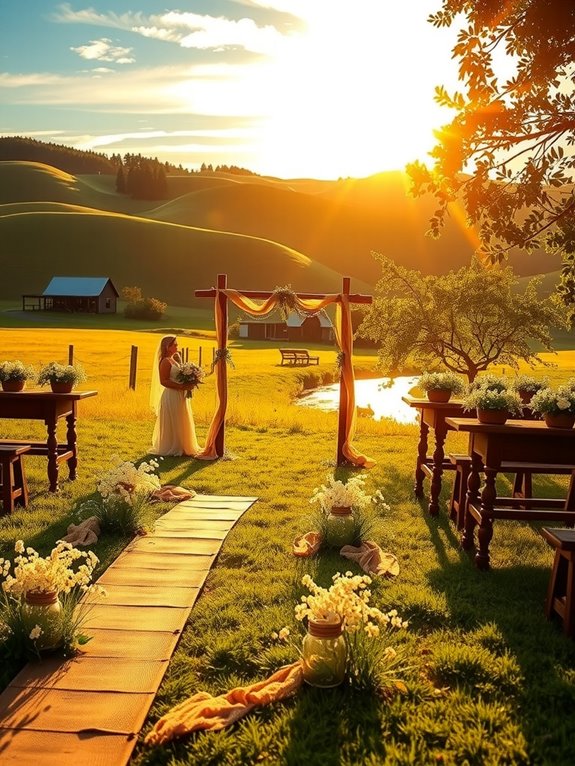
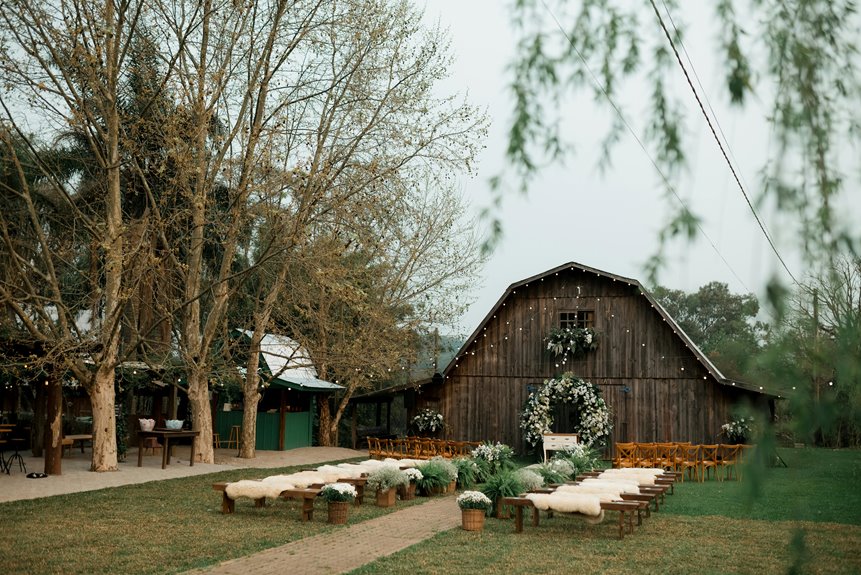
Why choose an ordinary backdrop when nature already provides your visual foundation? A barn wedding venue in Hill Country offers authentic scenery that photographs exceptionally well without demanding excessive decorative additions. Open fields, blue skies, and native gum trees create natural focal points that serve your aesthetic directly.
A barn wedding venue in Hill Country offers authentic scenery that photographs exceptionally well without demanding excessive decorative additions.
Consider separating your ceremony and reception into different spaces if your venue layout permits this arrangement. This strategy maximizes the pastoral quality you’re seeking while giving guests a sense of journey throughout the day. A bare ground ceremony site emphasizes the landscape itself, allowing the environment to carry visual weight in your final photographs rather than competing with installed décor.
The architectural character surrounding your chosen space should guide every decoration decision you make. When rustic barns or weathered structures anchor your venue, they become the design framework—keeping the environment as your primary visual element rather than treating it as secondary to your setup. This approach delivers authenticity: you’re celebrating within a working agricultural setting rather than a constructed theme space.
What role does venue selection play in reducing your overall decoration budget? Rural venues with strong existing character typically require 30-40% less décor spending than blank indoor spaces, according to wedding planner surveys from the Texas Hill Country Wedding Association.
Design Your Ceremony to Frame the Natural Landscape
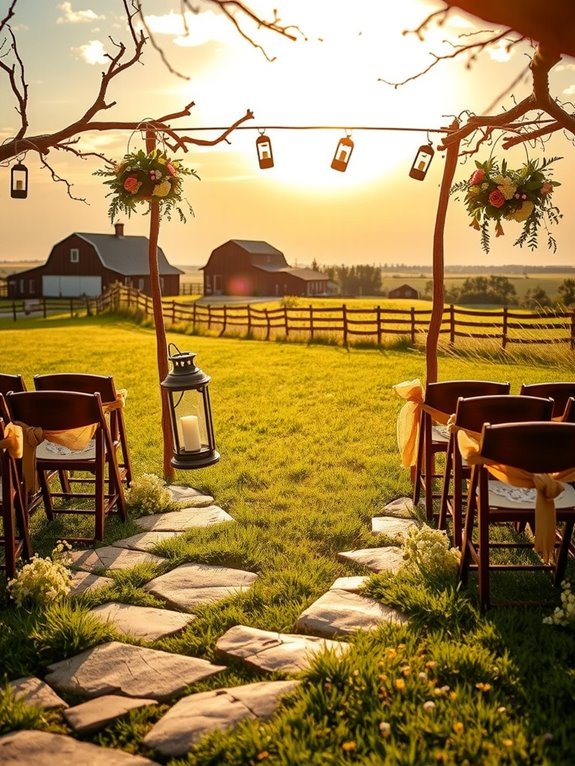
You’ve selected your rural venue for its inherent beauty—now design a ceremony that complements rather than competes with the setting. Your setup should work alongside the landscape, not against it.
Consider a rustic arbor dressed with lace and fresh foliage as your focal point. This wooden structure, typically costing $200–$500 to build or rent, creates a defined ceremony space while maintaining visual lightness. Line your aisle with gum leaves or local foliage to establish an organic pathway. Hay bales provide practical seating that costs $3–$8 per bale, offering guests comfort while reinforcing your pastoral theme.
Earth-toned elements and natural wood accents create visual cohesion with your surroundings. Greens and whites form your color foundation, allowing the scenery itself to frame your vows rather than requiring elaborate decorative layers. What purpose does each element serve beyond aesthetics? A rustic arbor frames your backdrop with elegant simplicity. Hay bale seating combines function with authentic charm. Gum leaf pathways establish organic flow without manufactured feel.
| Element | Purpose | Material | Cost Range |
|---|---|---|---|
| Rustic Arbor | Frame backdrop | Wood & flowers | $200–$500 |
| Hay Bales | Guest seating | Straw | $3–$8 each |
| Gum Leaf Aisle | Natural pathway | Local foliage | $50–$150 |
| Earth Tones | Color palette | Natural hues | Included |
Plan your setup during site visits to identify natural focal points your ceremony can highlight rather than hide. Most venues allow 2–3 visits before finalizing your design, giving you flexibility to observe how light, shadows, and seasons affect your chosen location.
Choose Haybale Seating for Comfort and Rustic Charm
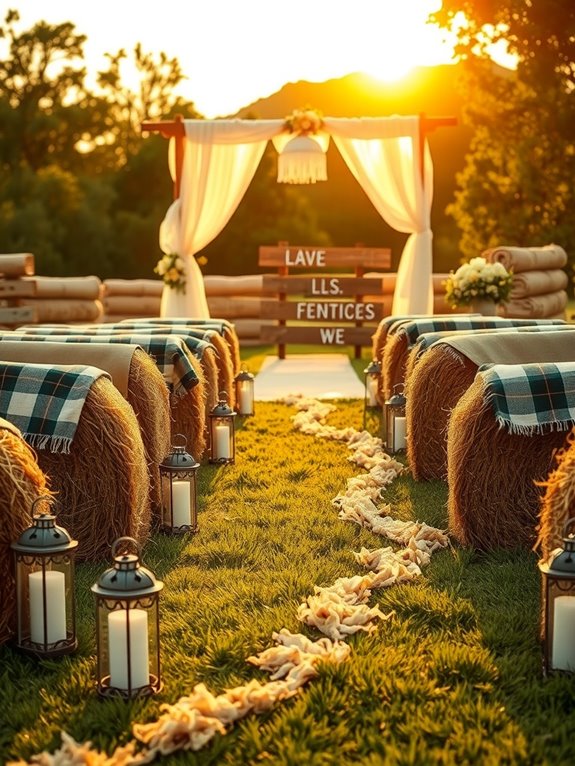
Haybale seating works well for outdoor weddings because it offers both comfort and a countryside look that feels authentic. These sturdy bales function as practical seating while maintaining the natural textures and earthy tones your rustic venue requires. Pairing haybales with burlap runners and wooden accents creates a cohesive design that feels intentional rather than accidentally assembled.
The setup process is straightforward. Stack bales to your preferred height, typically 14 to 18 inches from the ground, and arrange them in rows or clusters depending on your guest count and venue layout. One bale generally seats two to three people comfortably. Adding cushions or blankets improves comfort during longer events, particularly if your ceremony or reception extends beyond two hours.
Cost considerations range from $2 to $5 per bale when renting from local farms or event suppliers, with most couples needing 30 to 50 bales for a 75 to 100-guest wedding. Purchasing offers another option if you want to keep the bales afterward, though this typically runs higher per-unit than renting. Your venue may have preferred vendors already established in the area, which can simplify delivery and setup logistics.
The rustic aesthetic naturally complements outdoor ceremonies and cocktail hour arrangements. Guests appreciate the casual atmosphere haybale seating creates, though you should consider ground conditions beforehand—muddy or uneven terrain requires additional planning, such as placing bales on wooden pallets for stability and cleanliness.
Practical Seating Solutions Outdoors
When planning an outdoor country wedding, hay bales provide functional seating that aligns with rural aesthetics. These rustic elements work well in countryside settings because they blend naturally with the landscape while offering informal arrangements for your guests.
Small hay bales create a relaxed atmosphere without requiring traditional rental furniture, which typically costs $8-15 per chair for standard options. To improve comfort, layer them with cushions or throws that match your color palette. Stability becomes important on uneven terrain—place protective mats or wooden pallets underneath to prevent shifting during the ceremony or reception.
Strategically positioned bales serve multiple purposes simultaneously. They mark ceremony aisles, create visual focal points, and reinforce your country theme throughout the day. When combined with lace, burlap, and wooden accents, they establish a cohesive look that feels genuinely welcoming to guests.
Consider the logistics of this approach before committing. Hay bales typically cost $3-8 each from agricultural suppliers, though rental companies specializing in wedding decor may charge $15-25 per bale due to delivery and setup fees. You’ll need approximately one bale per two guests for ceremony seating, depending on how closely you space them. Account for the fact that hay can trigger allergies in some guests, so having traditional seating alternatives available demonstrates thoughtful planning. What happens if rain dampens your hay bales? Protective covers and a covered backup area help mitigate this weather-related concern.
Rustic Comfort Meets Style
Haybale seating works as a practical solution for country weddings that need both functionality and visual appeal. These natural elements let guests settle into outdoor spaces while maintaining connection to the surrounding landscape. The versatility lies in how quickly you can customize them—adding cushions rated for outdoor use costs between $15-40 per seat and transforms bare bales into genuinely comfortable perches that last through four-hour receptions.
Your aesthetic choices matter here. When paired with burlap runners, lace overlays, and wooden frames, haybales reinforce the countryside narrative without competing with ceremony backdrops or architectural features. Strategic placement in shaded zones prevents guest discomfort during peak heat hours, reducing the complaints vendors typically hear about outdoor seating endurance.
Consider the practical logistics. Haybales measure roughly 14x18x36 inches and weigh 40-50 pounds each, requiring 8-10 pieces for 50 guests when arranged in conversational groupings. Rental costs range from $3-8 per bale for weekend events, with delivery fees of $75-200 depending on venue distance. This approach positions seating as part of your décor strategy rather than an afterthought, giving photographers natural framing opportunities while solving functional seating needs simultaneously.
Stock Your Bar Like You Mean It
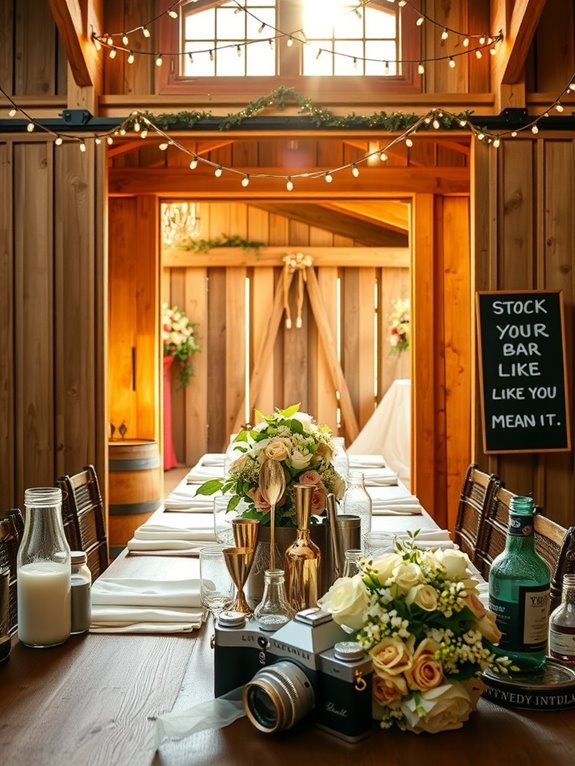
You’ll want to stock essential spirits thoughtfully, ensuring bourbon and whiskey anchor your selection for that authentic country vibe. Planning quantities requires calculating one drink per guest per hour—so a hundred guests over four hours means roughly four hundred drinks total.
Beyond the basics of beer and wine, you’ll need signature cocktails and non-alcoholic options that reflect your rustic theme while keeping every guest satisfied. A standard bar setup typically includes vodka, gin, rum, and tequila alongside your whiskey selection. Most venues recommend stocking one bottle per five guests for the full event duration.
Consider offering two to three signature cocktails that tie into your country aesthetic—think bourbon smashes or whiskey lemonades—rather than attempting to stock every possible spirit. This approach reduces waste while giving guests memorable drinks aligned with your vision. Non-alcoholic options should represent about twenty percent of your total drink volume, accounting for designated drivers, pregnant guests, and those simply preferring softer beverages.
Essential Spirits and Selection
What spirits will your guests actually want to drink throughout the reception?
Your country wedding bar needs core liquors that align with your region’s preferences and culture. Build your selection around these foundational bottles:
Bourbon or Whiskey
This category forms the backbone of most country celebrations, with bourbon prices ranging from $25 to $60 per bottle for mid-range quality. Tennessee whiskey and Kentucky bourbon both work well, depending on your location and guest expectations.
Vodka and Gin
These versatile spirits serve as bases for mixed drinks and cocktails, accommodating guests who prefer lighter options. Budget $20 to $40 per bottle for adequate quality that won’t disappoint.
Rum
Stock rum for popular crowd favorites like mojitos and punch bowls, which work particularly well at outdoor country weddings. Dark and light varieties together cost roughly $30 to $50 combined.
Local Craft Options
Regional spirits tell your story and support nearby producers. Whether that means local moonshine alternatives, craft distilleries, or regional brews, these bottles create conversation and authenticity.
Quality matters more than quantity when planning your bar service. Calculate your needs based on guest count and reception length—a standard formula suggests one drink per person per hour. Balance aged whiskeys with affordable everyday options so you’re prepared for varied preferences without excessive leftover inventory.
Coordinate your staffing, glassware, and ice supplies before the reception begins. Proper planning prevents runs on popular drinks and keeps service flowing throughout your celebration.
Quantity Planning for Guests
Running out of drinks mid-celebration ranks among the worst country wedding mishaps you can encounter. How much should you actually stock for your specific guest count and timeline?
Calculate quantities based on three variables: your total guest count, event duration, and outdoor temperature. During peak hours—typically the first two hours after cocktail service begins—plan for three to four drinks per person hourly. A 100-guest wedding during summer heat might require 1,200 drinks over a six-hour event, whereas a cooler evening reception could need 800 total.
Your beverage menu should include beer, wine, and spirits alongside non-alcoholic options like sparkling water, lemonade, and iced tea. Most country weddings stock a 60-30-10 ratio: 60 percent beer and wine, 30 percent spirits, and 10 percent premium liqueurs. Outdoor heat increases consumption rates significantly, sometimes by 25 to 40 percent compared to indoor celebrations.
Position your bar near rustic elements like hay bales or wooden structures, adding clear directional signage from your main gathering area. Work with your caterer or beverage vendor to overstock by approximately 15 to 20 percent as a safety buffer. Request additional staff for restocking during the first two hours when consumption peaks. This prevents the awkward moment when guests discover empty kegs or wine bottles running dry during toasts and dancing.
Beer, Wine, and Beyond
A memorable country wedding bar depends on offering beverages that appeal to different tastes and preferences among your guests. Start by stocking these foundational categories:
Regional beer selections showcase local breweries and highlight craft traditions specific to your area. Most regions within 100 miles of your venue have established breweries worth featuring, which guests appreciate as a local touch.
Farm-to-table wines sourced from nearby vineyards provide authentic pairings while supporting regional producers. A wine distributor familiar with your region can recommend 3-5 selections that work across appetizers, main courses, and desserts.
Signature cocktails built around bourbon or whiskey complement rustic themes naturally. These drinks—perhaps a whiskey smash or bourbon lemonade—give your bar personality while keeping preparation straightforward for your bartender.
Non-alcoholic options matter more than many hosts realize. Plan for roughly 20-30 percent of guests to choose these beverages, ranging from iced tea and lemonade to sparkling water and coffee.
Your rustic bar structure, whether built from whiskey barrels or wooden crates, becomes a focal point when stocked thoughtfully. Before ordering, calculate quantities based on your guest count and typical consumption patterns. A general rule suggests 1.5 drinks per person for a four-hour reception, though country weddings often see lighter drinking than urban events.
Hiring a bartender experienced with country-themed drinks prevents service gaps during peak hours. This person typically costs $20-35 per hour depending on your location and whether they provide their own supplies or work with your inventory.
Wear Western Boots That Feel Like Home
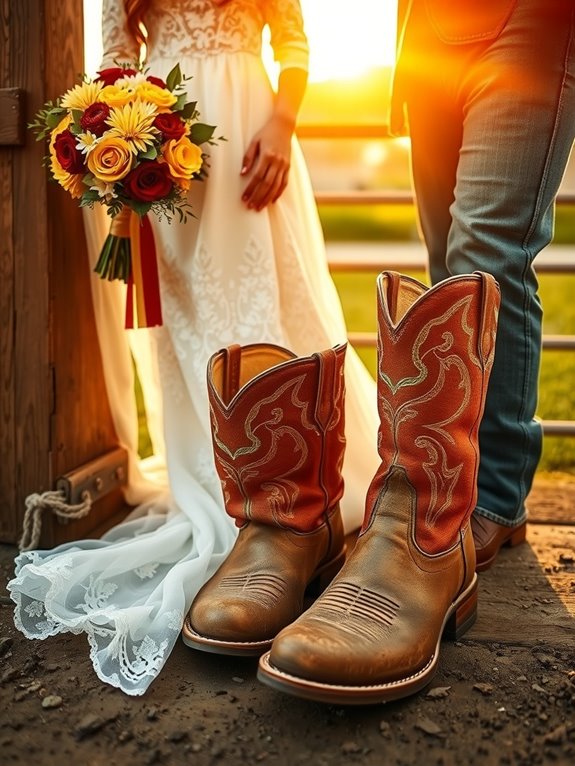
Why Western Boots Matter for Country Weddings****
Fancy heels might look polished in photos, but they’re impractical for a country celebration where you’ll spend hours standing, dancing, and navigating uneven terrain. Western boots offer genuine comfort without compromising on visual appeal, letting you move freely throughout your ceremony and reception.
The Practical Advantages of Boot Footwear
Durable boots handle outdoor venues far better than delicate heels. Hay bale seating, gravel pathways, and grass won’t damage quality leather the way they would compromise satin or silk. You’ll avoid the mid-reception foot pain that forces many brides to kick off their shoes during dancing. A quality pair typically costs between $150 and $400, depending on leather quality and customization options.
Creating Visual Cohesion With Your Wedding Party
Coordinate your boot selection with your groom’s outfit choices. When the groom pairs his suit with cowboy hats, leather belts, and matching boots, it establishes a unified aesthetic. Groomsmen should follow the same styling approach, creating consistency throughout your wedding photos and ceremony footage. This coordinated look works because it feels intentional rather than cobbled together.
The Comfort and Photography Balance
You’ll actually be able to dance through your entire celebration without wincing. Your photographs will reflect genuine enjoyment rather than forced smiles masking discomfort. The combination of practical footwear and authentic country style delivers what matters most: a wedding where everyone moves comfortably while maintaining the rustic aesthetic you’re after.
Build a Playlist Heavy on Country Classics
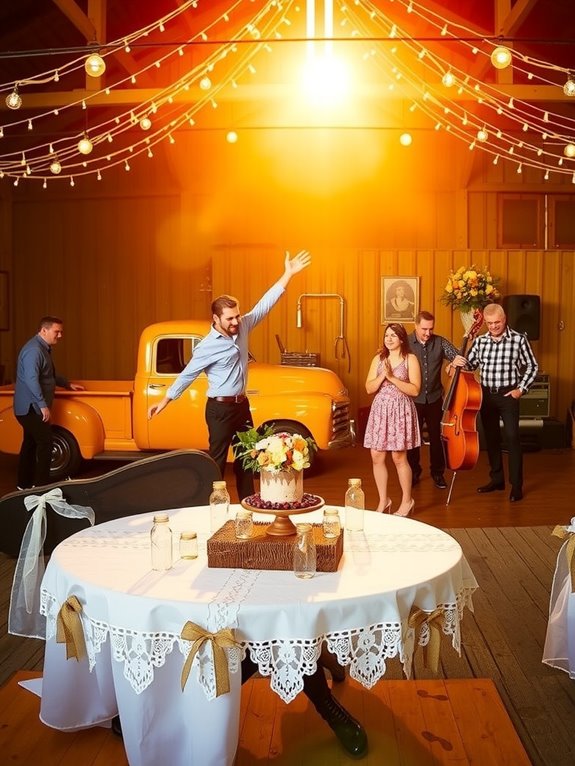
Music sets the emotional tone for your entire celebration, shaping how guests experience the venue and remember the event. Your country playlist should blend timeless classics with contemporary hits, creating continuity that resonates with everyone present.
Structure Your Music Timeline by Event Phase
Start with ambient songs during cocktail hour, keeping volume around 65-70 decibels so guests can converse comfortably. Move to classic country ballads during dinner service to maintain an intimate atmosphere without disrupting conversation. Classic tracks like “Die a Happy Man” by Thomas Rhett work well during the first dance and slow dance block, typically scheduled 90 minutes into your reception.
Build momentum as the evening progresses by introducing uptempo tracks such as “I Don’t Dance” by Lee Brice during peak dancing hours, usually between 8 PM and 10 PM. This timing capitalizes on when guests have eaten and loosened up. Higher-energy songs should comprise roughly 40 percent of your latter playlist hours.
Finish your reception with nostalgic wedding standards that invite group participation. These selections strengthen community bonds through collective singing and dancing rather than individual performance. Plan this final set for the last 30 to 45 minutes of your event.
Plan Transitions and Pacing
A 5-hour reception requires 150 to 180 songs to avoid repetition and awkward gaps between tracks. Space slower songs throughout rather than clustering them consecutively. Most DJs recommend alternating between two to three uptempo songs and one slower selection to maintain energy without exhaustion.
Pick a Dress That Commands the View
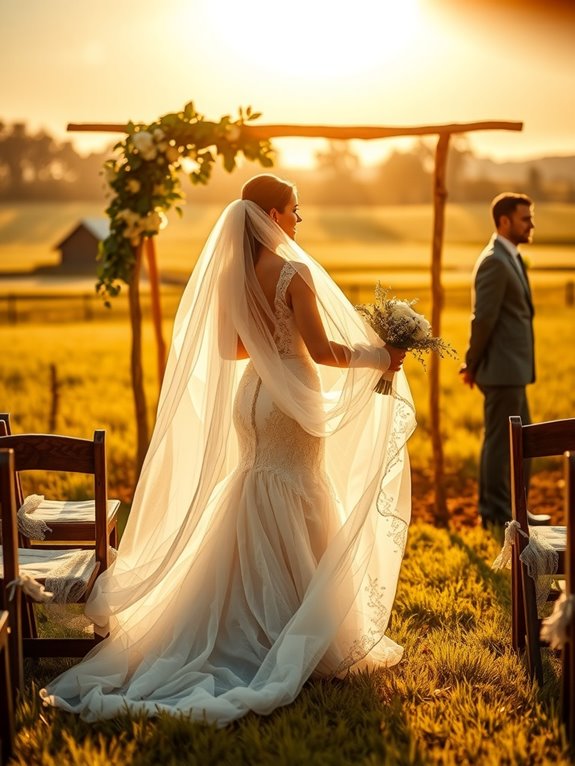
Your rustic wedding dress needs to work with the venue’s natural elements, not against them. Weathered barn wood, greenery, and natural light create a specific visual environment that demands thoughtful fabric and design choices. How will your dress photograph against these pastoral backdrops without disappearing into them?
Flowing silhouettes work best for outdoor settings because they move across hay bales and wooden surfaces without snagging or collecting debris. Chiffon and cotton blends complement natural textures in photos more effectively than heavier fabrics like satin, which can look disconnected from rustic settings. Skip busy patterns that compete with the landscape; subtle western touches or delicate lace detailing let the venue shine while keeping your dress relevant.
Your neckline choice affects both comfort and appearance. A well-fitted neckline flatters your frame while allowing full movement for mingling and dancing throughout the reception. A modest train photographs beautifully and maintains mobility, unlike longer trains that require constant management on uneven ground.
Natural light behaves differently than studio lighting, highlighting fabric quality and seam construction in ways indoor venues don’t. Golden-hour sunshine—typically occurring one to two hours before sunset—casts warm tones that enhance ivory and champagne dresses while revealing any fabric imperfections or cheap construction. Plan your photography timeline around this window to maximize how your dress appears in images.